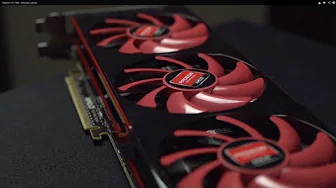
AMD Radeon HD 7990 Unboxing & Technology Overview
0 up · 0 down · 0 ratings
Channels and socials
Radeon HD 7990 is AMD's answer to the NVIDIA GTX Titan, and GTX 690. Is it too little too late, or when you consider the MASSIVE number of games that come with this card, do you think it brings a compelling value to the table? Sponsor link: corsair.com Join our community forum: bit.ly twitter.com @LinusTech Pricing & availability: ncix.com
The video provides a comprehensive unboxing and technology overview of the AMD Radeon HD 7990, emphasizing its position as a dual-GPU solution that pairs two Tahiti cores on a single PCB. The host explains that the 7990 is essentially two Radeon 7970 GPUs on one card, sharing a 384-bit memory bus and 6 GB of GDDR5, with usable memory halved in multi-GPU configurations. A primary focus is the cooling system, which uses an aggressive three-fan open-air cooler with four heat pipes and a substantial copper VRM block designed to dissipate a 375-watt TDP. The design aims to match or exceed the GTX 690 in acoustics and cooling despite the higher power draw, aided by a custom cooler, multiple heat pipes, and a robust aluminum fin array. The card includes full backplate coverage, dual 8-pin power connectors, a single Crossfire connector, and a mix of IO options including DVI and four mini DisplayPorts, enabling high-resolution multi-monitor configurations. The host also discusses performance expectations, noting higher power consumption and heat vs. competing single-GPU cards, and provides context on dual-GPU scaling, while cautioning about power, case cooling, and the realities of driver support for Crossfire. In the closing segments, the video positions the 7990 among its peers by price and capability, highlighting the “Never settle” branding, bundled games, and the potential value of the package, albeit with caveats about modern alternatives and the evolving driver landscape. Overall, the presentation blends technical detail with practical considerations for buyers weighing raw GPU horsepower, memory, cooling, and value propositions in a high-end graphics card up to $1,000. The host signs off with a reminder to subscribe for more unboxings and tech content and hints at how future driver updates and game bundles could affect the card’s real-world appeal.
Topics · technology · hardware · graphics cards · consumer electronics
Questions answered
- What are the key hardware specifications of the AMD Radeon HD 7990 as described in the video?
- The 7990 uses two Tahiti GPUs on one card, totaling 248 stream processors per GPU, a 384-bit memory bus with 6 GB of GDDR5, and it runs at a base clock around 950 MHz with a boost near 1 GHz. It is a dual-slot card with two 8-pin power connectors and a 375 W TDP, cooled by a custom three-fan cooler with extensive copper heat pipes.
- How does the video characterize the cooling solution for the 7990 compared to its competitors?
- The video notes that the 7990 uses a high-end air cooling system with four heat pipes, massive aluminum fins, and copper heat pipes in the VRM area, designed to keep temperatures and noise in check for a 375 W TDP. It is described as quiet and capable of matching GTX 690 acoustics, though it exhausts heat into the PC case due to the open-air design.
- What factors does the host highlight when evaluating whether the 7990 is a compelling value for around $1,000?
- The host compares the 7990 to the GTX 690 and GTX Titan, highlighting dual-GPU horsepower, 6 GB usable memory, and bundled games as a potential value add. He notes higher power consumption and heat relative to Titan, and more memory bandwidth but potential issues with Crossfire scaling and driver improvements. The decision hinges on preference for raw performance, gaming bundles, and the impact of power, heat, and future driver updates.
- What is the meaning of the Never settle slogan in the context of this video?
- Never settle refers to AMD’s branding and strategy of offering enhanced value and performance with dual-GPU cards, often including game bundles at launch, to entice buyers despite higher power consumption and heat. In the video, it is tied to the card’s bundled games and AMD’s ongoing driver support promises.