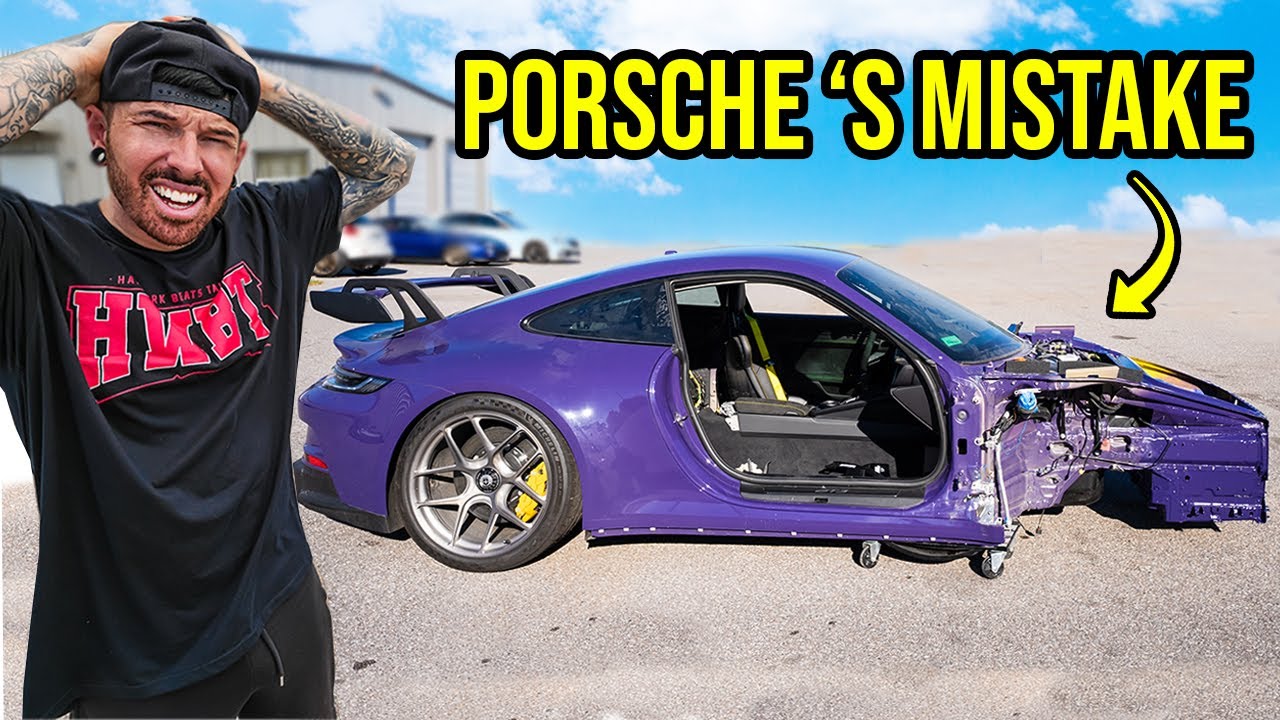
REBUILDING A WRECKED PORSCHE 911 GT3 | PART 6
0 up · 0 down · 0 ratings
Promos
Check if your car was damaged with Car Vertical - 10% off here carvertical.com I bought Adam Lz's old Porsche 911 992 GT3 after it was involved in a accident over in the US. Ive been flying back to the UK to get parts which US Porsche are not allowed to sell me. Now i need to solve the overheating and get the car painted, but things are proving harder than first thought as a part from Porsche is holding us back!
ALL MA MERCHANDISE
Channels and socials
CHECK OUT JACKS CHANNEL
FOR MORE CONTENT
CHECK OUT MY SECOND CHANNEL
Follow Me Here Aswell
Notes
The video follows the ongoing rebuild of a wrecked Porsche 911 GT3, focusing on mechanical troubleshooting, assembly, and cosmetic work that bring the car closer to a finished state. In the first segment, the team wrestles with an overheating issue that only appears when the engine is idling, not when it is running at higher RPMs. They explain the cooling system arrangement, with radiators at the front and the coolant reservoir at the back, which allows air pockets to form during topping up. To purge air from the system, they attempt a method that involves opening the coolant cap and revving the engine to push air bubbles through the expansion tank. After some attempts, they observe the temperature stabilize around 190 degrees Fahrenheit, suggesting the air is being purged and the system is starting to function properly again. The team also deals with a stubborn engine hatch and door wiring puzzles, testing assumptions by reconnecting the door and checking codes to isolate the root cause of the hatch and electrical fault. As they relocate back to the UK and prepare the car for paint, the crew completes more body work and reassembly tasks. They confirm the wing is back on and address paint prep for multiple panels, with Jack taking the lead on sanding and priming while Louis matches Porsche Ultra Violet to a sample color. The narrative highlights the collaboration, with thanks and shout outs to Jack for his work while the team is away in the US. The car gets prepped for priming and paint, and the crew documents the process of masking, taping, and readying the shell while parts are shipped back from America. The team also revisits electrical and loom compatibility, discovering that the correct loom is essential because a mismatched loom can prevent essential functions like the horn and ignition from working. Back in Florida for the third time, the crew documents the car nearing a more complete interior. They remove wheels for powder coating, assess the wiring loom again, and test the horn after a loom swap. They deduce a difference between a manual transmission loom and a PDK loom and troubleshoot by adapting connectors and harnesses to fit the car’s actual configuration. The interior assembly progresses with a focus on safety and fit, reinstalling the roll cage, carbon bucket seats, and seat belts, while checking clearances and ensuring everything aligns correctly. The video closes with reflections on the journey, tease of further work, and a reminder to stay tuned for the next episode as they anticipate finishing touches like wheel color and final diagnostics. Throughout, the host emphasizes problem solving, risk taking, and the satisfaction of seeing the GT3 come back together after a challenging rebuild.
Topics · auto restoration · car rebuild · garage build · mechanics · race cars · car painting · interior installation · diagnostics
Questions answered
- Why does the Porsche GT3 overheat only when idling, and how is the issue being addressed?
- The overheating occurs because the coolant is topped up at the rear while the radiators are at the front, creating air pockets in the cooling system. The team purges air by running the engine with the coolant cap off and revving to push air bubbles into the expansion tank, allowing the system to bleed and stabilize the temperature.
- What solved the horn and steering wheel button issue in the car rebuild?
- A faulty wiring loom was suspected. After testing, they discovered the loom connectors had different part numbers. They swapped and adapted wiring, including reusing a good old loom and using a connector that could be heat-soldered to fit the new loom, which restored horn and button functionality.
- Why was the loom compatibility so critical, and how did they determine the correct configuration?
- The loom had to match the car’s actual transmission and electronics configuration. They identified that the UK loom and the US loom had different part numbers and pinouts, with a theory that a manual loom may be used in a car that actually needed a PDK loom. By comparing connectors and testing power to the ignition and steering buttons, they confirmed the correct setup and avoided a mismatched loom causing failure.
- What interior components were reinstalled, and why is careful reassembly important here?
- They reinstalled the roll cage, carbon bucket seats, and seat belts, then bolted in the interior trim. Careful reassembly is crucial because the carbon seats are extremely costly, and the final fit must preserve safety, alignment, and performance while avoiding damage during installation.