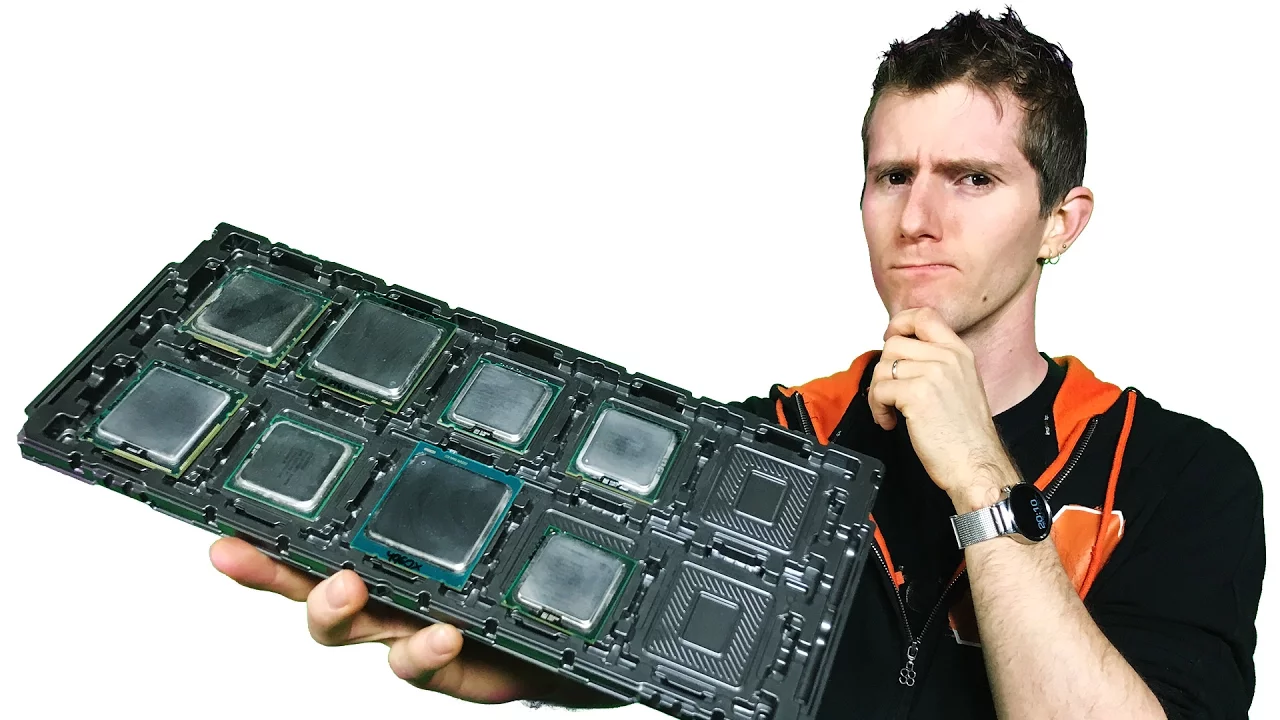
Intel CPU Innovation.. or Lack Thereof?
0 up · 0 down · 0 ratings
Promos
Has Intel pushed performance ahead in the last 10 years? Let's take a look! Buy Intel CPUs on Amazon: geni.us Enter our Razer giveaway: gleam.io Buy Kraken Pro V2: geni.us Buy Kraken 7.1 V2: geni.us GFuel link: Use offer code "LINUS" to save 10% over at geni.us Discuss on the forum: linustechtips.com Our Affiliates, Referral Programs, and Sponsors: linustechtips.com
Channels and socials
Check out our Linus Tech Tips posters at crowdmade.com twitter.com @LinusTech Intro Screen Music Credit: Title: Laszlo - Supernova Video Link: youtube.com iTunes Download Link: itunes.apple.com Artist Link: soundcloud.com Outro Screen Music Credit: Approaching Nirvana - Sugar High youtube.com Sound effects provided by freesfx.co.uk
Intel CPU Innovation.. or Lack Thereof? surveys a decade of Intel processors to question whether consumer CPU performance has truly advanced. The video begins by acknowledging a common feeling that upgrades rarely deliver noticeable gaming or creative-application gains, then sets up a rigorous cross-generation comparison. The host explains a careful methodology: using the same graphics card across all CPUs to isolate CPU performance, selecting a high-end RAM/motherboard setup to reflect typical top-tier platforms from each era, and testing with a mix of modern CPU benchmarks and real-world workloads. Early results show incremental gains over time, with single-thread performance often lagging behind what enthusiasts expect, even as multi-core workloads improve. A notable find is that the 2011 era CPUs sometimes match or exceed newer designs on specific single-core tasks, while modern CPUs excel in multi-threaded scenarios. The discussion then moves to broader implications, including power draw, thermals, and the influence of market focus on design choices, suggesting that Intel has shifted attention toward mobile, data centers, and cloud workloads rather than pushing consumer-core performance aggressively. The host concludes that while efficiency per watt has improved, overall power draw for gaming remains largely unchanged, and prices have risen, culminating in a broader critique of the current state of consumer CPU innovation and the market dynamics that shape it. The video closes with reflections on Moore’s Law, the evolving goals of CPU design, and a light note about potential shifts in competition, including AMD’s role in reintroducing consumer-price and performance competition.
Topics · technology · hardware · computing · consumer-electronics
Questions answered
- Did Intel's single-thread performance see large improvements over the last decade?
- The video indicates that single-thread performance improvements have been limited over the years, with some very old CPUs sometimes matching or outperforming newer ones in certain single-thread benchmarks.
- What was the testing methodology used in the comparison?
- The test used the same graphics card across all CPUs to isolate CPU performance, paired each CPU with a high-end RAM/motherboard setup representative of its era, and ran a mix of modern CPU benchmarks and gaming workloads, including some legacy tests like Half-Life 2.
- What are the main conclusions about pricing and efficiency?
- Efficiency per watt has improved, but gaming power draw remains largely unchanged; flagship prices have risen, with Intel historically asking around $700 for top-end consumer CPUs, contributing to the overall perception of diminishing consumer-level gains.