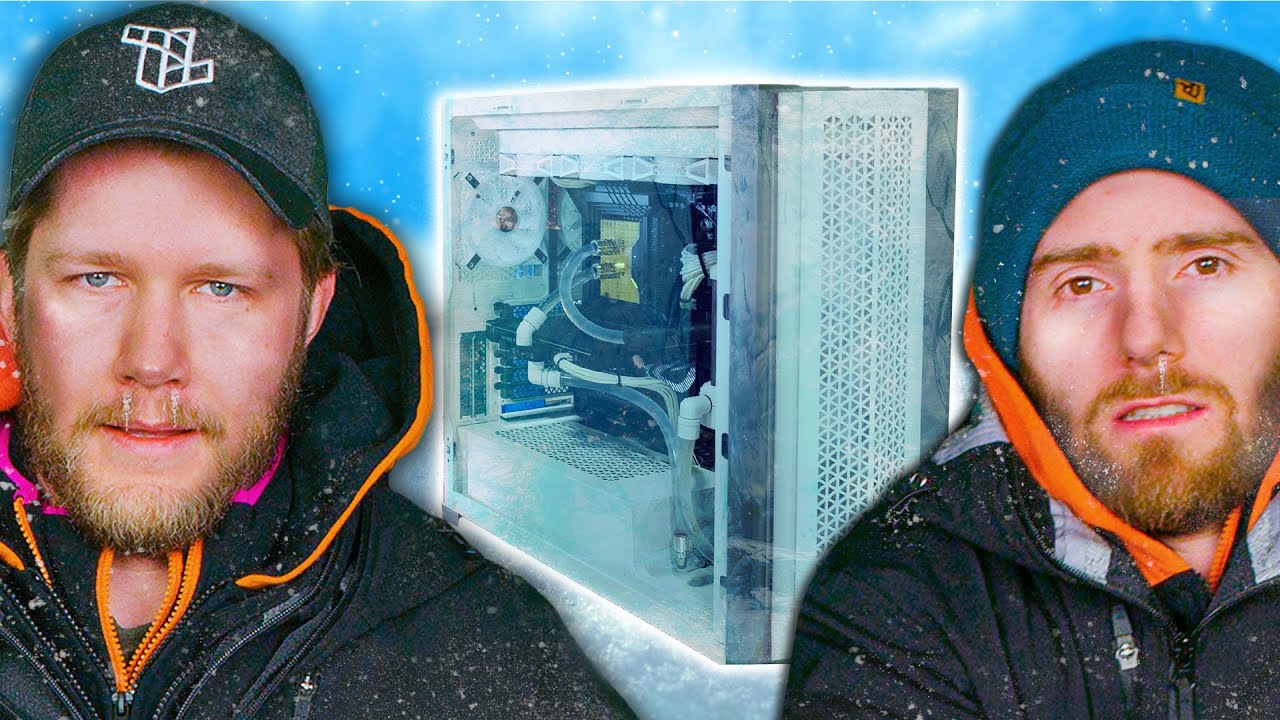
Can a Gaming PC Survive the North Pole? - Environmental Chamber Update
0 up · 0 down · 0 ratings
Description
Promos
Get 69% off any of XSplit’s video tools. Use code LINUS at lmg.gg Create your build at buildredux.com Our new environmental testing chamber can reach temperatures in excess of 50 degrees Celsius, or as low at -40 - the only question that remains is can a gaming computer survive these extremes? Discuss on the forum: linustechtips.com Buy an Intel Core i9-13900K CPU: geni.us Buy an ASUS ROG Strix GeForce RTX 4090 OC GPU: geni.us Buy a DeepCool Infinity Series LT520 240mm Liquid Cooler: geni.us
Check out the SCH-512-4 Environmental Chamber here: lmg.gg Purchases made through some store links may provide some compensation to Linus Media Group. ► GET MERCH: lttstore.com ► LTX 2023 TICKETS AVAILABLE NOW: lmg.gg ► GET EXCLUSIVE CONTENT ON FLOATPLANE: lmg.gg ► SPONSORS, AFFILIATES, AND PARTNERS: lmg.gg ► OUR WAN PODCAST GEAR: lmg.gg FOLLOW US --------------------------------------------------- Twitter: twitter.com Facebook: @LinusTech Instagram: @linustech TikTok: @linustech Twitch: twitch.tv MUSIC CREDIT --------------------------------------------------- Intro: Laszlo - Supernova Video Link: youtube.com iTunes Download Link: itunes.apple.com Artist Link: soundcloud.com Outro: Approaching Nirvana - Sugar High Video Link: youtube.com Listen on Spotify: spoti.fi Artist Link: youtube.com Intro animation by MBarek Abdelwassaa @mbarek_abdel Monitor And Keyboard by vadimmihalkevich / CC BY 4.0 geni.us Mechanical RGB Keyboard by BigBrotherECE / CC BY 4.0 geni.us Mouse Gamer free Model By Oscar Creativo / CC BY 4.0 geni.us CHAPTERS --------------------------------------------------- 0:00 Intro 0:50 Setting up the machine 2:19 Running a PC in the desert (122F ambient) 7:53 Running a PC in the Arctic (-40F ambient) 8:40 Looking inside the environmental chamber 9:22 Arctic temperature results 10:57 All hell breaks loose when a liquid cooler enters the mix 13:03 How about a custom water-cooled PC in the Arctic?
The video opens by framing an extreme experiment: testing how far a gaming PC can be stressed inside an environmental chamber that can reach temperatures from very hot to minus 40 degrees Celsius. The hosts explain the setup and the purpose, noting that condensation is a major risk at subzero temperatures and that humidity control is not yet available in their chamber. They heat the chamber first to remove moisture, then begin with a PC inside the frost chamber to observe how components handle extreme cold, focusing on how temperatures affect CPU, GPU, and VRM behavior. Early results show surprisingly resilient core temperatures under heavy load, with the CPU sustaining high clocks and the GPU maintaining activity even as ambient conditions drop, though they acknowledge the cooling setup is more than capable of handling the task at hand. The segment also emphasizes the realities of condensation risk, cable routing, and the need for careful door management to prevent moisture from affecting sensitive components. Through rapid, hands-on experimentation, they reveal both notable performance stability and looming challenges as the cooling system and environmental variables push hardware toward limits.
Topics · technology · hardware · experiments · environmental-testing · science-and-technology
Questions answered
- What temperatures does the environmental chamber reach in this test?
- The chamber is configured to reach minus 40 degrees Celsius and temperatures high enough to simulate extreme hot environments, allowing testing across a wide thermal range.
- Why is condensation a major concern in cold testing?
- Condensation can form on and around electronics when warm, humid air comes into contact with very cold surfaces, potentially causing short circuits or corrosion and affecting reliability.
- What hardware challenges did they observe at low temperatures?
- They saw reduced clock speeds and power consumption, with some components showing freezing or frost effects on external surfaces and concerns about internal moisture and glycol in the cooling loop.
- How did the team approach the cooling strategy during the test?
- They used a combination of heat and cooling cycles, desiccant drying, and a large compressor-based cooling system, experimenting with liquid cooling and an AIO setup inside the environmental chamber.