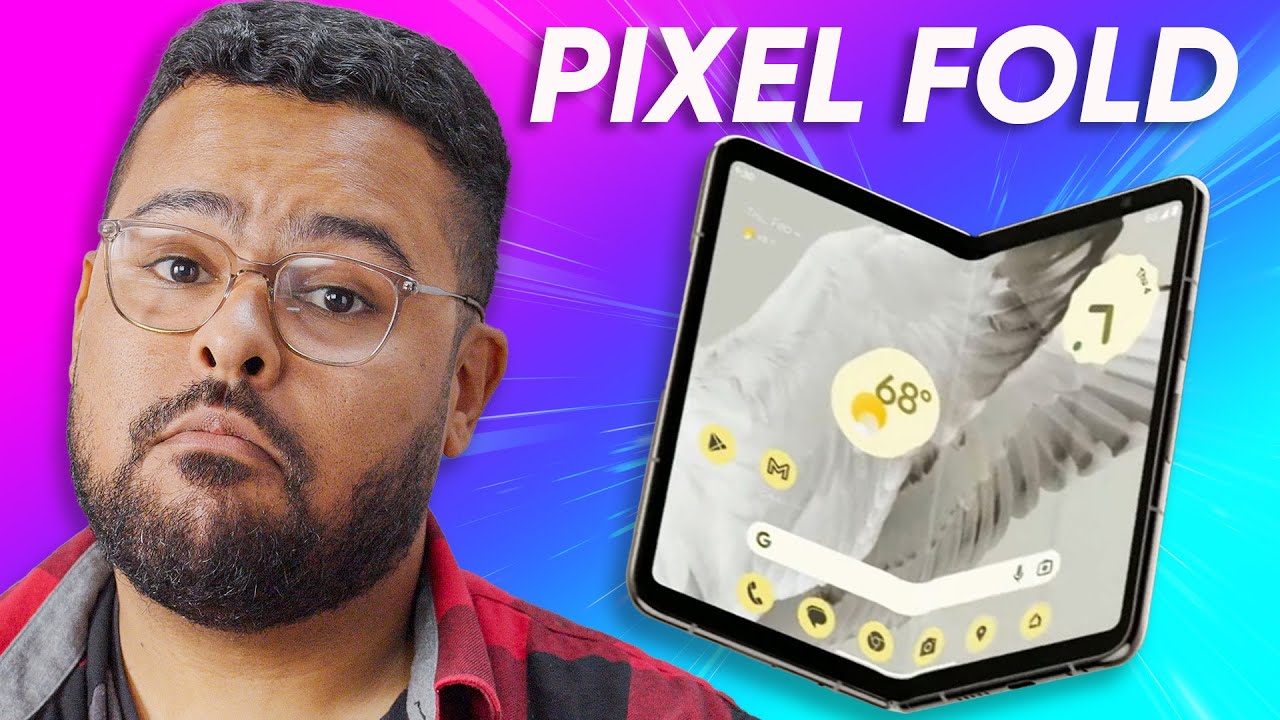
The Pixel Fold has a fatal flaw… - Google Pixel Fold
0 up · 0 down · 0 ratings
Promos
Get your own Robot City skins from dbrand at: shortlinus.com The Google Pixel Fold has arrived! Will this new phone be able to take the top spot from the current Samsung Fold lineup? Or did Google just miss the mark? Find out as Bell takes you through his experience using the Pixel Fold. Buy a Google Pixel Fold: lmg.gg Purchases made through some store links may provide some compensation to Linus Media Group. Want us to unbox something? Make a suggestion at lmg.gg ► GET MERCH: lttstore.com ► LTX 2023 TICKETS AVAILABLE NOW: lmg.gg ► GET EXCLUSIVE CONTENT ON FLOATPLANE: lmg.gg ► SPONSORS, AFFILIATES, AND PARTNERS: lmg.gg ► PRODUCTS WE USE ON THE SHORTCIRCUIT SET: lmg.gg FOLLOW US ELSEWHERE --------------------------------------------------- Twitter: twitter.com Instagram: @shortcircuityt TikTok: @linustech Facebook: @ShortCircuitYT CHAPTERS --------------------------------------------------- 0:00 Intro 0:20 What's in the box?! 1:15 Exterior impressions 3:00 Inside display specs 3:55 Hand feel and weight 5:06 dbrand! 6:38 Booting up the phone 7:50 Fingerprint scanner 8:41 Software testing 10:41 Speaker and display impressions 12:06 Camera impressions and specs 20:35 Labs test results 22:28 Comparing to the Fold 4 24:45 Closing thoughts 25:36 Outro
The Pixel Fold review arrives with a detailed first look at Google’s take on a folding phone, emphasizing its slim closed profile and flat exterior, which contrasts with Samsung’s Fold devices. The creator notes the packaging basics, such as the SIM tool, USB-C cable, and an OTG adapter, before diving into the physical design that feels thinner when closed and maintains a solid, gapless hinge. The outside display is highlighted as a capable 5.8 inch 120 Hz OLED with HDR support, while the inner 7.6 inch 1840p 120 Hz panel is a flagship-grade screen with bright HDR performance and a protective thin glass layer with a plasticky feel. The device weighs about 283 grams and packs a large 4800 mAh battery, contributing to a premium but chunky handheld experience that remains two-handed. Practicalities like eSIM reliance and a wide form factor are discussed, alongside a robust software experience built on stock Android with five years of security updates, indicating Google’s long-term support commitment. The unboxing is followed by hands-on impressions: the device feels fast in general use, fingerprint authentication is quick though positioned high on the device, and the multi-window and dock features on the large internal display showcase Google’s attempt to optimize productivity for a two-panel layout. The reviewer experiments with apps in both portrait and landscape modes, praising the adaptive split keyboard and two-panel multitasking features while noting that some layout transitions across outer and inner screens could be smoother. Observations extend to media consumption, brightness performance, and the overall look of the display, which remains vibrant and color-accurate for a flagship Android experience. In camera testing, the Pixel Fold offers five cameras including outer and inner selfies, with the cover screen selfie being particularly impressive, while the inner camera generally performs well but not exceptionally across lighting. Lab-driven gaming tests reveal thermal throttling on the internal screen that dampens performance, especially under heavy load, whereas the external display performs markedly better. Battery life tests show solid endurance with about 20 hours of video playback on external display and strong stress test results on internal usage, while charging remains competitive with a 65 W charger. The presenter compares the Pixel Fold to Samsung’s Fold lineup, identifying internal screen durability concerns, hinge endurance questions, and the absence of folding-specific apps in the Play Store. Final verdicts weigh the Pixel Fold as a capable, still slightly vanilla first-gen fold from Google, with strong cameras and UI polish but notable drawbacks in thermals, hinge longevity, and app ecosystem optimization, all set at a premium price that mirrors competing devices. The closing thoughts encourage potential buyers to weigh the benefits of expanded screen real estate against practicality, pocketability, and the risk of a relatively unfamiliar foldable experience, while inviting viewer input on who this device is for and whether it justifies the investment for two-panel productivity.
Topics · technology · mobile_devices · consumer_electronics · reviews
Questions answered
- What is the Google Tensor G2 configuration in the Pixel Fold and how much RAM does it have?
- The Pixel Fold uses the Tensor G2 chip with 12 GB of RAM, a configuration aligned with other flagship Google devices this year.
- How many cameras does the Pixel Fold include and how do the front-facing cameras perform on different screens?
- The device has five cameras total, including outer and inner selfie cameras. The cover screen selfie looks particularly impressive, while the inner camera performs well but varies with lighting.
- What are the battery and charging specs for the Pixel Fold?
- It includes a 4800 mAh battery and supports 65 W charging, enabling fast top-ups and solid endurance in tests.
- How does Google handle software updates for the Pixel Fold?
- Google promises five years of security updates, aiming to extend the device’s lifespan and keep user data protected.
- What are the main drawbacks highlighted in the review for the Pixel Fold?
- Thermals causing throttling on the internal screen, hinge durability concerns, and limited fold-specific apps in the Play Store are noted as key drawbacks.