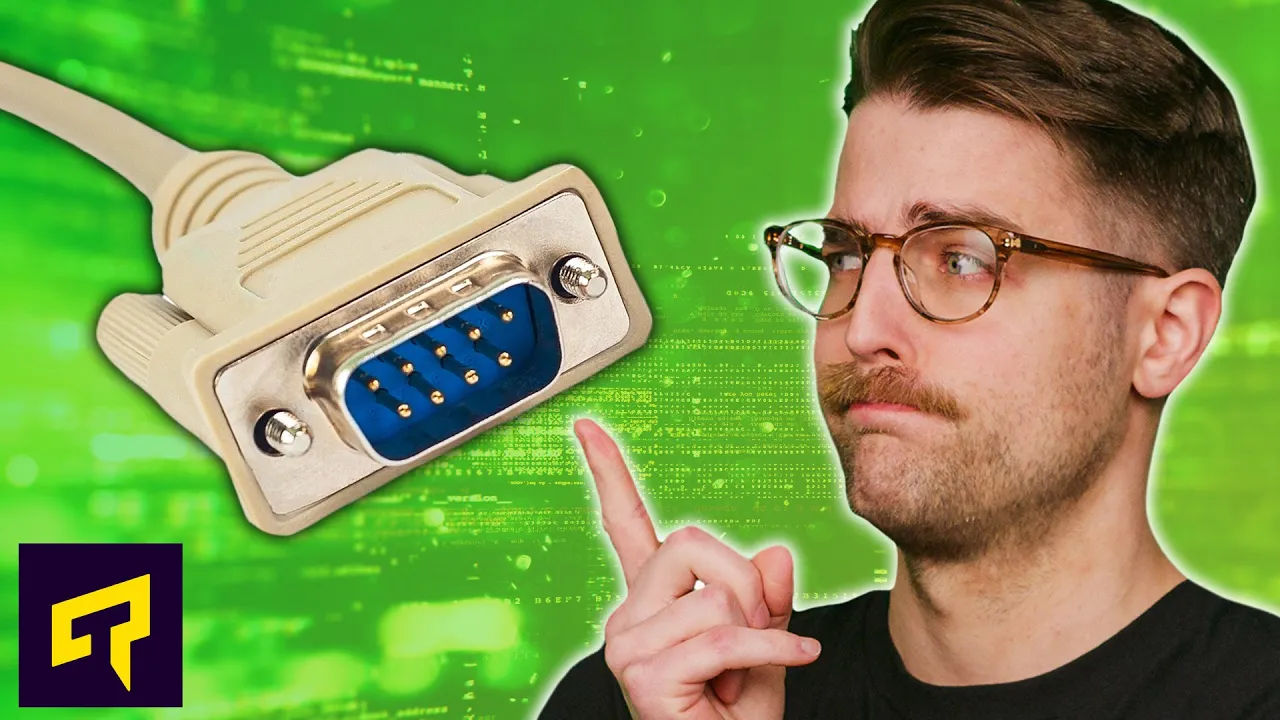
Serial Ports Are STILL Around!
0 up · 0 down · 0 ratings
Promos
Try FreshBooks free, for 30 days, no credit card required at freshbooks.com Learn about the history of the classic serial port and why it's still relevant today! Leave a reply with your requests for future episodes, or tweet them here: twitter.com ► GET MERCH: lttstore.com ► AFFILIATES, SPONSORS & REFERRALS: lmg.gg ► PODCAST GEAR: lmg.gg ► SUPPORT US ON FLOATPLANE: floatplane.com FOLLOW US ELSEWHERE --------------------------------------------------- Twitter: twitter.com Facebook: @LinusTech Instagram: @linustech TikTok: @linustech Twitch: twitch.tv
The video opens by contrasting USB’s rise with the long history of serial connections, explaining that true serial ports, notably the 9-pin RS-232 style, were common long before USB became popular in the late 1990s. It then recounts how these ports looked and why they were designed with screws to secure the connector and prevent bending under use, highlighting the era when multiple devices still relied on this legacy interface. The host details the speed limitations of early serial hardware, with some devices managing only around 75 bits per second and others reaching about 115 kilobits per second, a stark contrast to today’s typical home internet speeds. The narrative moves through typical uses of serial ports in their heyday: dial-up modems, data syncing with early personal assistants like the Palm Pilot, and power supply monitoring in uninterruptible power supplies, all underscoring the practical, low-bandwidth nature of the technology. The piece also touches on broader industrial and home automation contexts, where serial was used to interact with smart home devices and base stations, driving reliability and simplicity over speed. Finally, the host emphasizes that serial ports persisted into modern times in specialized equipment and certain industries because of their robustness and low cost, even as modern PCs no longer include native serial ports, underscoring why a technically outdated interface still has a living footprint in the tech landscape.
Topics · technology history · hardware · computing · industrial-tech · embedded-systems
Questions answered
- Why do some industries still rely on serial ports today?
- Serial ports remain in use because they are simple, reliable, and inexpensive, with well-understood signaling that works in harsh environments and with legacy equipment that has not been upgraded.
- What are common modern alternatives when serial is not available?
- USB-to-serial adapters are commonly used to bridge modern systems with legacy RS-232 devices, providing a practical path for compatibility without replacing entire infrastructures.