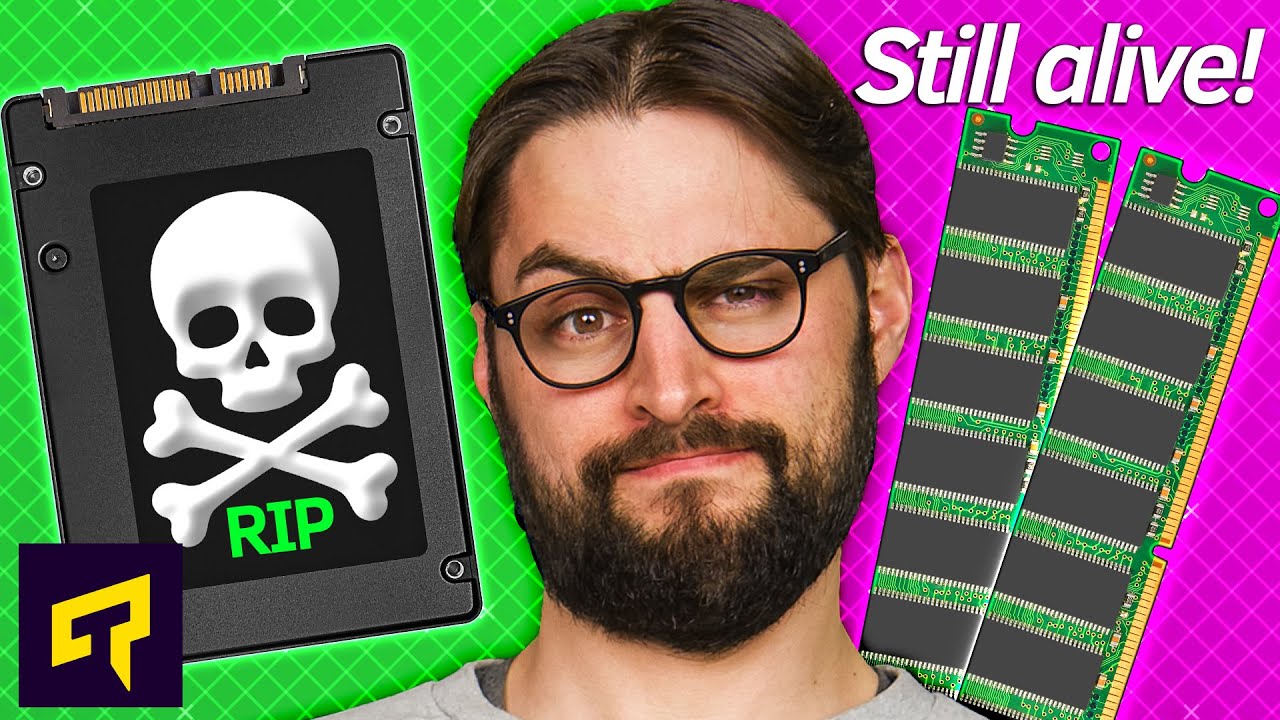
SSDs Die, RAM Doesn't. Why?
0 up · 0 down · 0 ratings
Promos
Get 50% off your Zoho CRM annual subscription with code ZCRM50 at: lmg.gg Why does the NAND flash inside SSDs wear out, but typical RAM doesn't suffer from this problem? Leave a reply with your requests for future episodes, or tweet them here: twitter.com ► GET MERCH: lttstore.com ► AFFILIATES, SPONSORS & REFERRALS: lmg.gg ► PODCAST GEAR: lmg.gg ► SUPPORT US ON FLOATPLANE: floatplane.com FOLLOW US ELSEWHERE --------------------------------------------------- Twitter: twitter.com Facebook: @LinusTech Instagram: @linustech TikTok: @linustech Twitch: twitch.tv
The video explains why SSDs degrade over time while RAM does not, by contrasting the underlying technologies used to store data. It walks through how SSDs use floating gate transistors with an insulating layer that electrons must pass through to flip a bit, and how this wear leads to eventual data loss if the transistor degrades. The host emphasizes that SSDs retain data without power due to trapped charges, but the insulating layer wears out with high voltage writes, eventually making the drive read-only as a safeguard. It then switches to RAM, noting that it uses capacitors instead of floating gate transistors, which must be constantly powered to hold charge, making RAM volatile and dependent on steady power. The explanation covers lifetime expectations, such as wear leveling in modern SSDs to spread writes, and why RAM typically ships with warranties longer than those for SSDs. The segment closes with practical takeaways about durability, usage patterns like overclocking, and the overarching idea that both technologies serve different roles with complementary reliability considerations. If you’re curious about how storage technologies impact everyday computing, this video clarifies the core mechanisms, debunks common misconceptions, and ties technical details to real-world outcomes such as data persistence after power loss and the transient nature of RAM during active use.
Topics · technology · hardware · storage · computing · science & tech
Questions answered
- Why do SSDs wear out while RAM does not, in simple terms?
- SSDs wear out because they store data by moving electrons through an insulating layer in floating gate transistors, which gradually damages the layer with writes. RAM uses capacitors that require constant power to hold a charge, so it does not rely on moving electrons through an insulating layer and is volatile when power is removed.