Why Are PC Video Game Ports So Bad?
0 up · 0 down · 0 ratings
Promos
Why do so many games struggle to make the transition from console to PC? Squarespace link: Visit squarespace.com and use offer code TECHQUICKIE to save 10% off your first order. Techquickie Merch Store: designbyhumans.com Techquickie Movie Poster: shop.crowdmade.com Follow: twitter.com Leave a reply with your requests for future episodes, or tweet them here: twitter.com
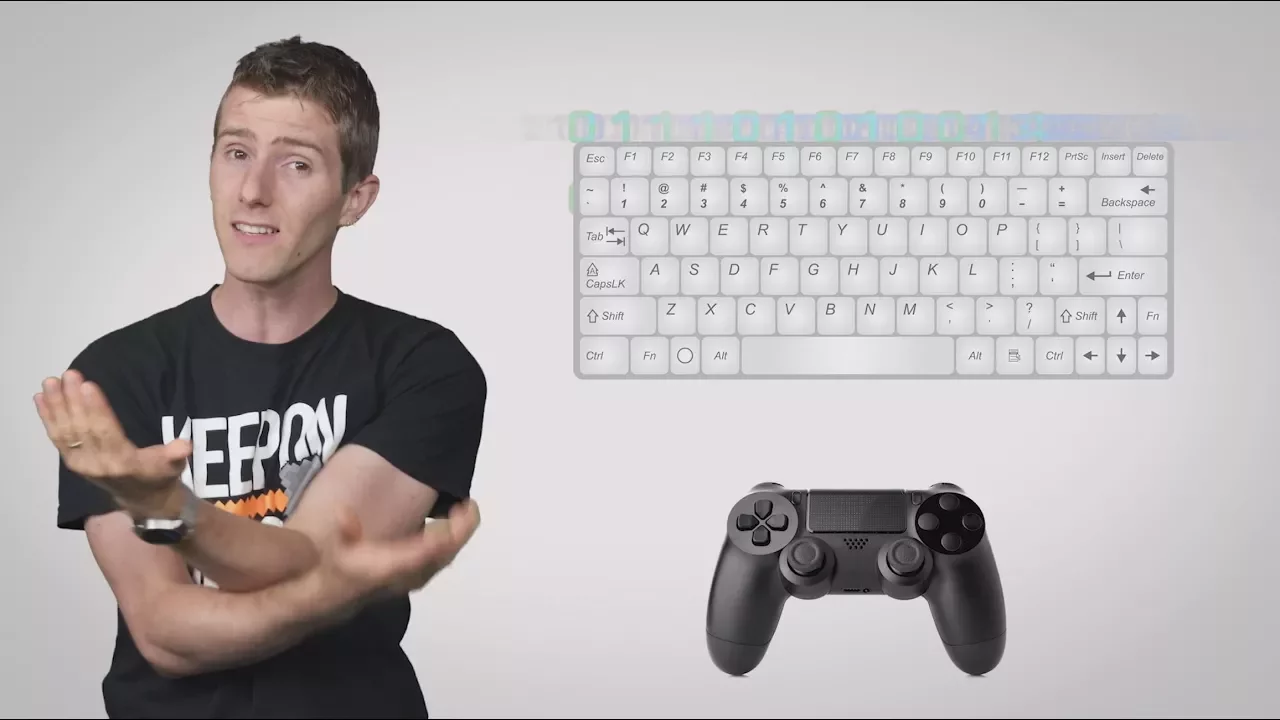
The video discusses why PC video game ports from console development often underperform when they arrive on PC hardware. The speaker highlights that consoles have relatively uniform, fixed hardware and a finite set of APIs, which makes optimization straightforward for the developers. In contrast, PCs present a vast array of configurations, drivers, and other software that can compete for resources, forcing ports to adapt to many possible environments. This adaptability requirement means that PC versions may suffer from wonky controls, reduced visuals, or even game-breaking bugs as developers work to bridge gaps between DirectX, x86 instruction sets, and desktop GPU drivers. The presenter notes that porting can add months to development cycles, raising costs that studios might prefer to spend on new games, DLC, or marketing. He also explains how PC ports often aim to match console visuals while also accommodating a keyboard and mouse mapping, which can involve substantial code changes. Looking ahead, the video mentions efforts like Microsoft's Universal Windows Platform to streamline porting from Xbox to PC, suggesting that architecture shifts could reduce some of the current friction, though the porting challenge remains for the time being. Overall, the message is that PC ports are technically feasible but labor-intensive, with varying results depending on the degree of alignment between console APIs and PC hardware. The discussion blends the realities of game development with practical consequences for players, including how porting complexity impacts performance, graphics fidelity, and control schemes. It also touches on the economics of game development, noting why studios might delay PC releases or limit graphical ambition to manage risk and cost. The host closes by acknowledging that while there are improvements on the horizon, the inherent diversity of PC configurations ensures that some ports will continue to lag behind their console counterparts for the time being.
Topics · technology · video games · software engineering
Questions answered
- Why do PC ports often perform worse than their console counterparts?
- PC ports must support a wide variety of hardware, drivers, and software configurations, unlike consoles which have fixed hardware and APIs. This diversity requires additional coding, testing, and sometimes thousands of file rewrites to work with different GPUs and DirectX implementations, which can lead to poorer performance or visual issues.
- What is being done to reduce the porting burden from consoles to PC?
- Efforts like Microsoft's Universal Windows Platform aim to make porting easier by standardizing APIs across devices, allowing some titles to run on desktop PCs without extensive rewrites. While this helps, porting remains time-consuming and costly for many games, especially those with ambitious graphics or unique console-specific features.