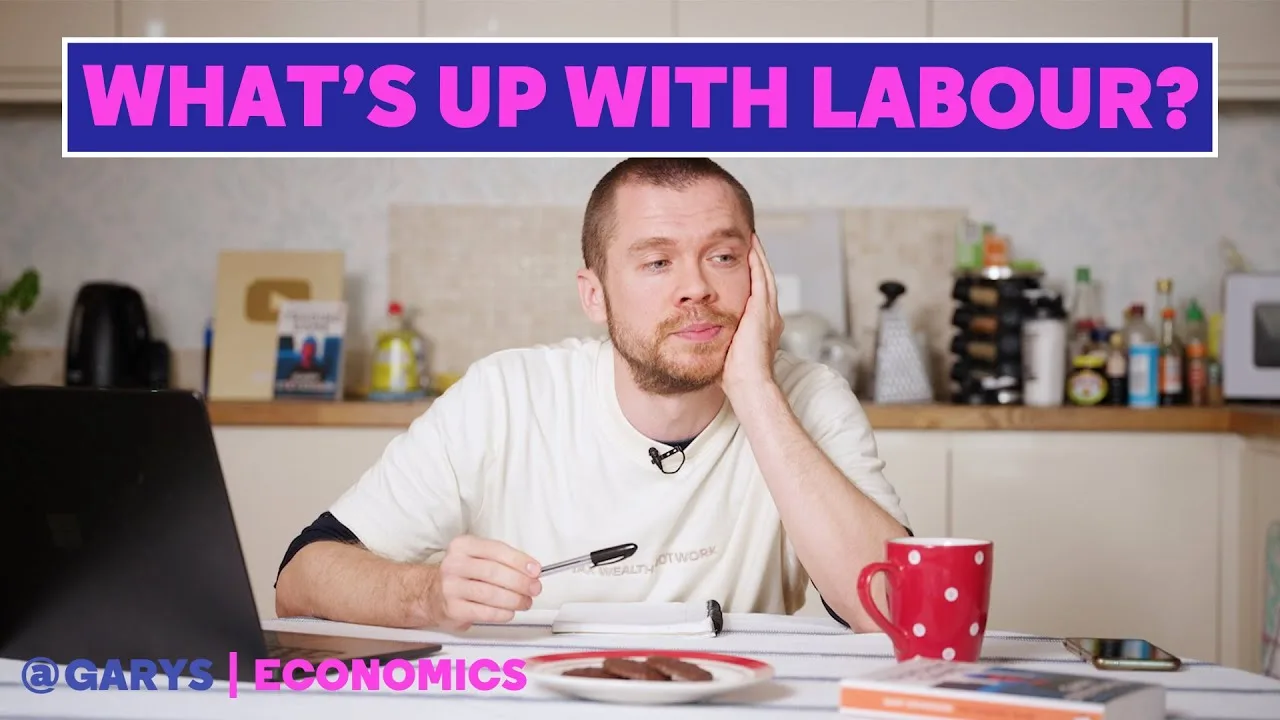
Are Labour Unlucky (or are they just rubbish)?
0 up · 0 down · 0 ratings
Description
Is the Labour government failing to change anything because of bad choices – or because the economic situation makes them powerless to act?
Promos
TAX WEALTH NOT WORK t-shirt available here: shop.garyseconomics.org –––––––– 00:00 Intro 01:13 Labour just unlucky? 04:22 Could they have fixed it? 06:50 Are they incompetent? 08:30 The centre is failing globally 11:14 They don’t understand economics 13:58 The real problem 18:00 Demand for change is unstoppable 19:20 Collapse of the Roman Empire 20:14 What new idea will win? 25:35 Fascism and poverty 26:15 What do you do? 28:18 My message to the intellectual class 30:23 What is really happening ––––––––––– MAKE A DONATION TO OUR CAMPAIGN – buy.stripe.com SUPPORT US ON PATREON – patreon.com JOIN GARY'S MAILING LIST – subscribepage.io GET THE TRADING GAME – penguin.co.uk ––––––––––– Follow Gary on other channels: LINKEDIN – linkedin.com SPOTIFY – open.spotify.com INSTAGRAM – @garyseconomics TIKTOK – @garyseconomics BLUESKY – bsky.app X – twitter.com FACEBOOK – @garyseconomics DISCORD – discord.gg WEBSITE – garyseconomics.org
The video opens by framing a central question about Labour’s unpopularity: is it a result of bad luck or of something deeper and systemic. The host argues that Labour are not merely unlucky but that their challenges reflect broader dynamics in wealth distribution and the way the political class as a whole has failed to account for inequality. He situates the discussion in a global context, noting that centrist parties on both sides have repeatedly overlooked wealth concentration and its impact on living standards. The narrative then delves into the claim that Covid era stimulus and policy significantly boosted wealth for the rich while ordinary households faced rising costs, a trend the speaker says was predictable and preventable with targeted taxation and structural reform. He asserts that Labour’s perceived missteps are part of a wider pattern across Western democracies, where elites have not properly diagnosed the root cause of economic malaise. Throughout, the presenter emphasizes that the underlying problem is not incompetence in one party but a failure to confront wealth inequality, which he argues drives declining living standards and eroding public services. He calls for a shift in economic thinking, urging ordinary people to demand policies that curb wealth concentration and protect the purchasing power and assets of everyday families. The discussion then broadens to critique the intellectual class and media for overlooking distributional issues, suggesting that this naivety has allowed the wealthiest to accumulate power while the middle and working classes bear the costs. The host uses historical analogies, including the fall of empires and the American founding principles, to illustrate how crises create space for new ideas and political realignment. He argues that the current moment represents a window of opportunity to reimagine economic policy around preventing wealth and power from concentrating in a small elite, with a future where new political movements could shape policy if they address inequality convincingly. The video teases a follow-up discussion on whether Labour can be saved, and ends with a direct appeal to the public and to elites alike to rethink the drivers of living standards and to push for systemic tax reform, redistribution, and a more inclusive economic framework.
Topics · politics · economics · education · public policy · wealth inequality
Questions answered
- What is the central claim about Labour's unpopularity in the video?
- The central claim is that Labour's unpopularity is not just bad luck but the result of a broader failure to address wealth inequality and its impact on living standards, a failure seen as part of a wider pattern across Western democracies.
- Why does the host compare current economic issues to historical events like the fall of empires?
- The host uses historical analogies to illustrate how crises create space for new ideas and political realignment when existing systems fail to address fundamental problems such as wealth concentration and its effects on society.
- What policy direction does the video advocate for to combat falling living standards?
- The video advocates for tackling wealth inequality through tax reform, distributing wealth more fairly, and building policies that prevent wealth from being monopolised by a small elite.
- What does the host say about the role of the intellectual class in economic outcomes?
- The host argues that the Western intellectual class has failed to recognize the root causes of falling living standards, particularly wealth distribution, and that this failure contributes to the persistence of inequality and poor policy choices.