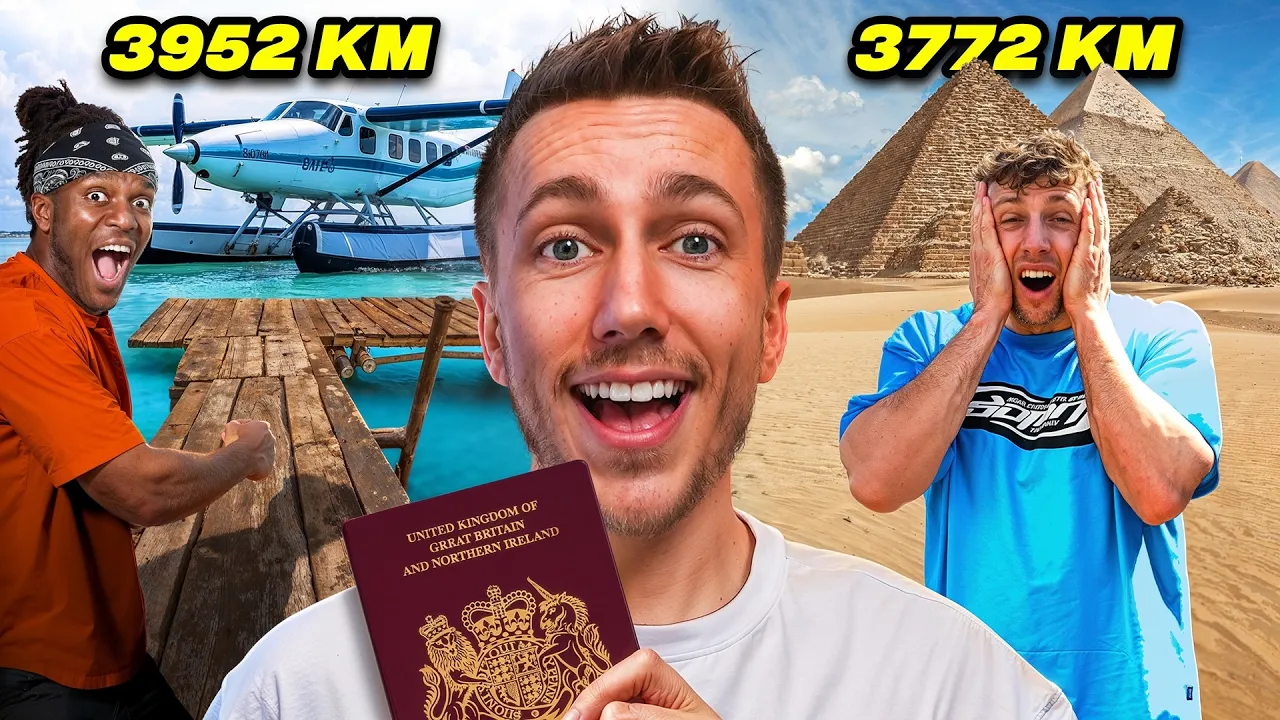
How Far Can You Travel in 24 Hours?
0 up · 0 down · 0 ratings
Description
Channels and socials
: Shop the New Drop at: sidemenclothing.com : Order food NOW at: eatsides.com : Access exclusive content at: sideplus.com : XIX Vodka: xixvodka.com : Hit Send: hit-send.com : Subscribe to our Reacts Channel: youtube.com Subscribe to our 2nd Channel: youtube.com : Sidemen Instagram: @Sidemen : Sidemen Twitter: twitter.com : SUBMIT A #SidemenSunday IDEA HERE forms.gle ----------------------------------------------------------------------------------------------------------------------- SIDEMEN JOSH (Zerkaa)
● @Zerkaa
● @KSI
How Far Can You Travel in 24 Hours? follows Sidemen as six friends split into three teams of two and race across the world using only money they earn from completing challenges. The opening introduces the rules: teams must travel as far as possible within 24 hours, constrained by 4000 pounds maximum before bonuses, and all earnings must come from the challenges themselves. The teams are Josh and Harry, Tobi and Ethan, and JJ and Vik, each receiving a randomized set of challenges that determines how they earn money. The host explains that the teams will be navigating a web of routes, aiming to maximize distance while staying within the constraints. Early on, the teams quickly realize the difficulty of moving large sums of money, and the competition shifts toward speed, strategy, and improvisation rather than sheer luck. The teams begin by evaluating travel options that minimize UK travel and maximize opportunities to earn extra funds through challenges. They discuss potential hubs like Dubai and Istanbul as engines to kick their journey into higher gear, while also weighing cheaper short hops that still keep the dream of distant destinations alive. Around the 5 minute mark the players start to implement their plan, placing bets on which tasks will yield the most cash and which routes will yield the greatest distance. They debate the pros and cons of expensive flights versus earning enough money to buy tickets later, and the tension rises as options get narrowed by logistics and time. The challenges themselves provide a rotating checklist that includes eating local dishes, visiting five countries, taking a ride on a yacht, and even a ballroom of quirky tasks like swapping shoes with strangers, shaking hands for a minute, or performing a TikTok dance on a plane. This creates a push-pull between fun, risk, and the practical need to reach an international hub before the 24-hour deadline. By the 10 minute window, the teams are actively collecting small wins to pad their totals. The scene shifts to London as they race to earn, swap, and barter for money with tasks like bogies in a public space, a long physical handshake with a stranger, and a frantic shopping run to acquire a souvenir to please Simon. They discuss the challenge budget and how each decision affects travel options, revealing the mental math and social dynamics behind the game. The members of each duo show their personalities: some are cautious about spending, others are bolder in taking risks for bigger rewards. As money climbs into the hundreds of pounds per team, the pressure mounts to convert that cash into international travel while avoiding costly holds or delays. Entering the 15-20 minute stretch, the teams juggle logistics and time, with conversations about transit hubs, flight costs, and whether to push toward East or West routes. The crew experiments with unconventional options such as riding an animal for distance, submerging up to the knees in water, and performing public stunts to trigger extra bonuses. The show also documents the camaraderie and banter that keeps morale high even as long hours and sore feet threaten to derail their plans. A recurring theme is the tension between wanting to go far and the constraints of money, time, and the logistics of crossing borders in a single day. Around 25 minutes in, the teams begin to consolidate profits and recalibrate strategies, often with rapid-fire planning in the control room. They discuss the possibility of a late-night flight from a hub like City Airport or Schiphol, and the prospect of using a long-haul leg to connect continents. The participants reflect on past choices and adjust goals based on the current cash pile, aiming to secure a viable path to international destinations while remaining mindful of the time left. The mood oscillates between exhilaration and anxiety as the clock ticks toward the 24-hour mark, with each team hoping to outpace the other two. From 30 minutes onward, the teams intensify their attempts to maximize distance, attempting more high-variance tasks such as buying a stadium-shirt abroad, arranging a yacht tour, or finding creative ways to generate funds from public interactions. The editing highlights key moments where a single decision changes the trajectory, such as realizing a cheaper but longer route exists or discovering a new city hub that unlocks additional flight options. The players continuously re-evaluate risk and reward, balancing bold gambits with the necessity of reaching a departure airport before the time runs out. Between 35 and 40 minutes, a running tally shows the teams acquiring more money through a mix of public challenges and clever social bets. Tension spikes when a plan to travel via a UK-based route collides with a hard constraint that forbids UK legs, forcing the group to pivot toward international connectors at short notice. The players exchange ideas on optimizing leg counts to maximize total distance while maintaining plausible travel times, all while managing daily realities like long lines, crowd reactions, and the fear of missing flights. The camaraderie remains a constant, even as fatigue sets in and the trio of duos pushes toward the final hours. In the final stretch, around the last few hours, the teams race to consolidate funds, book feasible international hops, and secure a last boost of distance. The dialogue focuses on immediate costs, last-minute bets, and the emotional weight of letting teammates down or pulling off a surprising sprint to the next hub. The camera captures tense moments, celebratory high-fives, and final countdowns as the 24-hour clock nears zero. The ending frames reveal the results and reflections on what it takes to push beyond comfort, the cost of ambition, and the joy of shared achievement among friends. Overall, the video blends travel ambition, social challenges, and strategic money-making under pressure. It showcases the Sidemen’s chemistry under stress, the thrill of rapid decision-making, and the delight of ridiculous yet entertaining tasks. The format rewards creative thinking, teamwork, and the willingness to take calculated risks, while also acknowledging the practical limits of travel logistics and budget management. Viewers are invited to enjoy the spectacle, cheer for their favorite pair, and think about how they might improvise when faced with a similar 24-hour travel challenge.
Topics · entertainment · travel · reality-show · challenge
Questions answered
- What is the basic premise of How Far Can You Travel in 24 Hours?
- Three teams of Sidemen duel to travel as far as possible in 24 hours, earning money by completing challenges, with a 4000 pound cap before bonuses.
- Which teams are competing in the challenge?
- Josh and Harry, Tobi and Ethan, and JJ and Vik.
- How are earnings used to influence travel options
- Earnings fund travel tickets and determine how far the teams can go, with strategic decisions balancing speed, routes, and costs.