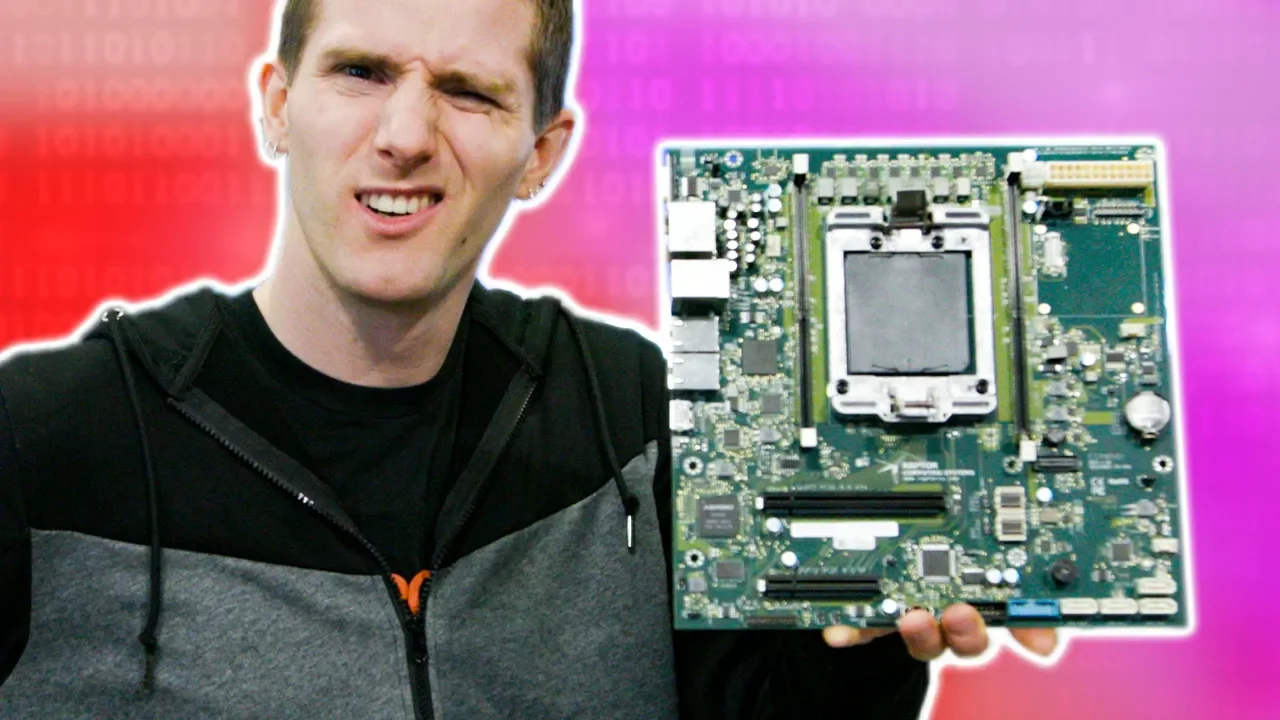
An Open Source Motherboard?!
0 up · 0 down · 0 ratings
Description
Thanks to IBM Systems for sponsoring our coverage at Think 2019! Check them out at ibm.co
Promos
Check out Raptor Computer Systems at lmg.gg OpenPOWER: openpowerfoundation.org Discuss on forum: linustechtips.com Linus Tech Tips merchandise at lttstore.com Linus Tech Tips posters at crowdmade.com Our Test Benches on Amazon: amazon.com Our production gear: geni.us Twitter - twitter.com Facebook - @LinusTech Instagram - @linustech Twitch - twitch.tv Intro Screen Music Credit: Title: Laszlo - Supernova Video Link: youtube.com iTunes Download Link: itunes.apple.com Artist Link: soundcloud.com Outro Screen Music Credit: Approaching Nirvana - Sugar High youtube.com
Paragraph 1: The video presents IBM Think 2019 coverage focused on an open source motherboard built around the IBM Power9 architecture. The host emphasizes that the hardware, including the motherboard itself, is open source in a way that is unusual for modern systems. He notes that the CPUs are Power9, which are used across a range of devices from storage appliances to supercomputers, and explains that the surrounding ecosystem enabled by the OpenPower Foundation lets multiple manufacturers offer open Power9 solutions rather than relying on IBM directly. The rig shown in the footage demonstrates a workstation-like motherboard with standard interfaces and PCIe Gen4 capabilities, highlighting that a fully open hardware stack extends to firmware and write-protectable BIOS chips. He also remarks that users can run common operating systems like Linux or FreeBSD on Power9, underscoring the practical, everyday usability of an open source hardware platform. The segment blends enthusiasm for openness with concrete details about form factors, expansion options, and the user experience of a non-x86 system. Paragraph 2: The host explains how openness accelerates performance and ecosystem development, mentioning OpenCAPI as a faster alternative to PCIe Gen4 and the potential to run multiple GPUs with full data coherency in multi-socket configurations. He connects these technical advantages to real-world workloads such as AI, where multi-GPU configurations and fast interconnects can significantly speed up computation. The video also frames the broader impact of open hardware on security and transparency, noting the absence of binary blobs and the ability to build components from source. He contextualizes the Power9 lineup in terms of target users, pointing out that these boards are primarily aimed at developers and researchers who want affordable access to test code at their desks, while acknowledging that consumer or professional use could emerge with the right software. The conclusion weaves together the themes of openness, performance, and future potential, and thanks IBM for sponsorship while inviting viewers to engage with the topic through related resources and community forums.
Topics · open source hardware · computer hardware · ai and machine learning · enterprise computing · high performance computing
Questions answered
- What makes the Power9 motherboard open source and why is that important?
- The motherboard and firmware are designed to be open and accessible, with schematics and firmware approaches available for review and modification, enabling developers to inspect, modify, and build from source rather than relying on vendor binaries.
- How does OpenPower improve performance for AI workloads?
- OpenPower supports high bandwidth interconnects like OpenCAPI, quad channel memory, and multi-GPU configurations with full data coherency, which reduces bottlenecks and accelerates data-intensive AI workloads.