What's the Best Platform for Transcoding Media? Find Out NOW!! Linus Tech Tips
0 up · 0 down · 0 ratings
Description
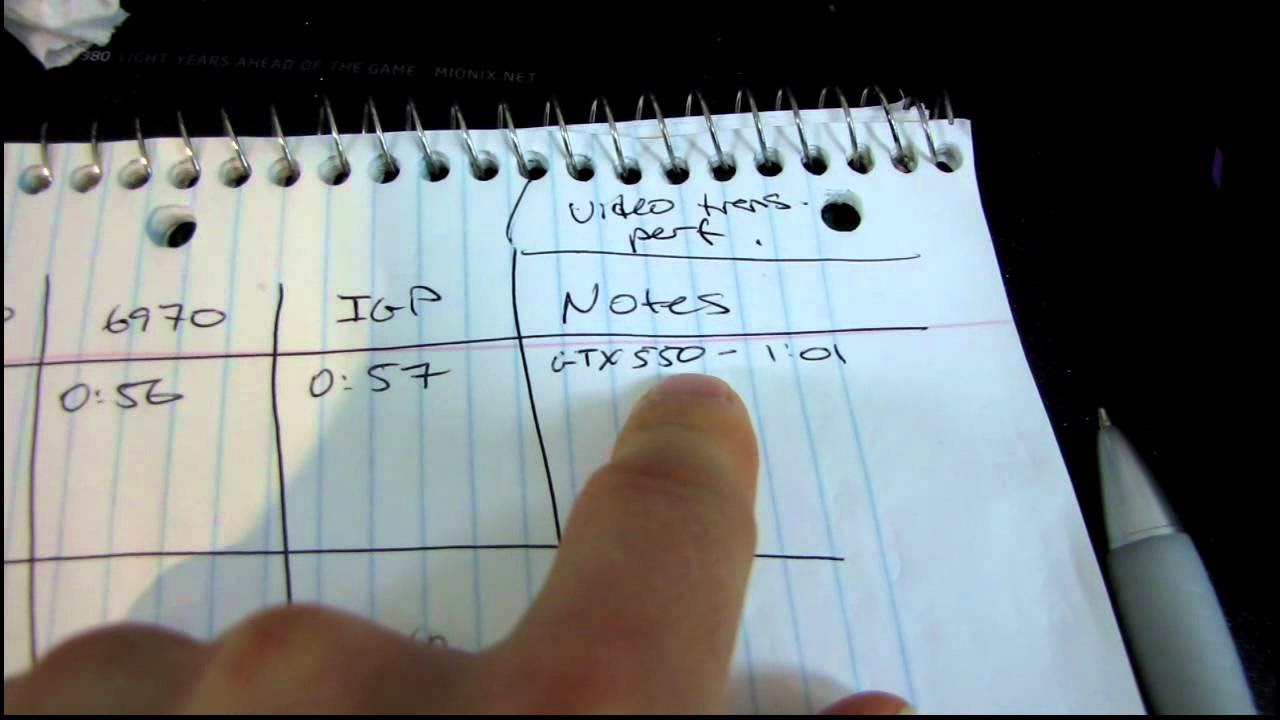
Third time's a charm. I have removed the random footage of my cat from the middle of the video this time... Benchmarks showing Intel Virtu (Sandy Bridge only) versus pretty much every other solution I could think of including using AMD and Intel CPUs and AMD and NVIDIA GPUs!
Linus Tech Tips investigates the effectiveness of different media transcoding platforms using a standardized test setup. The host tests three main CPU platform configurations: an Intel 1155 system with a quad‑core hyperthreaded processor, an AMD AM3 system with a six‑core CPU, and an AMD FM1 system with the newer APU, keeping memory, storage, and I/O constant across platforms. The testing workflow uses Media Converter 7 to transcode a 200 MB 3‑minute 1080p source to an iPad compatible format, comparing CPU only, GPU assisted, and onboard graphics acceleration options such as CUDA, OpenCL, DirectCompute, and Lucid Virtu on various hardware paths. Early results show the high‑end GTX 580 delivering strong performance on the 1155 platform with CUDA, while the CPU on its own lags behind, and onboard graphics varies in effectiveness depending on the platform and acceleration technology. As the testing expands to larger files and different codecs, Linus reveals that some accelerations like Quick Sync on Intel can dramatically outperform CPU or lower tier GPUs, while others require sufficient CPU power to feed the GPU for maximum throughput. The video highlights the nuanced tradeoffs between using discrete GPUs, onboard graphics, and CPU power, and emphasizes that software support for hardware acceleration is not universal, meaning users must balance platform choice with the software they intend to use. In the end, the host presents concrete benchmarks across all tested configurations, noting that for certain chipsets and accelerators the Iris Pro style or embedded solutions can be competitive, while others require more expensive setups to achieve similar speeds. The conclusion reinforces that transcoding performance is highly dependent on the combination of CPU, GPU, and software support, and viewers should consider both hardware capabilities and application compatibility when choosing a transcoding platform.
Topics · technology · video_encoding · hardware_benchmarking
Questions answered
- What hardware setups were compared in the transcoding benchmark?
- The video compares an Intel 1155 system with a 2600K, an AMD AM3 system with a six‑core 1100T, and an AMD FM1 system with an APU, each tested with CPU only, GTX 580, Radeon 6970, and an onboard/accelerated path like Lucid Virtu.
- Which transcoding acceleration method performed best on the 1155 platform for some files?
- Intel Quick Sync and CUDA on the GTX 580 provided strong results, with Quick Sync sometimes outperforming other methods depending on the file size and codec.