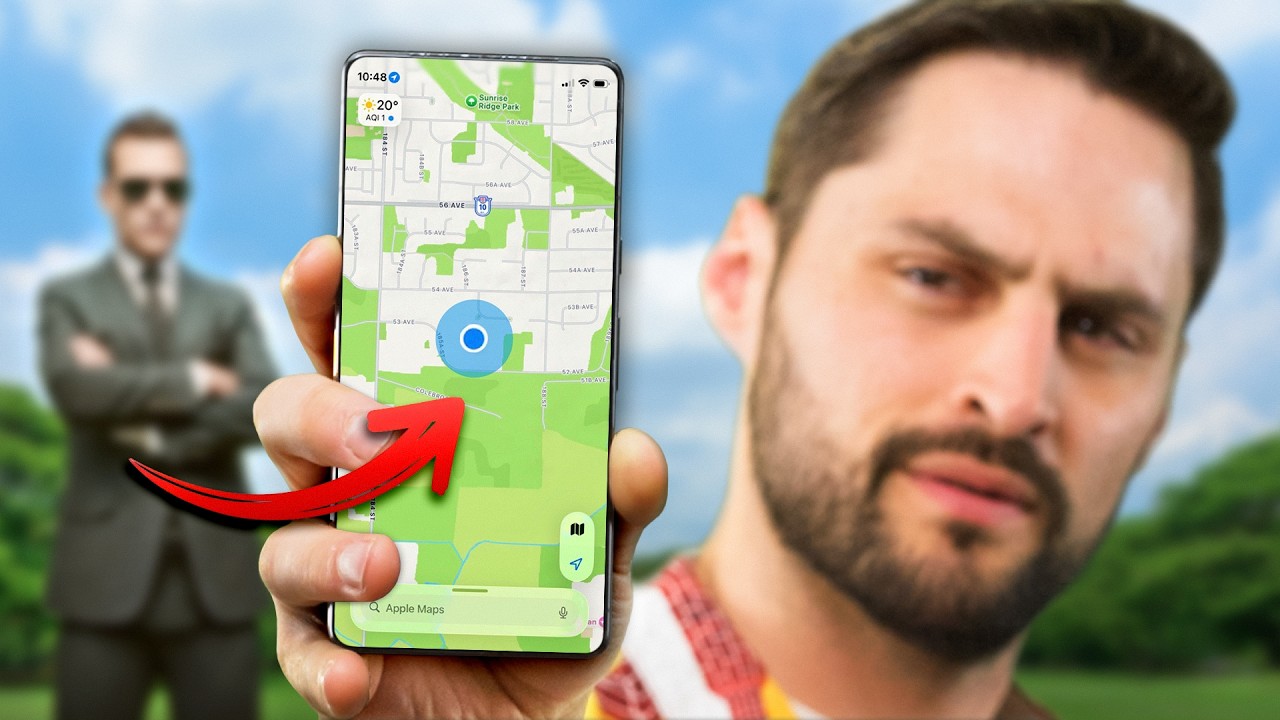
How companies use your phone’s location data
0 up · 0 down · 0 ratings
Description
Thanks to Micro Center for sponsoring this video!
Check out Micro Center's Apple Savings Event: micro.center - Sign up for a FREE 128 gig Flash Drive at Micro Center Austin, TX: micro.center - Sign up for a FREE 128 gig Flash Drive at Micro Center Columbus, OH: micro.center Visit Micro Center News: micro.center Your phone is the best tool in your pocket for most things, but if you're privacy-minded, it might be working against you. This video explains how phone tracking works, and what you can do to try and control it. Special thanks to Serge Egelman for helping us out with this one. icsi.berkeley.edu Leave a reply with your requests for future episodes. ► SHOP OUR PRODUCTS: lttstore.com ► GET A VPN: piavpn.com ► GET EXCLUSIVE CONTENT ON FLOATPLANE: lmg.gg ► SPONSORS, AFFILIATES, AND PARTNERS: lmg.gg Chapters ----------------------------- 0:00 Your phone's location might not be private 0:29 How do phones even know my location 2:34 Sponsor 3:10 How do companies get your data 4:30 What they do with your data 6:20 Watch another video
The video explains in accessible terms how your phone determines location and why those data points are valuable to advertisers, brokers, and even financial firms. It starts by outlining the two levels of location precision on iOS and Android,approximate and precise,and describes how signals from GPS, Wi-Fi, cell towers, and Bluetooth beacons combine to reveal an individual’s movements. It then walks through the typical user prompt when an app asks for location access, highlighting the common options and noting that background, always-on tracking is not part of the initial prompt but can be enabled in deeper settings. The host connects these permissions to real-world consequences, showing how ride-share apps or family locator services can continuously ping a device, gathering coordinates, altitude, speed, and heading in ways that go far beyond a one-time use. The discussion then shifts to how data moves from a seemingly harmless weather or flashlight app into the hands of unknown brokers, and how firms pay developers to bake tracking into apps, creating detailed profiles of where people live, work, shop, and seek medical care. The central discussion centers on who buys this data and what they do with it. Industry players such as data brokers and brokers like InMarket, Foursquare, and Outlogic are named, with explanations of how profiles are packaged and sold to advertisers, insurers, and even government agencies. The video cites examples of money trails, including influence from hedge funds seeking foot traffic metrics ahead of earnings reports, illustrating how location data can reveal consumer behavior and economic signals. The host interviews Serge Egelman from Berkeley’s usable security group, who clarifies the economics of data monetization and potential non-advertising revenue streams for developers. The segment concludes with practical steps viewers can take to reduce exposure, such as auditing location permissions and selecting “no ongoing access” or “don’t allow” where appropriate, while acknowledging that a large portion of data has already been bought and sold. The host also mentions GrapheneOS as an extreme privacy option and points to further resources for deeper privacy exploration, encouraging proactive privacy management rather than relying on regulators alone.
Topics · privacy · technology · data-security · regulation · consumer-rights
Questions answered
- What are the two levels of location granularity on mobile devices, and how do they differ?
- Approximate location provides a coarse area (about 2 to 10 km on iOS, around 3 square km on Android), while precise location pinpoints your actual spot using multiple signals like GPS, Wi-Fi, cell towers, and Bluetooth. Precise access can be restricted or granted with different prompts to limit ongoing background tracking.
- How do data brokers obtain and use location data from apps?
- Developers embed tracking into apps, often with the consent prompt allowing location access. Brokers purchase or compile this data to create profiles showing where people live, work, shop, and seek medical care, and then sell those profiles to advertisers, insurers, and government agencies.