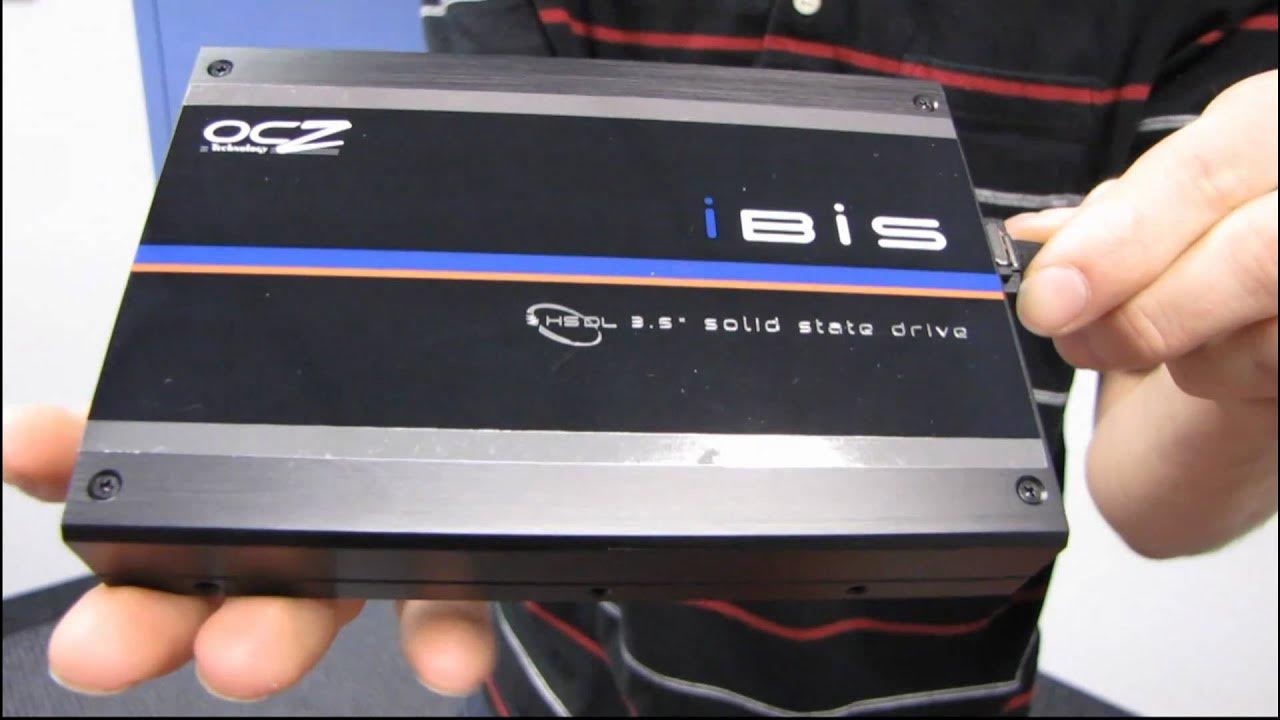
OCZ IBIS & HSDL Extreme Performance SSD Unboxing & First Look Linus Tech Tips
0 up · 0 down · 0 ratings
Description
ncix.com Finally having a look at this bad boy. Yes, it's 3.5" of solid SSD goodness. This beast of an SSD achieves its performance by bypassing the SATA interface entirely.
OCZ IBIS & HSDL Extreme Performance SSD Unboxing & First Look Linus Tech Tips presents Linus discovering a cutting edge SSD storage solution that bypasses traditional SATA bottlenecks. The host explains the evolution of SSDs, from early drives with modest performance to high end solutions leveraging new controllers and faster interfaces. He introduces the OCZ IBIS HSDL setup, detailing how four SandForce controllers can be connected through a high speed data link, pushing beyond SATA limits by using PCI Express as the main conduit. The unboxing sequence reveals the components involved, including the IBIS card, a high speed data link cable, and the PCIe-based controller that aggregates performance. Throughout the video, Linus emphasizes the potential and the wow factor of combining multiple controllers for extreme throughput, while acknowledging the novelty and the era of the technology. The discussion also covers practical aspects like form factor, power, and the physical interface, concluding with on-camera specs highlights and a plug for future follow ups. Overall, the video positions the IBIS as a disruptive approach to storage performance that challenges conventional SATA boundaries and hints at the direction of SSD evolution. The presenter frames the technology within a narrative of rapid SSD advancement, highlighting historical milestones such as early SSDs, Intel x25 series, Barefoot controllers, and the move to SATA 6 Gbit/s. He then explains how HS DL (high speed data link) can connect multiple SandForce controllers to deliver unprecedented throughput, essentially multiplying drive performance by aggregating multiple controllers. The unboxing is complemented by a hardware overview: standard 3.5 inch form factor, an HS DL card, and a sleeve cable assembly, with emphasis on how the IBIS device operates as an onboard RAID-like solution rather than a single drive. He demonstrates the setup steps, describes PCIe 4X compatibility, and outlines practical installation scenarios within a motherboard, including the possibility to install on x8 or x16 slots for maximum bandwidth. The video closes with a quick spec recap , reads up to 740 MB/s, writes up to 690 MB/s, and up to 100,000 random 4K IOPS , underscoring the ambition of this approach and inviting viewers to anticipate real-world testing and benchmarks in future coverage.
Topics · storage · hardware · technology · pcie · ssd · review · unboxing · computing
Questions answered
- What is the OCZ IBIS HS DL solution and how does it bypass SATA bottlenecks?
- OCZ IBIS HS DL uses a PCI Express 4X interface to connect multiple SandForce controllers via a high speed data link, aggregating their performance to deliver significantly higher throughput than SATA alone, effectively bypassing the SATA bottleneck.
- What are the claimed performance specs for the IBIS HS DL setup?
- The setup reportedly achieves reads up to 740 MB/s, writes up to 690 MB/s, and up to 100,000 4K random IOPS, leveraging four SandForce controllers connected through HS DL.