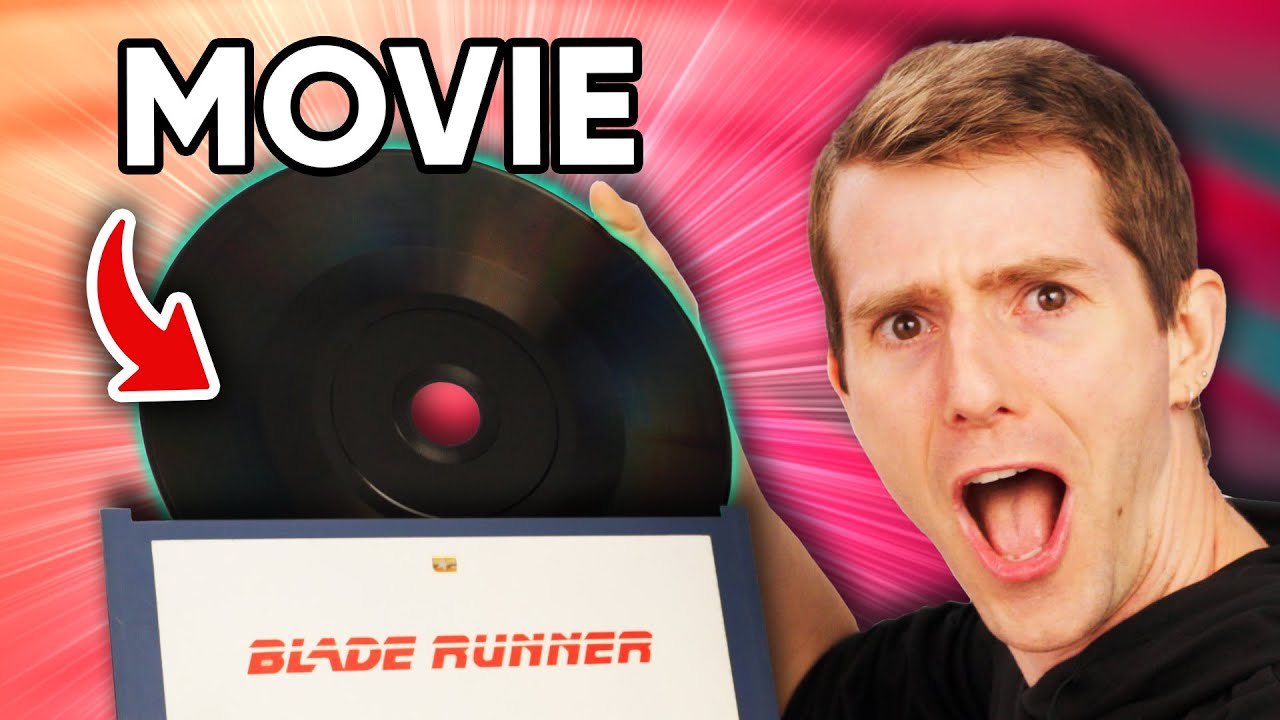
We Bought MOVIES on VINYL RECORDS and They’re AMAZING - SelectaVision CED VideoDisc
0 up · 0 down · 0 ratings
Promos
Get a free 15-day trial of Odoo’s all-in-one business solution and see how it can make your life easier! Check it out at odoo.com What happens when you double down on a product instead of giving up when your competitors beat you to market? You get RCA’s VideoDisc player! That’s right, movies on vinyl discs, what could go wrong? Discuss on the forum: linustechtips.com More Info CEDMagic: cedmagic.com Technology Connections: youtube.com Techmoan: youtube.com ► GET OUR MERCH: lttstore.com ► GET EXCLUSIVE CONTENT ON FLOATPLANE: lmg.gg ► GET A VPN: piavpn.com ► SPONSORS, AFFILIATES, AND PARTNERS: lmg.gg Purchases made through some store links may provide some compensation to Linus Media Group. CHAPTERS --------------------------------------------------- 0:00 Intro 1:29 Loading the player 2:45 Bit o' History 2:35 First Impressions 6:35 Why It Failed 9:22 How It Works 11:33 Conclusion 14:08 Outro
The video introduces RCA's CED VideoDisc, a vintage home video format that attempted to bring feature films to households on a vinyl-like disc. The host contrasts it with VHS, noting the novelty and physical tangibility of loading and handling a large disc, while highlighting the technical oddities of the CED system, such as its titanium stylus and mutual capacitance data reading. A brief history traces RCA's decades-long effort beginning in the 1960s, the format’s limited catalog, and the eventual market failure against VHS and LaserDisc. The host discusses the practical drawbacks, including limited runtime per side, disc wear leading to skipping, and the need to repeatedly flip discs, while acknowledging the impressive feat of achieving video data density in such a small, rigid surface. Throughout, the presentation balances nostalgia with a critical assessment of why the format did not endure, offering a clear picture of the tradeoffs between fidelity, convenience, and cost. The middle section delves into the technical comparison between CED and VHS, focusing on picture quality, fringing, and noise. The host demonstrates the problems with older copies and worn hardware, explaining that fringing on VHS is more pronounced, while CED’s data density and micro-groove structure push the limits of the medium. He explains how CED stores video information via capacitance between the stylus and a titanium electrode, and how the disc’s unusually high data density required extremely precise tracking. The discussion also covers the format’s early promise of lower cost and the competitive landscape of the time, emphasizing how timing, catalog size, and playback reliability shaped consumer adoption. The segment closes with a recognition that while the technology was ahead of its era, real-world usage revealed fundamental drawbacks that ultimately doomed the format. In the final stretch, the video reflects on the cultural and historical significance of CED as an innovative, albeit unsuccessful, attempt to modernize home entertainment. The host compares the format’s launch timeline with VHS and LaserDisc, noting the late arrival and insufficient market impact despite strong engineering ambitions. He summarizes the lessons learned from CED’s story, including the importance of timing, catalog breadth, and user experience in technology adoption. The host teases future explorations of other competing formats, setting up a broader cross-format showdown and inviting viewers to dive into related content from Techmoan and Technology Connections. The closing remarks leave viewers with an appreciation for what the CED era represented, even as newer technologies ultimately prevailed over it.
Topics · Technology · Vintage technology · Home entertainment · Media formats
Questions answered
- What was RCA's goal with the VideoDisc technology and how did it compare to VHS at launch?
- RCA aimed to bring movies into homes on a durable, vinyl-like disc, but the format faced limitations in runtime per side, reliability, and catalog size, which made it less practical compared to VHS, leading to its market failure.
- How does CED store video data differently from traditional vinyl records?
- CED uses a titanium stylus and mutual capacitance to read data from the distance between the disc and a titanium electrode, with data density far higher than standard vinyl grooves.
- Why did CED ultimately fail in the market despite its technical achievements?
- CED launched late, had a small catalog, limited runtime per side, and reliability issues such as skips, making it less convenient than VHS and LaserDisc for consumers.