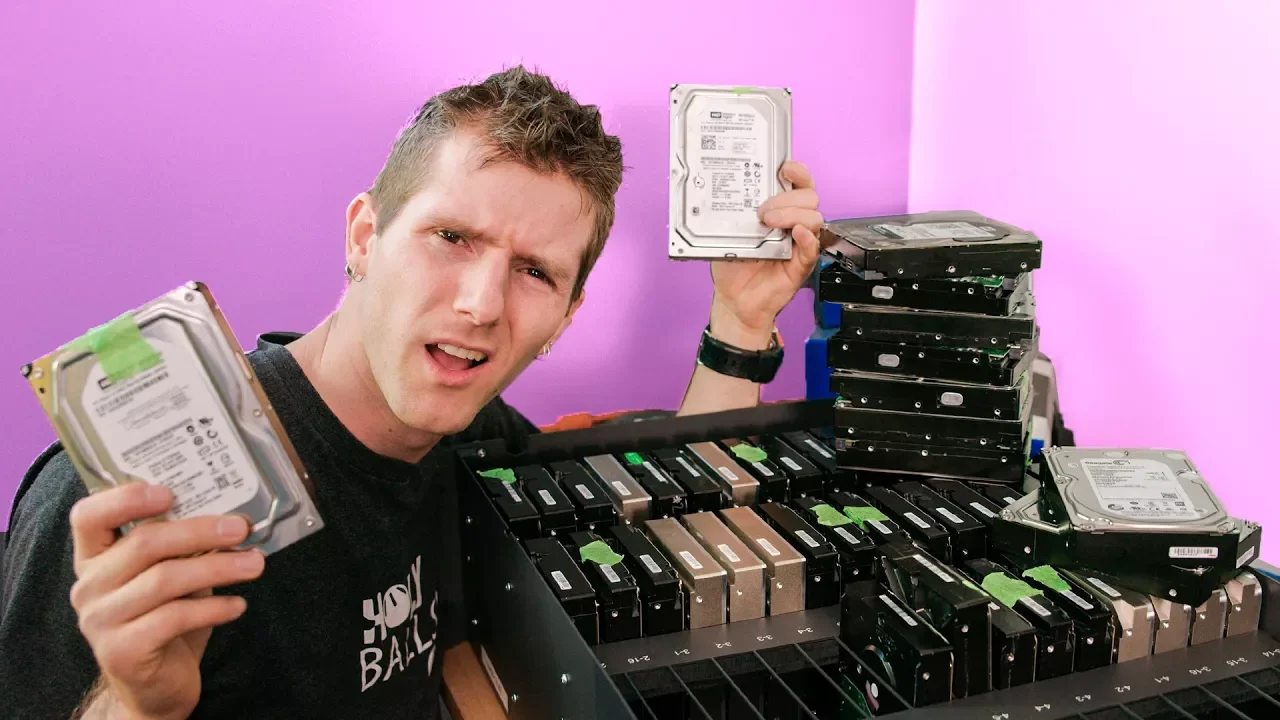
HARD DRIVE Mining? This is getting ridiculous...
0 up · 0 down · 0 ratings
Promos
Hard drive mining... could this be the solution to the GPU crisis?... For your unrestricted 30 days free trial, go to freshbooks.com and enter in “Linus Tech Tips” in the how you heard about us section. Get iFixit's Pro Tech Toolkit now for only $59.95 USD at ifixit.com Buy HDDs on Amazon: geni.us Discuss on the forum: linustechtips.com Our Affiliates, Referral Programs, and Sponsors: linustechtips.com Linus Tech Tips merchandise at designbyhumans.com Linus Tech Tips posters at crowdmade.com Our production gear: geni.us Get LTX 2018 tickets at ltxexpo.com Twitter - twitter.com Facebook - @LinusTech Instagram - @linustech Twitch - twitch.tv Intro Screen Music Credit: Title: Laszlo - Supernova Video Link: youtube.com iTunes Download Link: itunes.apple.com Artist Link: soundcloud.com Outro Screen Music Credit: Approaching Nirvana - Sugar High youtube.com Sound effects provided by freesfx.co.uk
The video opens with Linus introducing a side project inspired by a forum post about mining Burst Coin using spare hard drive capacity instead of traditional CPU, GPU, or ASIC power. He discusses the initial setup idea, weighing the benefits of using enterprise drives for reliability against Burst Coin mining benefits, and the importance of cooling to prolong drive life. The host then decides to repurpose a spare Storinator with ample backplane space and a new extended ATX motherboard to create a more scalable mining station. He highlights practical considerations such as avoiding unnecessary wear from sleep features, ensuring adequate cooling, and the value of a capable plotting workflow that precursors the mining process. The segment also covers the step of transplanting drives into the upgraded chassis and evaluating whether the effort pays off in real-world ROI given current Burst Coin pricing and storage volume. In the closing, Linus presents measured ROI results, showing that after months of storage at roughly 150 terabytes, about 4,000 Burst Coin were mined, equating to around a few dollars per burst at the time and roughly $100 of Burst Coin per month given their capacity. He then frames the larger takeaway: for someone with spare drives, Burst Coin mining can be a curiosity or a learning exercise, but it is not a reliable path to meaningful income compared to running a cloud storage service or other storage-focused ventures. The video ends with practical purchase links, sponsorship mentions, and an invitation to the community to discuss further while acknowledging the project was more of a rabbit hole than a simple afternoon side quest. Overall, the host emphasizes learning, experimentation, and cautious ROI evaluation before investing heavily in large-scale mining hardware.
Topics · technology · science · cryptocurrency · hardware
Questions answered
- What is Burst Coin mining and how does it differ from traditional crypto mining?
- Burst Coin mining uses spare storage space to mine rather than computational power from CPU, GPU, or ASICs, making the process more storage-centric and less energy-intensive per unit of activity.
- Is it financially viable to mine Burst Coin with a large hard drive setup?
- According to the video, after several months and about 150 terabytes of storage, roughly 4,000 Burst Coin were mined, which translated to around $100 per month at the time; given Burst Coin prices and electricity costs, it is generally not a reliable ROI compared with other storage or cloud offerings.
- What hardware configurations did Linus experiment with for plotting and mining?
- He used a Storinator XL60 with an extended ATX dual socket motherboard, multiple SAS NICs, a substantial amount of RAM, and an array of drives connected via backplanes to enable plotting and mining.