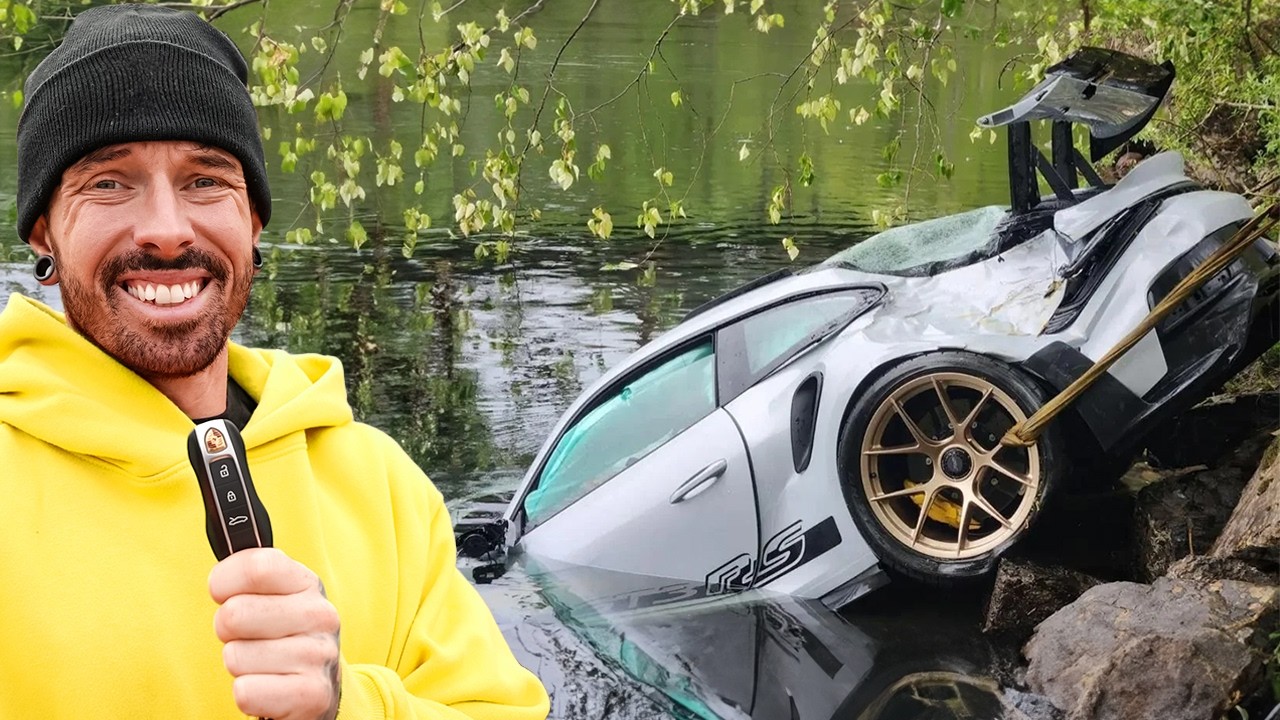
I REBUILT A PORSCHE 911 GT3RS THAT WENT SWIMMING
0 up · 0 down · 0 ratings
Description
Whatsapp WheelMania for Alloy or Alloy repairs
Promos
Check if your car was damaged with Car Vertical - 20% off here - carvertical.com I bought a wrecked 2024 911 992 Porsche GT3RS that had been fully submerged underwater & for the past 4 months ive been rebuilding it to make it one of a kind. Now i wanted to finish the car for good, but as always theres some problems we run into when trying to finish the Porsche.
ALL NEW HWBT MERCHANDISE
ALL MA MERCHANDISE
Channels and socials
wa.me Thanks to @autotrimsystems for the amazing custom interior THANKS VALVETRONIC FOR THE CRAZY EXHAUST valvetronic.com
FOR MORE CONTENT
CHECK OUT MY SECOND CHANNEL
Follow Me Here Aswell
Notes
I rebuilt a Porsche 911 GT3 RS that was fully submerged, taking viewers through an epic, real world restoration that spans teardown, chassis fabrication, interior retrim, and finally a start up of the rebuilt machine. The narrative follows a deliberate, methodical process where every component is inspected, replaced, or reconditioned to restore structural integrity after flood damage. The host explains the challenges of sourcing parts, including the carbon fiber roof, rear subframe, and carbon fiber doors, while also detailing the decisions around preservation versus replacement to maintain the car’s character. The work is split across several major phases: engine installation and coolant fill, suspension reassembly and alignment, interior retrim and wiring rework, and exterior assembly including a bespoke GT3 RS carbon roof and roll cage. The video highlights both the technical learning curve and the emotional satisfaction of turning a wreck into something that can be driven again. A recurring theme is risk management, such as ensuring waterproof seals on electronics, validating headlight modules, and confirming the gearbox tolerances with the experts at es Motors. The host emphasizes the value of hands-on, father-son collaboration, showing how teamwork accelerates problem solving under tight timeline pressures. The car’s transformation is showcased with a focus on aesthetics as well as performance, with a blue and white interior, carbon accents, and a lightweight window treatment that preserves visibility into the hypercar’s detailing. In a culminating moment, the team tests systems like the braking, cooling, and ECU tuning, and the video often pauses to reflect on the potential final sound and performance. Throughout, the host narrates practical learnings, like how to seal a roof frame to a windscreeen, how a GT3 RS’s front radiator placement affects weight distribution, and how the final touch pieces,airbags, seat belts, and the roll cage,finish the build. The pacing is brisk yet thorough, ensuring viewers gain insight into both the craft and the patience required for high-end car restoration. The video ends on a high note with the car nearing completion, a sense of achievement, and an invitation to see the finished machine in action in future installments. The overall message is clear: dedication and a clear plan can revive even a disaster recovery project into a high-performance machine that’s as striking as it is functional. This is not just about rebuilding a car, it’s about storytelling through hands-on engineering and the persistence required to see a complex restoration to fruition.
Topics · Automotive Restoration · Car Enthusiast Channel · Sports Cars · Porsche · Vehicle Rebuild · DIY Car Repair
Questions answered
- What was the first major hurdle after submersion, and how was it addressed?
- The first major hurdle was getting the engine running after flood damage. The builders replaced and reassembled critical components, including the engine, drivetrain, and cooling system, and then proceeded to reconnect electricals and the dashboard to bring the GT3 RS back to life.
- Why was the carbon roof a point of contention, and how was it resolved?
- The carbon roof had a hole for an aerial that was not standard on all GT3 RS roofs. Porsche could not take the roof back for repairs, so the team chose a workaround by filling the hole with a carbon component solution, enabling proper sealing and fit without a new roof.
- What role does the roll cage play in this build?
- The roll cage provides essential structural rigidity and safety, especially for a track-oriented build like the GT3 RS. The team added a full carbon cage which integrates with the new interior and harnesses for a complete, race-inspired setup.
- What was the outcome of testing the gearbox and ECU together?
- After updating the ECU to reflect the American engine setup, es Motors guided the process to ensure the gearbox would operate correctly. The initial test indicated potential gear engagement, but issues such as oil levels and air locks required further adjustments.
- How did the team handle the interior retrim and electronics after submersion?
- The interior was retrimmed with a blue and white theme, airbags replaced or reconditioned, and the loom wiring replaced where heat damage occurred. Functional elements like seat belts, door cards, and switches were integrated, with careful attention to airbag safety procedures during reconnection.
- What makes the car visually distinct after the rebuild?
- The GT3 RS features a blue and carbon aesthetic with a full carbon fiber doors, a carbon roof, a blue stitched interior, and a distinctive carbon cage. The no-tint rear windows emphasize the interior detailing and the craftsmanship.
- How did the team approach parts sourcing for an already submerged car?
- Parts were sourced from various channels, including salvage yards and second-hand components, often refurbished or modified to fit. The team prioritized maintaining original character while ensuring safety and performance integrity.
- What was the most expensive component or fix encountered during the rebuild?
- High-cost components included carbon parts and the specialized exhaust system, with some elements like the carbon fiber doors and roof being particularly valuable. The project balanced cost with the goal of achieving a credible, high-performance result.