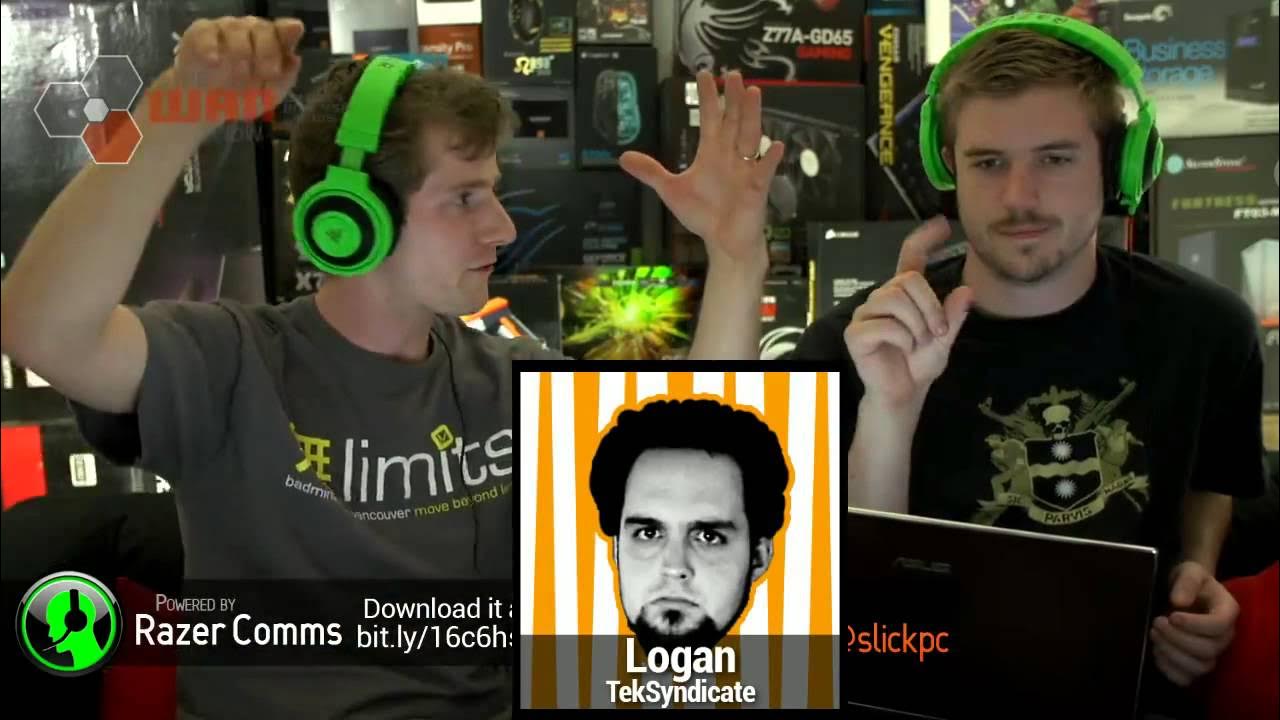
The WAN Show : 4960X Preview, Google Glass Hacked, and Guest LOGAN - July 19, 2013
0 up · 0 down · 0 ratings
Channels and socials
After Party! youtube.com Razer Comms! bit.ly/16c6hso Logan's Channel: youtube.com Topics Document: linustechtips.com 2:56 Google glass got L337zor H4Xored 12:47 Moto x will be listening to all of your commands 23:00 Logan joins us! 23:43 Snowden has an instruction manual for how the NSA operates 30:32 HBO asks google to remove a link to VLC (DMCA Takedown) 33:08 Politics 37:48 i7-4960X preview! 46:00 Adobe flash player shoving extra unwanted software in your face 55:06 League of Legends is now an official sport in the US 1:00:00 Oculus Rift Will NOT be availiable on next gen consoles 1:03:55 Microsft is down 11.4% in shares today... 1:11:45 Apple blocks off 300Million potential customers 1:21:50 Internet anonymity 1:26:49 HTC One Mini 1:32:50 Silverstone AIO liquid cooler review 1:38:28 Samsung 840 EVO drive 1:40:10 Format changes to the WAN show 1:42:50 Thunderbolt vs USB 1:49:30 Elon Musk's Hyperloop 1:55:40 Build logs of the week!
The WAN Show episode dated July 19, 2013 covers a wide range of technology topics, starting with a personal incident involving the host rescuing a friend and managing a traffic situation, which leads into a discussion of the show’s usual format and tone. The crew announces the topics for the day, including Google's Glass hack, the always-on listening feature of the Moto X, and a quick look at Intel’s Thunderbolt flash drive prototype, plus industry financials from AMD and other tech hardware chatter. The first major topic centers on Google Glass being hacked to enable facial recognition, highlighting the privacy and security implications of wearable devices and the potential for exploits through QR codes and other methods. The hosts debate the privacy implications, the open security angle, and Google’s reactive stance, contrasting it with broader questions about personal data, surveillance, and the evolving landscape of wearable tech. As the discussion broadens, they examine the balance between innovation and privacy, considering how a user base that is more informed about security could push for better protections, while recognizing the risks of exposing sensitive information through always-on devices. The dialogue then shifts to the Moto X leak showing an always-on listening feature, and they compare this device’s approach with Google Glass and Microsoft’s Connect, exploring user expectations, practicality, and potential privacy concerns. The panel discusses how voice-enabled devices could reshape notifications and user interaction, arguing that ease of use and intuitive design may drive adoption even if privacy concerns persist. The conversation moves to AMD’s quarterly results, noting a net loss but also potential profitability in the near term, alongside AMD’s new CPU prospects and the broader market context for GPUs and CPUs. The show transitions to the guest segment, welcoming Logan from Raise the World, who provides insights on NSA transparency, whistleblowing, and the Snowden discourse, enriching the political dimension of the tech conversation. Logan and the hosts explore whether the NSA should exist at all, the potential consequences of leaking blueprints, and the tension between national security and civil liberties, with Logan emphasizing democratic oversight and the need for public wake-up calls. The discussion includes Jimmy Carter’s commentary about democracy and the role of technology in modern governance, framing Snowden’s disclosures as a catalyst for global dialogue about freedom, privacy, and state power. The panel contemplates how public awareness can shift policy, the role of media in shaping perception, and the responsibility of tech companies to balance innovation with accountability. The show returns to practical tech topics with HBO’s request to DMCA remove a link to VLC and the implications for content regulation, search rankings, and internet governance, arguing that enforcement actions can have unintended consequences on visibility and information access. The participants stress the importance of informed citizenship and responsible voting to influence tech policy, while also noting the potential overreach of large media entities in policing the internet. The broadcast then revisits the topic of privacy and surveillance, considering how emerging devices could expose or protect individuals, and the ongoing debate about how much information should be publicly accessible versus securely guarded. The crew reflects on the evolving role of technologists in public life, arguing that more people should engage with policy discussions to shape a healthier tech ecosystem. The show then pivots to hardware deltas, starting with Tom’s Hardware coverage of the Core i7-4960X, analyzing its performance and architectural changes, and contrasting expectations with actual outcomes, including the implications for gaming, content creation, and workstation use. They critique Intel’s choice to emphasize power efficiency over raw clock speed, discuss the core counts and potential for higher core counts, and consider what the processor means for enthusiasts and professionals alike. The discussion continues with practical PC building considerations, such as motherboard choices, cooling solutions, and the trade-offs of different CPU generations, while the hosts tease upcoming format changes and reader questions. The hosts explore peripheral and accessory chatter, including Razer Comms, Razer earbuds, display setup tools like DisplayFusion, and input devices such as laser versus optical mice, offering personal preferences and practical guidance for enthusiasts. The show closes with a teaser for the next WAN Show, inviting viewer participation via Twitter Q&A, and a transition to a rapid-fire segment that highlights viewer questions about gear, privacy, and contemporary tech narratives. The conversation ends with a nod to the collaborative spirit of the WAN Show, acknowledging Logan’s contribution and encouraging continued dialogue about the intersection of technology, policy, and society.
Topics · science_and_technology · business_and_industry · privacy_and_security · hardware_and_peripherals · gaming_and_e-sports
Questions answered
- What are the main privacy concerns raised by Google Glass hacks and always listening devices like the Moto X?
- The discussion emphasizes facial recognition and constant microphones as potential privacy risks, including the possibility of unauthorized data capture, surveillance, and the need for robust security against exploits. The hosts consider how these features could be misused, the importance of user consent, and the role of industry and regulation in setting boundaries for wearables.
- Should NSA existence be defended or dismantled according to the debate, and what are the implications of Snowden’s disclosures?
- The guest argues that Snowden’s disclosures aim to restore democratic oversight and highlight the need for accountability in national security programs, suggesting there should be oversight rather than a blanket dismantling. The dialogue frames the NSA as potentially necessary for security but criticizes warrantless surveillance and calls for transparency and reform to protect civil liberties.