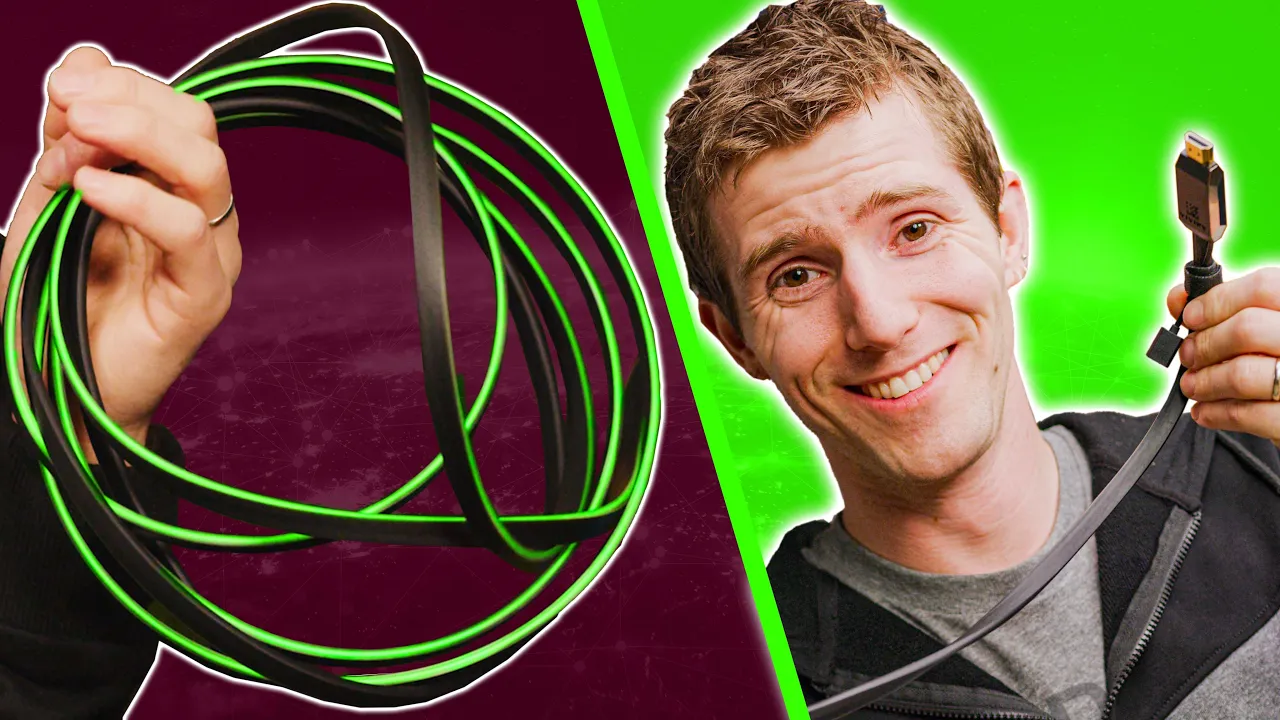
The RGB HDMI cable ISN'T as dumb as you'd think...
0 up · 0 down · 0 ratings
Promos
Get an unrestricted 30-day free trial of FreshBooks at freshbooks.com Thanks to Thermal Grizzly for sponsoring today's episode! Buy Thermal Grizzly Conductonaut on Amazon (PAID LINK) at lmg.gg It finally happened. RGB has permeated every Gaming PC part from motherboards, to graphics cards, to RAM, and now this: an RGB HDMI cable. The final frontier. Buy RGB HDMI cable On Amazon (PAID LINK): geni.us Purchases made through some store links may provide some compensation to Linus Media Group. Discuss on the forum: linustechtips.com Our Affiliates, Referral Programs, and Sponsors: lmg.gg Get a Displate Metal Print at lmg.gg Get a 30-day free trial of Amazon Prime at lmg.gg Linus Tech Tips merchandise at lttstore.com Our Test Benches on Amazon: amazon.com Our production gear: geni.us Come see us at LTX 2020: ltxexpo.com Twitter - twitter.com Facebook - @LinusTech Instagram - @linustech Twitch - twitch.tv Intro Screen Music Credit: Title: Laszlo - Supernova Video Link: youtube.com iTunes Download Link: itunes.apple.com Artist Link: soundcloud.com Outro Screen Music Credit: Approaching Nirvana - Sugar High youtube.com
The video begins with a dramatic reveal of an RGB HDMI cable marketed for gaming, highlighting its seven color lighting and fiber optic construction. The host explains that although the cable is pricey, the cost is somewhat justified by the fiber optic design and lack of traditional copper in the sheath, which contributes to reduced electromagnetic interference and lighter weight. A key point is that the cable is directional and contains active circuitry at both ends, requiring careful orientation with the source and display devices. The host also touches on the power requirements, noting that HDMI ports can supply limited power, and a supplemental micro USB power option may be there to assist only if the source port cannot deliver enough power. Practical demonstrations show color cycles, touch controls for color modes, and a dual-ended illumination strategy that reduces fading in the middle of the cable. The discussion moves to real-world use, including 4K 60 Hz capability and the possibility of gaming at 120 Hz by using a 1440p compromise, with the TV auto-detecting features like Ultra HD Deep Color. The reviewer then pilotes through setup tests with a PC and monitor to verify seamless operation and color memory across displays, while acknowledging the premium price and considering scenarios where such a cable might be handy in a home theater setup for color-coded cable management. The video closes by dissecting the internal construction, confirming the presence of diffusion layers and multiple RGB channels, and concluding that the cable fulfills its advertised function without misleading marketing, even if the price is high due to engineering and fiber optics. A closing note discusses whether the RGB HDMI cable represents a necessity or a luxury, suggesting that for many users the premium may not be worth it, but acknowledging the novelty and engineering achievement behind the product.
Topics · technology · hardware · consumer-electronics · video-cables · home-theater · gaming
Questions answered
- Why does the Vivify RGB HDMI cable require power at the ends?
- Because the cable contains active circuitry at each end that needs power to drive the fiber optic transmission and RGB signaling, which means the source and display ends must be powered appropriately for reliable operation.
- Can the cable improve visual quality beyond a standard HDMI cable?
- No, for a digital signal like HDMI, the color depth and brightness are not improved by using a higher-end copper versus fiber optic cable; the cable can affect reliability over long runs and reduce EMI, but it does not inherently increase image quality beyond the input signal.