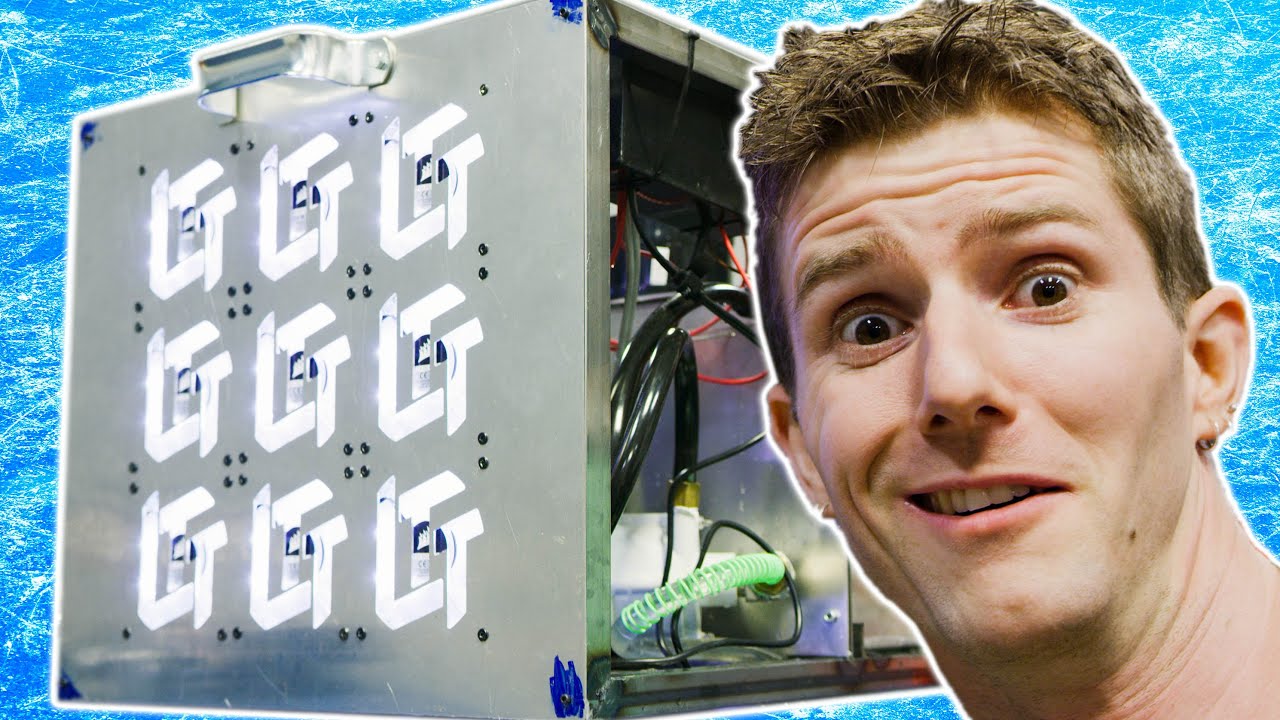
Building the Ultimate CPU Cooler!
0 up · 0 down · 0 ratings
Promos
Check out the March Expo 2020 on Alibaba, and get the Ecovacs Deebot Ozmo at bit.ly Our sub-zero chiller is pretty awesome for cooling CPUs... but pretty bad at being safe. Today that changes. Learn more about welding (This Old Tony): youtu.be Learn more about GFCI (ElectroBOOM): youtu.be Buy Corsair RGB Fans On Amazon (PAID LINK): geni.us On Newegg: geni.us Purchases made through some store links may provide some compensation to Linus Media Group. Discuss on the forum: linustechtips.com Our Affiliates, Referral Programs, and Sponsors: lmg.gg Get Private Internet Access VPN at lmg.gg Get a Displate Metal Print at lmg.gg Get a 30-day free trial of Amazon Prime at lmg.gg Linus Tech Tips merchandise at lttstore.com Our Test Benches on Amazon: amazon.com Our production gear: geni.us Get your ticket to LTX 2020: ltxexpo.com Twitter - twitter.com Facebook - @LinusTech Instagram - @linustech Twitch - twitch.tv Intro Screen Music Credit: Title: Laszlo - Supernova Video Link: youtube.com iTunes Download Link: itunes.apple.com Artist Link: soundcloud.com Outro Screen Music Credit: Approaching Nirvana - Sugar High youtube.com
The video chronicles the transformation of an aging, hazardous sub zero CPU cooling setup into a safer, more polished enclosure called the Chillinator v2. The opener introduces the original chiller, highlighting its dangerous exposed capacitor, sharp edges, and grounding issues, while promising a safer, enclosed solution. The host explains welding as the core fabrication method, emphasizing the balance of heat, shielding gas, and the need for clean surfaces to prevent porosity and splatter. The build shifts to acquiring materials, setting up a weldable chassis, and evaluating clamps, mounting points, and airflow considerations for fan placement and LTT logos on the enclosure. A practical pivot occurs as safety upgrades are addressed with a ground fault circuit interrupter (GFCI) and a more robust grounding strategy, reducing the risk of electric shock in a high energy system. The team then talks through the plumbing and coolant loop, planning a two side system with a hot side and a cold side immersion tank, and the challenges of integrating an evaporative coolant with a thermostat driven compressor. As the project unfolds, the team encounters leaks and a refrigerant handling mishap, prompting a rework of seals, refueling, and a test cycle that demonstrates the new unit functioning despite the still jank aesthetic. In the closing moments, the host provides a sensory description of the finished product as a safer, more refined, standalone sub zero cooler, capable of independent AC and pump control, while acknowledging ongoing electrical and insulation challenges. The video ends with the team hinting at测试 future demonstrations and reinforcing the project’s goals of showcasing both the engineering process and the entertaining, hands-on problem solving that defines Linus Tech Tips.
Topics · technology · engineering · science · hardware
Questions answered
- What safety upgrades were added to the Chillinator v2 compared to the original chiller?
- The updated design includes a ground fault circuit interrupter (GFCI), improved grounding, better enclosure to hide exposed components, and reworked wiring to reduce live edge exposure.
- How is the cooling system configured in the Chillinator v2?
- It uses a two sided approach with a hot side and a cold side, where fans cool the hot side and the cold side sits in an immersed coolant reservoir connected to a pump and a thermostat controlled compressor.