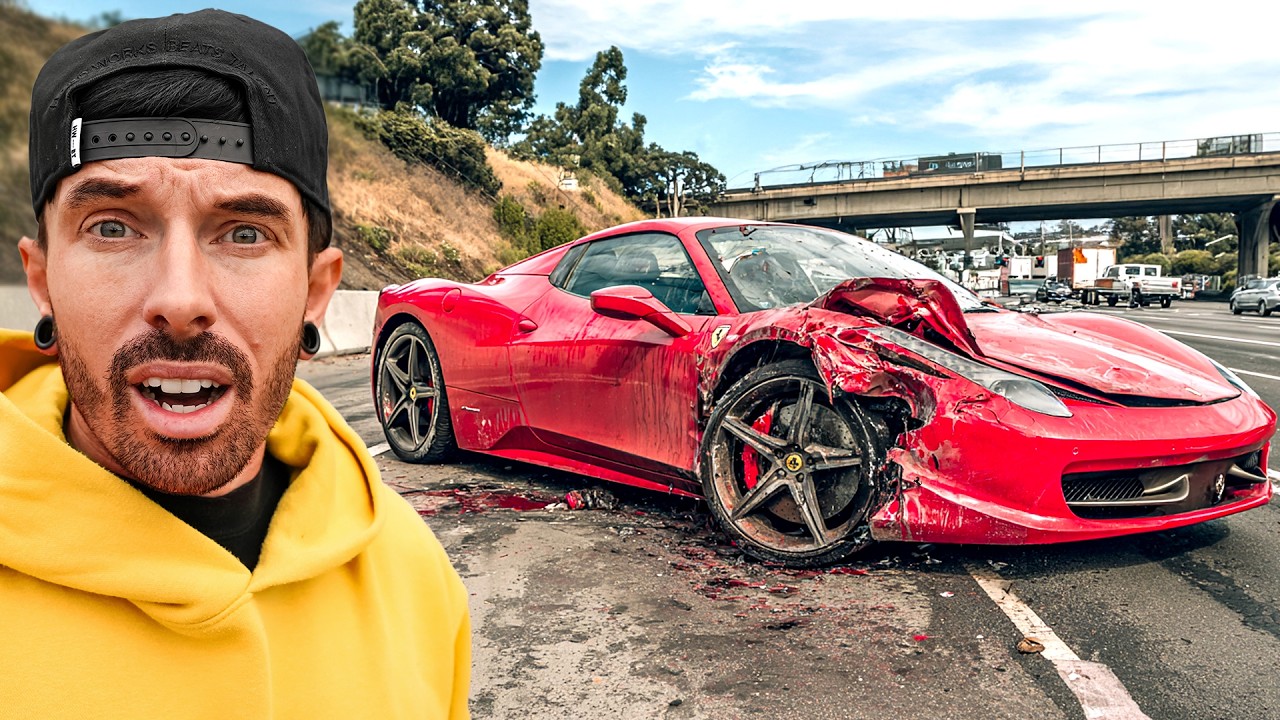
I BOUGHT THE CHEAPEST FERRARI 458 THEN ATTEMPTED TO REBUILD IT IN 7 DAYS
0 up · 0 down · 0 ratings
Promos
Check if your car was damaged with Car Vertical - 20% off here - carvertical.com I just bought my first ever Ferrari and it was the cheapest 458 Spyder in the world. But the cars been in a bad accident and i need to rebuild it. Looking at the damage i thought i might be able to rebuild it within 7 days. Thanks to Bob at the @the-machine-shop learn to weld here the-machine-shop.co.uk Thanks to DMC for the speciale bodykit! dmc.ag
ALL MA MERCHANDISE
Channels and socials
FOR MORE CONTENT
CHECK OUT MY SECOND CHANNEL
Follow Me Here Aswell
Notes
This video follows Mat Armstrong as he undertakes a highly ambitious project: buying the cheapest Ferrari 458 Spider at auction, assessing the damage, and attempting to rebuild it in seven days. The opening sequence sets the stakes, highlighting that the car is the Spider variant, with its roof removable and a history of accidents that left the interior damp and moldy. Early on, the team discovers the engine appears non-damaging, but many structural and cosmetic components are heavily compromised. The crew plans to get the car on wheels and into the workshop quickly to maximize their seven-day window. As the car is wheeled into the workshop, the narrative shifts toward diagnosing the extent of the damage and prioritizing the order of operations. We see the inertia switch, battery challenges, and the initial attempt to start the engine, which teases the possibility that the engine itself might still be salvageable. The team faces immediate roadblocks, including a dead battery and a nonfunctional fuel system, forcing them to improvise with a slave battery and jumper packs. The first day focuses on immediate tear-down tasks to reveal the full extent of the damage behind the panels, including a damaged front end, a bent suspension, and a compromised frame. The dialogue reveals the team’s careful decision-making about what can be saved, what must be replaced, and what needs to be sourced secondhand to stay on schedule. The video then pivots to the discovery of how the car was originally assembled, with exasperated commentary about welding, spacers, and the quality of Ferrari bodge fixes that preceded them. As the teardown unfolds, the team identifies critical components to replace, such as the steering rack, brake discs, and various suspension arms, while noting the high cost and scarcity of genuine parts. Suspension work consumes a large portion of the narrative, with the team detailing the process of removing and replacing top arms, towing arms, and the challenging task of aligning a rear quarter panel. The crew captures moments of high tension, such as discovering a bent steering rack, the need to rework brake pipes, and the realization that the rear bar and quarter panel must be reconstructed to OEM-like standards. The timeline emphasizes late-night sessions and a relentless pace as they weld, mock-fit, and measure to ensure alignments are precise. The involvement of Bob from The Machine Shop is highlighted as a turning point: his TIG welding expertise stabilizes the largely aluminum chassis work and helps realize the dream of a properly mounted rear assembly. The video teases a final fit test of the body panels, with anticipation about whether the aftermarket DMC body kit will blend with the rebuilt frame and existing components. The narrative closes on a cliffhanger note, underscoring the ambition and risk of attempting to complete a full structural rebuild within seven days, while praising Bob and the team for their craftsmanship and willingness to push the project forward against daunting odds. Throughout, the video blends technical detail with a celebratory, high-energy tone that underscores the appeal of reviving an iconic but challenged car, while also acknowledging the learning curve and the expensive realities of Ferrari restoration work. The ending teases the next steps, including final panel alignment, potential cosmetic refinishing, and the possibility of unveiling a car that looks, performs, and sounds like a Ferrari again, even if it started as the world’s cheapest 458 Spider. The overall takeaway is one of audacious DIY restoration, collaboration with skilled professionals, and the constant balancing act between time pressure, cost, and authenticity in a high-stakes automotive rebuild.
Topics · autos & vehicles · DIY & home improvement · automobile restoration · car restoration · automotive engineering
Questions answered
- What was the main objective of this Ferrari 458 rebuild project?
- To repair the cheapest Ferrari 458 Spider found at auction and attempt to rebuild it within seven days.
- Who contributed specialized welding expertise to the rebuild?
- Bob from The Machine Shop provided TIG welding and structural fabrication support.
- What challenges did the team face at the start of the project?
- A dead battery, nonfunctional fuel system, mold inside the car, and extensive front-end/frame damage requiring teardown to assess repairability.
- Why was the rear quarter panel a focal point of the build?
- The rear quarter panel and surrounding structure were heavily damaged and required replacement and precise alignment to OEM specifications.
- What role did secondhand parts play in the plan?
- Secondhand parts were used to save money and expedite sourcing, helping to keep the seven-day target feasible.