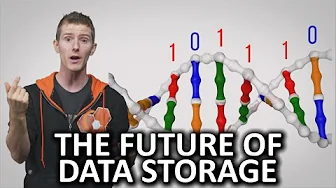
The Future of Data Storage
0 up · 0 down · 0 ratings
Description
We're all enamored with our microSD cards and NVMe solid-state drives, but what might we see down the road that could be even cooler? Techquickie/Linus Tech Tips t-shirts, posters, and more! teespring.com and shop.crowdmade.com Follow: twitter.com/linustech Join the community: linustechtips.com
The video surveys the near and far future of computer data storage, starting with a look at mechanical hard drives and the technologies poised to expand their capacity beyond today’s limits. It explains shingled magnetic recording, bit patterned media, and heat assisted magnetic recording as approaches to pack more data onto magnetic platters, with claims that drives could reach around 50 terabytes by the early 2020s. The segment then moves to alternative materials and forms of storage, including helium-filled drives for reduced fluid resistance and power, and newer solid state technologies such as Intel and Micron’s 3D Cross Point memory that omits transistors to boost density and reduce latency. The discussion broadens to the potential of competing approaches like Samsung’s Z-NAND and holographic data storage, which stores information in three dimensions rather than a flat plane, enabling multi-terabyte single disks in the future. The narrative then pivots to non-traditional media like DNA storage, highlighting DNA’s remarkable density and archival stability, with one cubic millimeter claimed to hold hundreds of terabytes of data, and its potential for long-term archival use. Finally, the presentation touches on liquid-state storage with nanoparticle clusters that could encode data in many more states than binary, offering the possibility of new storage paradigms and capacities, though concrete market timelines remain unclear. The host closes with a light plug for Linus Tech Tips merchandise and channels, inviting viewers to explore the related products while continuing the conversation about where data storage is headed and what it could mean for everyday computing and long-term archives.
Topics · technology · science and innovation · data storage · computer hardware · future trends
Questions answered
- What technologies are discussed as ways to increase hard drive capacity beyond today’s limits?
- The video discusses shingled magnetic recording, bit patterned media, and heat assisted magnetic recording as methods to increase hard drive capacity.
- What is DNA storage and why is it considered for archival use?
- DNA storage uses base pairs as digital symbols, with DNA’s high data density and stability making it a potential long-term archival medium.