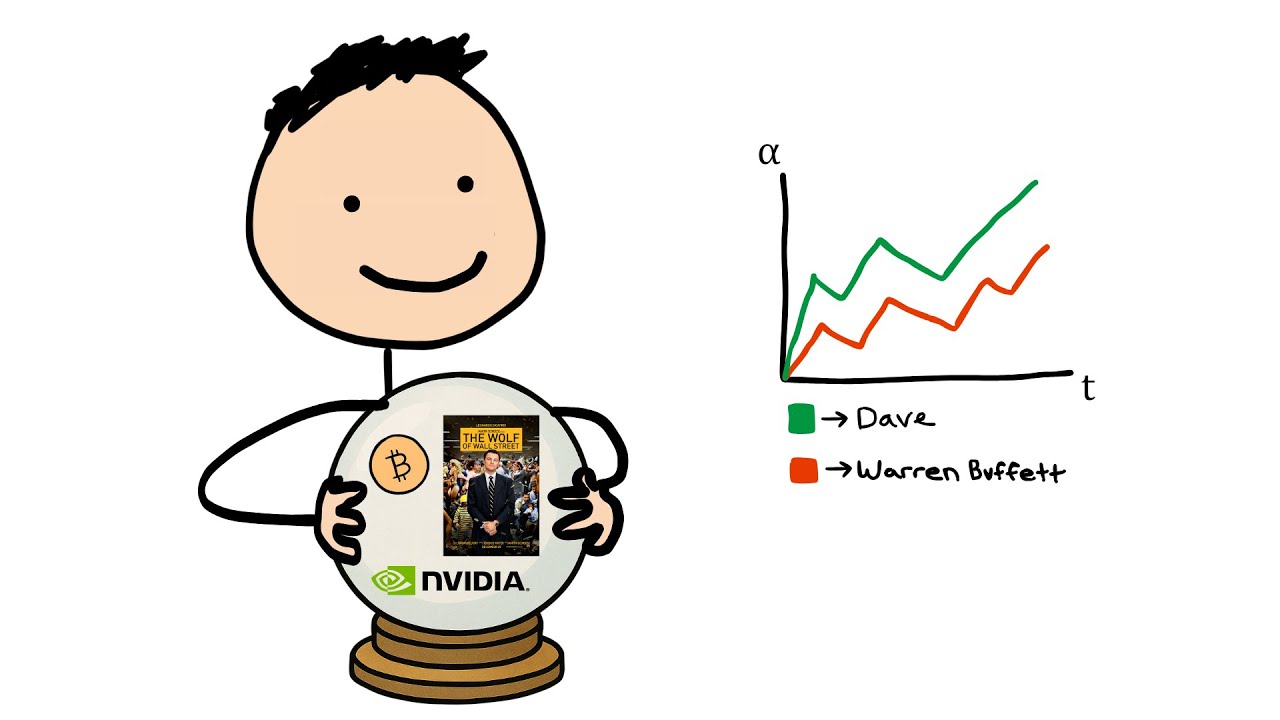
Why The Dumbest Investors Win (it's not why you think)
0 up · 0 down · 0 ratings
Channels and socials
The investors who have succeeded in the stock market over recent years don't read Bloomberg, don't follow the Federal Reserve, and definitely don't look at P/E ratios. It can be attributed to high-beta portfolios and a booming stock market. In this video, we explore why the least informed investors are outperforming traditional 'Wall Street' investors. Complex topics, simple breakdowns. Join my free weekly newsletter to stay ahead of what's actually happening in markets: casualmarkets.co #finance #investing #stockmarket #trading #tradingstrategy Disclaimer: The information provided in this video and on this channel (collectively, the “Content”) is for informational, educational, and entertainment purposes only and does not constitute investment, financial, legal, or tax advice, nor a recommendation to buy, sell, or hold any security or investment strategy. Investing involves risk and you must do your own research. Nothing in the Content should be interpreted as creating a fiduciary relationship, financial advisory relationship, or client relationship of any kind. The host, the channel, and all affiliated entities expressly disclaim any and all liability for any direct or consequential loss or damage arising directly or indirectly from the use of, reliance upon, or interpretation of the Content. By viewing or interacting with the Content, you acknowledge and agree to these terms and release the host and all related parties from any and all claims related to your reliance on the information provided.
The video opens with a satirical “Dave” character who starts off as an inexperienced trader, gets approved for options trading, then goes all in on leveraged out-of-the-money Tesla calls and meme-coin style bets. After the Federal Reserve hikes rates, Dave’s portfolio is shown collapsing by 67%, setting up the central question: why do the dumbest investors win. The host answers that the pattern maps onto the Dunning-Kruger effect plus market regime timing, arguing that retail investors tend to love volatile, high beta stocks, which outperform during bull markets and then fall hard in bear markets. The host contrasts traditional “value” thinking that emphasizes fundamentals and valuations with the reality that, during the long bull period since 2009, even irrational strategies could generate returns, producing the illusion of skill. To make it technical, the video defines beta as a stock’s volatility relative to the overall market and uses an Amazon beta example (1.33) to explain larger-than-market swings in both directions. It concludes by framing preparation as either sitting on cash like Buffett or staying aggressive and then shifting blame when the cycle reverses, emphasizing that retail-driven high beta performance is largely regime dependent.
Viewers consistently praise the video’s “serious topics, unserious delivery” style and find the core quote, “Everyone is a genius in a bull market,” especially memorable. Many comments share personal anecdotes of being up or down despite doing little “real” analysis, echoing the video’s theme that upside in bull markets can mask lack of skill. There is frequent humor about risky behavior, including leveraged positions, meme coins, and losing money, alongside debates about whether this is investing or gambling. Several viewers call the video educational and easy to understand, request more content, and recommend related ideas like survival bias, high beta behavior, and “betting on” downturn protection.
Topics · finance · stock market · markets · economics · business · education
Questions answered
- Why do the dumbest investors win in the stock market?
- Retail investors tend to favor volatile, high beta stocks, and those positions can outperform during bull markets, making it look like skill even when fundamentals are ignored.
- What is beta in finance and why does it matter for stock performance?
- Beta measures how volatile a stock is relative to the overall market. A beta of 1.33 means the stock is expected to move about 33% more than the market when the market rises or falls by a given amount.
- What are the two options discussed for preparing when high beta strategies stop working?
- The video discusses either sitting on cash, or continuing to take high risk positions and then attributing losses to others when the market reverses.