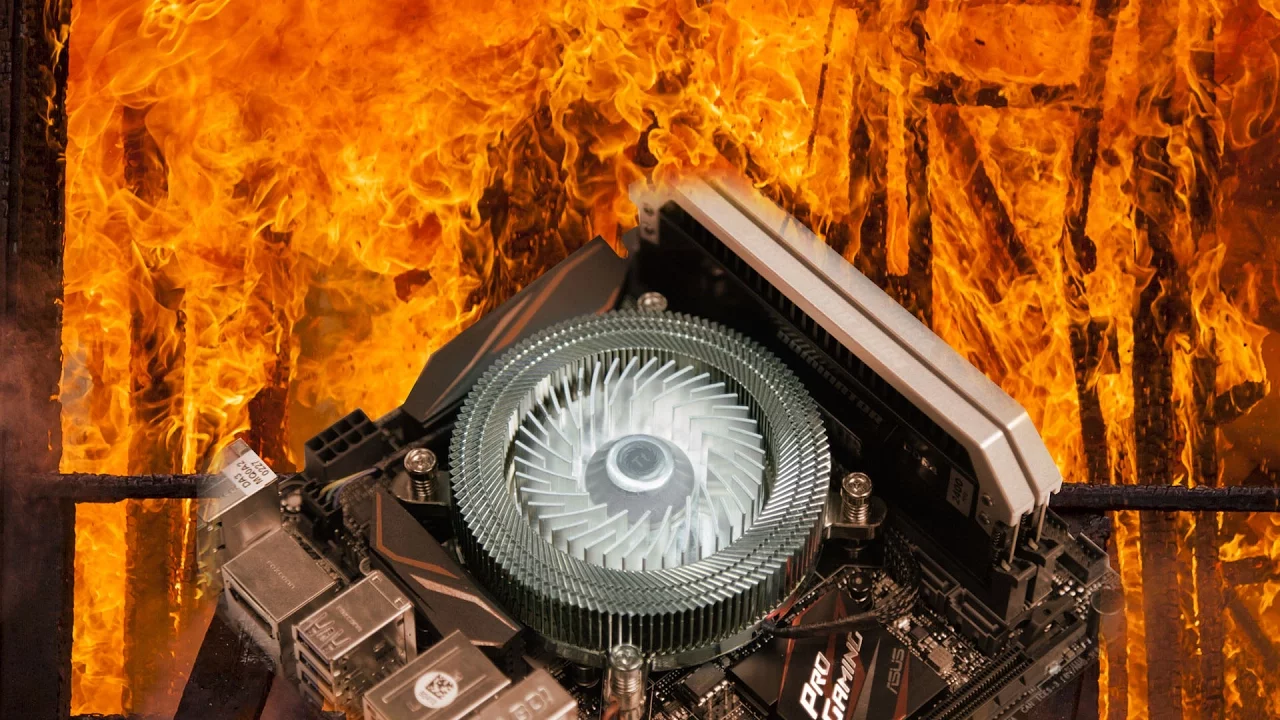
An All-metal FAN??
0 up · 0 down · 0 ratings
Description
The Sandia cooler - it's FINALLY a real product called the Thermaltake Engine 27.. But does it work? Angelbird Giveaway: gleam.io Buy Angelbird SSD2go on Amazon: geni.us Buy Thermaltake Engine 27 on Amazon: geni.us Discuss on the forum: linustechtips.com Our Affiliates, Referral Programs, and Sponsors: linustechtips.com
Channels and socials
Check out our Linus Tech Tips posters at crowdmade.com twitter.com @LinusTech Intro Screen Music Credit: Title: Laszlo - Supernova Video Link: youtube.com iTunes Download Link: itunes.apple.com Artist Link: soundcloud.com Outro Screen Music Credit: Approaching Nirvana - Sugar High youtube.com Sound effects provided by freesfx.co.uk
The video opens by contrasting the traditional CPU cooler with a metal heatsink and fan approach, highlighting Thermaltake’s all-metal Engine 27 as a bold departure from conventional designs. The host walks through the historical idea of metal spinning impellers paired with fixed metal bases, noting that this concept first surfaced in 2012 with the Sandia cooler and later prototypes at CES, before Thermaltake finally brought a market-ready product to the scene. The core explanation centers on the theory: a small air gap between a fixed grooved base and a spinning grooved impeller should still permit heat transfer, as if the two were effectively connected. The discussion then shifts to the practical evaluation, where a set of small form factor coolers, including the Engine 27 and a stock Intel cooler for baseline comparison, are tested on an Intel Core i7-6700K system under controlled conditions. The host describes the testing methodology in detail, including the use of NZXT CAM for fan curves and IC Diamond thermal compound for consistent contact, ensuring a fair comparison across devices. In the initial results, the Engine 27 performs poorly relative to expectations, coming in as the worst cooler in the test with roughly 10 degrees Celsius more CPU temperature under load than the nearest aftermarket competitor, and it also emits more noise than the stock cooler. Despite the disappointing cooling performance, the video emphasizes that CPU cooling is not the only factor; overall airflow to surrounding components remains critical. The host then provides a balanced assessment, noting that while the Engine 27 is not a top performer, its slim profile,being notably shorter than rival coolers,offers practical appeal for compact builds, provided its cooling limitations are accepted. Finally, the video culminates with a lighthearted awards segment, acknowledging the Engine 27 as better-than-nothing in its niche, while also giving playful “best looking” and “ugliest” awards to other cooling options. The closing moments shift to a viewer giveaway promotion for a high-speed portable SSD, followed by a brief push to like, subscribe, and explore related content and gear. In sum, the Engine 27 is celebrated for engineering audacity and form factor, but its real-world cooling power falls short of competitive expectations, making it a niche option for slim builds rather than a general upgrade for most systems.
Topics · technology · hardware · computer-cooling · product-review
Questions answered
- What is the Thermaltake Engine 27 and what makes it different from traditional CPU coolers?
- The Engine 27 is an all-metal CPU cooler with a spinning metal impeller and a fixed metal base, designed to improve heat transfer in a very compact form factor. Unlike traditional coolers that use a solid heatsink with a plastic fan, the Engine 27 relies on the interaction between the fixed grooved base and the spinning grooved impeller to transfer heat, enabling a slim profile that fits smaller cases.
- How did the Engine 27 perform in testing compared to a stock cooler?
- In the tests, the Engine 27 performed worse than the stock cooler, about 10 degrees Celsius hotter under load than the nearest aftermarket competitor, and it was louder as well. It did not beat the stock cooler or other top contenders, though its compact size offered a potential advantage for certain builds.