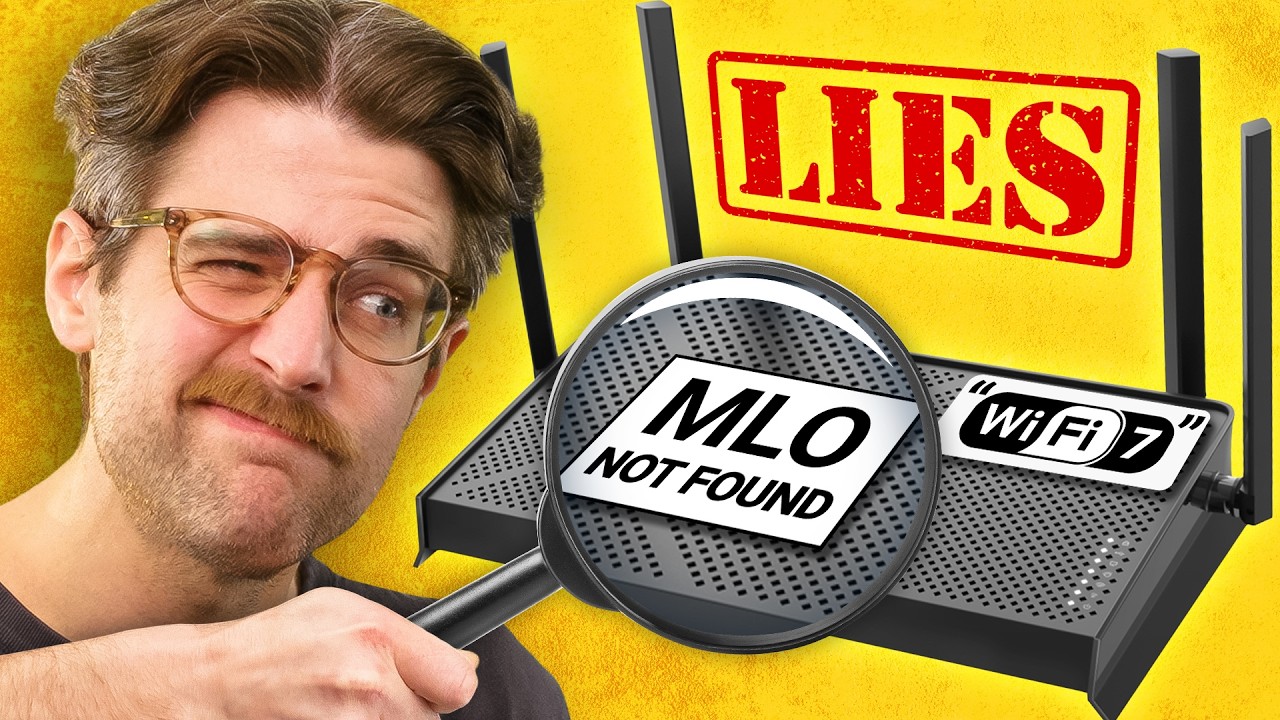
How Wi-Fi 7 is being held back by MLO
0 up · 0 down · 0 ratings
Description
Get a free 15-day trial of Odoo’s all-in-one business solution and see how it can make your life easier! Check it out at odoo.com Wi-Fi 7 has some awesome features, at least theoretically. However, MLO one of the most impressive features is still not widely available, let's try and find out why. Leave a reply with your requests for future episodes. ► SHOP OUR PRODUCTS: lttstore.com ► GET A VPN: piavpn.com ► GET EXCLUSIVE CONTENT ON FLOATPLANE: lmg.gg ► SPONSORS, AFFILIATES, AND PARTNERS: lmg.gg
The video starts with a practical metaphor for Wi-Fi performance, comparing it to clutching a difficult situation in a game to explain how Wi-Fi 7 and MLO are supposed to improve throughput and reduce lag. It explains that MLO, or Multi-Link Operation, would allow data to travel across multiple bands simultaneously, potentially removing the traditional bottlenecks caused by single-lane traffic on the 2.4, 5, and 6 GHz bands. The host then dives into why the Wi-Fi 7 label does not guarantee MLO in every device, pointing to the roles of standards bodies and certification bodies like the IEEE and the Wi-Fi Alliance that must verify both router capabilities and device support. A key argument is that consumer devices today mostly rely on lightweight MLO modes such as MLSR, which listen on multiple bands but transmit on one at a time, limiting the practical speed gains. The narrative continues by contrasting client device limitations with router capabilities, noting that many devices lack the hardware and software readiness to exploit full MLO in STR (simultaneous transmit and receive) mode. The discussion emphasizes that although routers may advertise high speeds, the real-world performance is constrained by device bottlenecks, poor band steering practices, and non-uniform certification requirements. The segment closes by advising viewers to verify Wi-Fi Alliance certification lists before purchasing and to temper expectations about immediate MLO-based upgrades, while teasing further exploration of mesh Wi-Fi as a potential solution to coverage issues. Throughout, the host weaves in a sponsor mention and broad business software recommendations to illustrate a typical tech video cadence, balancing hardware critique with practical consumer guidance.
Topics · technology · networking · consumer electronics · standards
Questions answered
- What is Multi-Link Operation (MLO) and why does it matter for Wi-Fi 7 performance?
- MLO is a capability that allows data to be transmitted across multiple frequency bands simultaneously, which can increase throughput and reduce latency if both routers and client devices support it across all used bands.
- Why might Wi-Fi 7 not deliver the promised speeds on all devices today?
- Because many consumer devices only support lightweight MLO modes (like MLSR) that listen on multiple bands but transmit on only one at a time, and because certification and hardware readiness for full STR/MLO capability are not universally present yet.