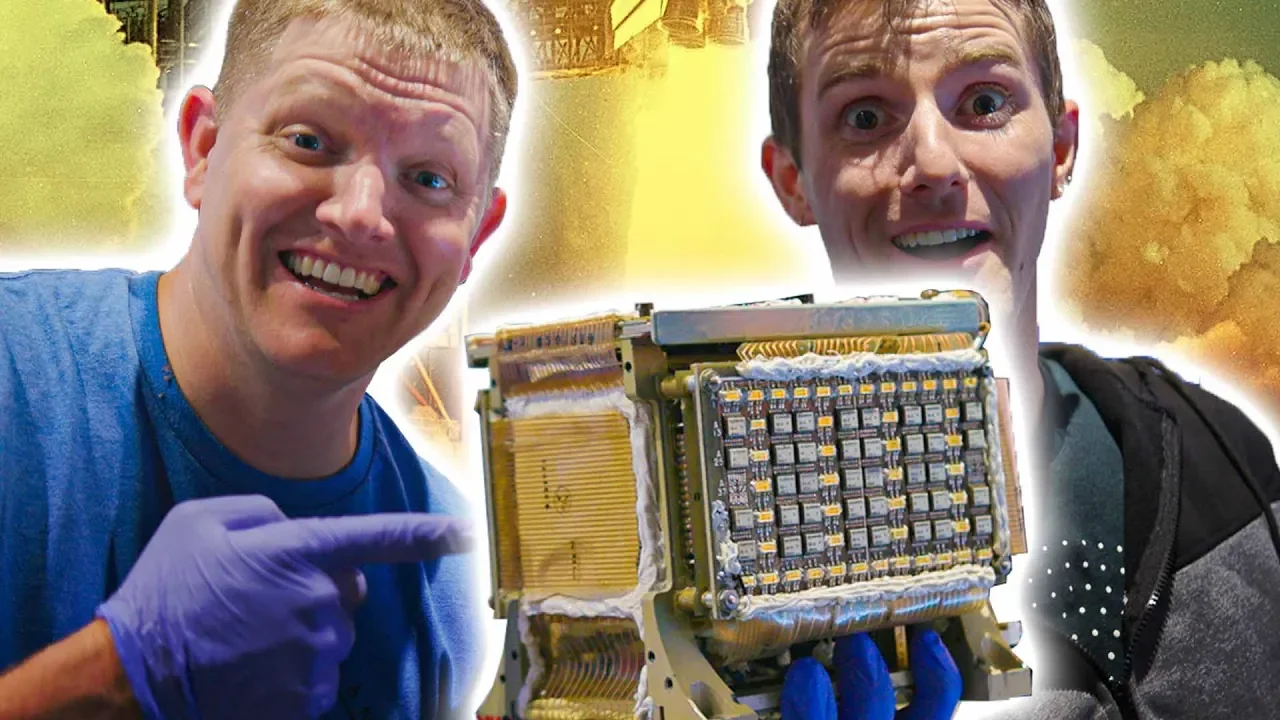
The ACTUAL Computer from the Saturn V Rocket - ft. SmarterEveryDay
0 up · 0 down · 0 ratings
Promos
Thanks to ViewSonic for sponsoring this video! Learn more about the ViewSonic X10-4K Smart Projector on Amazon at smarturl.it SmartDeploy: Windows imaging and application deployment in one simple tool. Claim your free IT software (worth $720!) at lmg.gg SmarterEveryDay's video will be coming later this month, so keep your eye out for that!! We got an exclusive tour of the Saturn V Rocket's on-board computer system. So awesome!! Buy much less interesting computers on Amazon: lmg.gg Discuss on the forum: linustechtips.com Our Affiliates, Referral Programs, and Sponsors: linustechtips.com Get Private Internet Access today at geni.us Displate metal posters: lmg.gg Linus Tech Tips merchandise at lttstore.com Linus Tech Tips posters at crowdmade.com Our Test Benches on Amazon: amazon.com Our production gear: geni.us Twitter - twitter.com Facebook - @LinusTech Instagram - @linustech Twitch - twitch.tv Intro Screen Music Credit: Title: Laszlo - Supernova Video Link: youtube.com iTunes Download Link: itunes.apple.com Artist Link: soundcloud.com Outro Screen Music Credit: Approaching Nirvana - Sugar High youtube.com
The video provides a detailed tour of the Saturn V rocket’s guidance and control hardware, focusing on the instrument unit that steered the mission to the Moon. The host, Destin from SmarterEveryDay, is joined by an IBM veteran who helped build the flight evaluation hardware, giving viewers an insider’s explanation of how the three main subsystems,navigation, guidance and control, telemetry, and environmental control,work together within a ring-shaped unit. A key emphasis is placed on how the system relied on robust, non-semiconductor technology of the era, including heavy use of relays, analog components, and a memory scheme that was hand-woven from copper wire and iron rings. The discussion also covers the power and cooling architecture, including the unusual sublimator cooling system that allowed the spacecraft to vent heat in the vacuum of space, maintaining temperatures between 50 and 60 degrees Fahrenheit during the mission. The segment underscores the real-time nature of the computer, which operated on a fixed two-second loop with interrupts, and explains how data and commands flowed from the computer to the engines and subsystems through switch selectors, rather than modern microprocessors. Through the collaboration with experts and on-site demonstrations at the U S Space and Rocket Center, the video conveys both the scale and the ingenuity of mid-century aerospace engineering, tying the Saturn V’s on-board computer to the broader Apollo program and the 50th anniversary of the Moon landing. The overall narrative honors the hardware that made lunar exploration possible, while highlighting fascinating technical specifics that illuminate how spaceflight was managed with what today would be considered antique technology, yet was perfectly reliable for its mission profile. In closing, the hosts reflect on the significance of the Saturn V hardware in the history of engineering and celebrate the collaboration that made the tour possible, inviting viewers to explore related content and sponsor links in the description. Overall, the video blends historical context, hands-on explanations, and an accessible tour that makes the complexity of the Saturn V’s avionics approachable for a general audience while remaining technically accurate and engaging.
Topics · space · engineering · technology · history · aerospace
Questions answered
- What is the Saturn V instrument unit and what subsystems does it include?
- The instrument unit houses navigation, guidance and control, telemetry, and environmental control. It organizes power, environmental cooling, and signaling to the rocket's engines and systems to steer the vehicle toward its mission path.
- How does the sublimator cooling system work in space?
- The sublimator uses a sintered metal surface exposed to space, with water driven through micro-pores by pressurized nitrogen. The water freezes and sublimates directly to vapor in the vacuum, dissipating heat and keeping coolant around 50 to 60 degrees Fahrenheit.
- Why is the LVDC/Launch Vehicle Digital Computer considered remarkable?
- The LVDC uses transistors visible to the naked eye, with memory woven from copper and iron. It operates in real time on a fixed two-second loop with interrupts, and commands are distributed through switch selectors to control engines and subsystems.