Asus Maximus VI Impact Unboxing & Overview
0 up · 0 down · 0 ratings
Channels and socials
The Maximus VI Impact from ASUS is their first RoG (Republic of Gamers) mini ITX motherboard, and one of the most exciting boards I've had my hands on in a LONG time. Sponsor link: linustechtips.com Join our community forum: bit.ly twitter.com @LinusTech Pricing & availability: linustechtips.com Intro Screen Music Credit: Adhesive Wombat -
Check out his channel here: youtube.com Outtro Screen Music Credit: Approaching Nirvana - Sugar High youtube.com
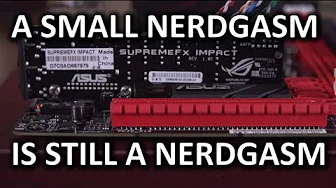
Asus Maximus VI Impact Unboxing & Overview begins with an enthusiastic unboxing that emphasizes the rarity and appeal of a mini ITX Republic of Gamers motherboard. The presenter highlights the accessory package as unusually full for a first MITx ROG board and immediately frames the device as a solution to ITX constraints, notably addressing the single PCI Express x16 slot limitation with innovative design. He walks through the included components, praising the MPCIE combo module that combines wireless AC with potential M.2 expansion, and notes the practical value of the extendable IO/front-panel connector solution that replaces the clunky Q connector. The video then pivots to the Supremе FX audio subsystem, explaining how the sound solution can operate without occupying a PCIe slot and its implications for headphone power handling and overall audio quality. Throughout, the host integrates technical observations about VRMs, capacitors, and power delivery, emphasizing cooler operation, stability, and a premium build quality that seems to justify the higher price point for gamers and enthusiasts. By the end of the first portion, the presenter positions the Maximus VI Impact as a top-tier choice for gaming-focused ITX builds, while acknowledging the competing i Deluxe and Maximus VI Formula as compelling alternatives depending on feature priorities. The wrap-up reflects on overclocking capabilities, ASUS automation features like four-way optimization, and a verdict that manual tuning often yields the best results for discerning enthusiasts, ending with a call to subscribe for more content and an invitation for feedback on the board. The middle section delves deeper into the board layout and real-world design considerations, including the compact yet robust VRM area, the use of high-current chokes and capacitors, and the visible attention to signal integrity and power delivery paths. The presenter comments on the distinctive arrangement of the 8-pin and 24-pin power connectors, noting how this impacts cabling aesthetics in smaller cases, and shows the location of the four fan headers and the CPU fan control features. The dialogue then shifts to practical use cases, such as Haswell CPUs and overclocking potential on a true Mini-ITX platform, and details the I/O options, including HDMI, DisplayPort, optical audio, and the impactful back-panel readout and BIOS features. The on-board diagnostics, BIOS flashback, and the impact control add-on are explained as user-facing enhancements that improve usability and recoverability, while the bundled software suite is acknowledged for essential maintenance tasks like antivirus and virtualization tools. The host closes this segment by reiterating the expected performance envelope for gaming and the appeal of ASUS’s ROG ecosystem on MITx builds, with a nuanced reminder that user needs should drive the final hardware choice. In the final stretch, the reviewer synthesizes the practical takeaway: the Maximus VI Impact represents a premium, well-engineered choice for high-end ITX gaming rigs with exceptional audio, flexible expansion through MPCIE, and strong power delivery. He contrasts it with slightly more feature-rich but larger boards, noting that the six- and deltas in feature sets should guide buyers toward either a compact, targeted gaming build or a more expansive system if raw SATA capacity and expansion matter more. The verdict reinforces that the board’s combination of Supreme FX audio, four-way optimization, and robust VRM design makes it a compelling option for enthusiasts who value performance and build quality in a compact footprint. Finally, the video invites viewers to subscribe for more unboxings, like or dislike based on preferences, and to share their plans for a build with this motherboard, thereby fostering a community discussion around MITx gaming rigs.
Topics · technology · computer_hardware · pc_components · unboxing · gaming_pc · overclocking
Questions answered
- What makes the Asus Maximus VI Impact suitable for mini ITX gaming builds?
- It combines a high-end VRM design, robust power delivery, the Supreme FX audio subsystem, and flexible expansion via MPCIE, all in a compact MITx form factor that supports Haswell CPUs and overclocking.
- How does the MPCIE combo module benefit ITX users?
- The MPCIE combo module provides dual-band wireless AC plus an M2/NVMe style expansion path, enabling wireless connectivity and future SSD upgrades without sacrificing PCIe slots.
- What is the benefit of the new expandable IO connector versus the old Q connector?
- The expandor extender consolidates front-panel connections into a single unit, reducing front-panel cable clutter and providing sturdier, more convenient front I/O mounting.