NVIDIA Wouldn’t Let Me Cover This
0 up · 0 down · 0 ratings
Promos
Buy a Seasonic TX 1000 PSU: geni.us Get 20% off DeleteMe US consumer plans when you go to joindeleteme.com and use promo code LTT20 at checkout. DeleteMe International Plans: international.joindeleteme.com Glasses Free 3D displays aren’t a new thing, but they never manage to gain a wide audience. Can Acer’s Spatial Labs overcome the limitations and wow our team? Discuss on the forum: linustechtips.com Buy Acer SpatialLabs Pro 27 store.acer.com Buy Acer SpatialLabs Predator 27 store.acer.com ► GET OUR MERCH: lttstore.com ► GET EXCLUSIVE CONTENT ON FLOATPLANE: lmg.gg ► GET A VPN: piavpn.com ► SPONSORS, AFFILIATES, AND PARTNERS: lmg.gg Purchases made through some store links may provide some compensation to Linus Media Group. CHAPTERS --------------------------------------------------- 0:00 Intro 1:31 A wild Jake appears 1:59 For real, this time 3:08 But what is it? 4:39 Model Viewer 6:41 Media Player 7:45 TrueGame 10:44 SpatialLabs Go 12:32 What about the Pro? 16:01 Credits
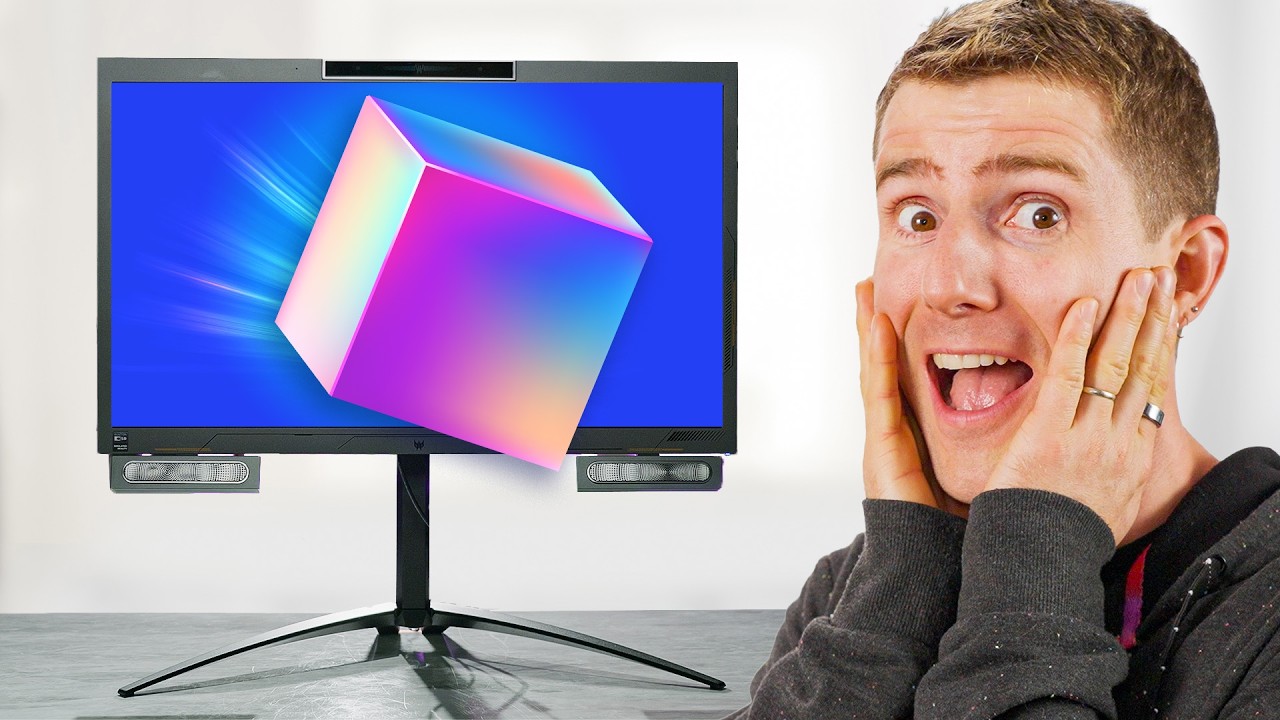
NVIDIA Wouldn’t Let Me Cover This explores Acer SpatialLabs View and Predator SpatialLabs Pro displays, presenting a glasses-free 3D experience that aims to push beyond typical 2D gaming monitors. The video outlines how lenticular microstructures and camera-based eye tracking work together to adjust depth for each eye, enabling a convincing stereo effect even on large screens. Early on, the host revisits the concept of glasses-free 3D and contrasts it with past attempts that were blocked by NVIDIA, explaining the historical context and why this iteration matters. The creator then demonstrates the hardware in action, showing model viewers, 2D and 3D content, and the SpatialLabs Go software, which expands 3D support to non-native titles. Through hands-on testing with several games and media, the video delves into the practical limitations, like cross-talk on LCD panels and the dependence on developer collaboration for true 3D profiles. Overall, the segment assesses the potential of this technology, acknowledges the compromises, and assesses whether spatial 3D can become a mainstream feature or remains a niche showcase. The second paragraph delves into the hardware bundle and how the two displays differ in hardware and software. The Predator PSV 27-2 and the ASV 272p Pro 27 share similar panels but diverge in ancillary software and the included accessories, such as the pro bundle’s magnetically attached shroud and enhanced bezel sensors. The video highlights the consumer price around five thousand dollars as a major barrier, noting the cost puts it in the realm of high-end gaming setups and VR systems. True Game, Spatial Labs Go, and model viewer are introduced as core software components that enable 3D experiences, with True Game applying a dedicated 3D profile to supported titles. Viewers see a practical demonstration of depth adjustment, object scaling, and the alignment challenges that come with close-up viewing. The host also discusses practical use cases, pointing out how head tracking versus eye tracking affects the experience when two or more people try to view content together. The section concludes by weighing whether the premium price justifies the immersive payoff. In the third paragraph the host examines game and content performance in 3D mode. Through hands-on testing with titles like Lego Star Wars and other classics, the video evaluates the stability and quality of 3D rendering, noting visible cross-talk on some scenes and reflections on glossy floors that can detract from the effect. The discussion includes the role of VSync and other visual settings to minimize tearing in stereo 3D, and whether certain games inherently support the Spatial Labs profile or rely on injected shaders for proper 3D depth. The presenter underscores that while some games look impressive, the 3D experience is not universally reliable across the entire library, and developer support remains a limiting factor. A comparison between the two displays emphasizes the software-enabled advantages of the pro model while cautioning that real-world results depend heavily on individual game implementations. The segment ends with reflections on consumer viability and the enduring appeal of glasses-free 3D despite current shortcomings. The fourth paragraph shifts to a broader perspective on the technology’s future and practical viability. The host previews Spatial Labs Go as a workaround for unsupported titles, noting its broad applicability across any app and even potential to inject shaders for depth effects, though with caveats. The discussion then expands to the Pro model’s advanced software ecosystem, including Unity and Unreal plugin support, developer tools, and open XR compatibility, painting a picture of potential use in education, medical imaging, and showroom displays rather than just gaming. Finally, the video closes with a cautious but hopeful assessment: glasses-free 3D has compelling aesthetics and a novelty appeal, but it faces competition from VR headsets and the price-to-value proposition, which have slowed broader adoption. The host expresses a desire to see the technology mature and regain momentum while acknowledging the hurdles that must be overcome for mainstream acceptance.
Topics · technology · gaming · displays · hardware · consumer_electronics