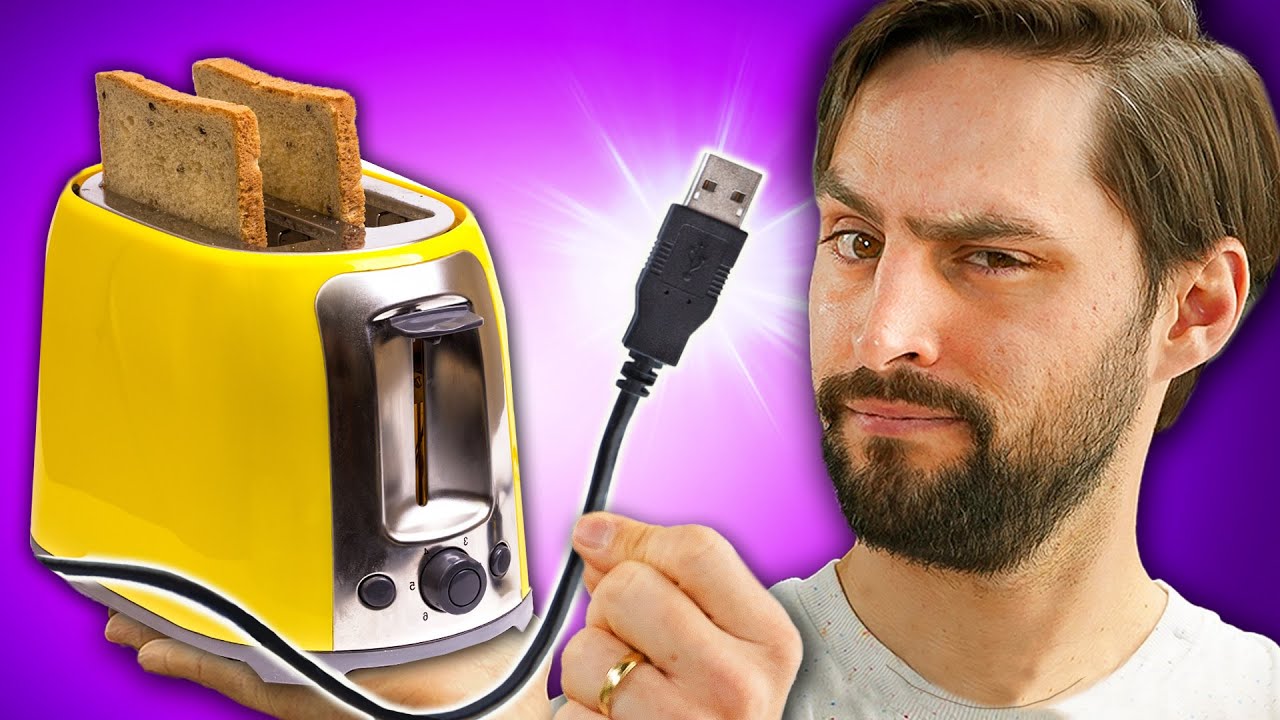
Why Doesn't EVERYTHING Use USB?
0 up · 0 down · 0 ratings
Promos
Save 90% on your first 4 months of Freshbooks at freshbooks.com USB is so versatile - so why do we still use connections like Ethernet, HDMI, DisplayPort, and RCA? Leave a reply with your requests for future episodes. ► GET MERCH: lttstore.com ► LTX 2023 TICKETS AVAILABLE NOW: lmg.gg ► GET EXCLUSIVE CONTENT ON FLOATPLANE: lmg.gg ► AFFILIATES, SPONSORS & REFERRALS: lmg.gg ► OUR WAN PODCAST GEAR: lmg.gg FOLLOW US ELSEWHERE --------------------------------------------------- Twitter: twitter.com Facebook: @LinusTech Instagram: @linustech TikTok: @linustech Twitch: twitch.tv
The video opens by posing a simple question about why there are so many different cables for digital signals, even though USB4 promises very high bandwidth. It recounts the historical progression of computer connectors, showing how early USB iterations could not meet the needs of bandwidth-hungry tasks like uncompressed video. The host explains that video standards such as DVI and HDMI emerged before USB could reliably handle high-speed video, creating a landscape where multiple interfaces coexist. He notes that while USB has grown to support higher data rates, video output requires dedicated pathways within displays, which carries costs and compatibility considerations for implementations. The discussion then pivots to the practical realities of cables and standards in everyday use, including the potential for a single universal connector but acknowledging the current economic and technical barriers. The segment concludes by reflecting on how the number of connectors might gradually shrink over time, yet a truly universal connector is unlikely soon, largely because of differences in protocol, power delivery, and consumer support challenges. Overall, the video frames USB not as a universal solution but as one of several specialized interfaces that remain optimized for specific tasks, with future improvements likely to come from better standardization rather than a single replacement for all connections.
Topics · technology · hardware
Questions answered
- Why can’t USB replace all video and audio connections like HDMI and DisplayPort?
- Because video and audio interfaces were developed with different requirements and cost structures; HDMI and DisplayPort were established to meet high-bandwidth, low-latency display needs, and their adoption was cost-effective for displays, while USB evolved differently and faces protocol, construction, and implementation challenges for video paths.
- Is there a path toward a universal connector for all devices?
- A universal connector is unlikely in the near term because of competing protocols, licensing costs, power delivery differences, and the diverse needs of devices, which makes a single, all-encompassing standard impractical.