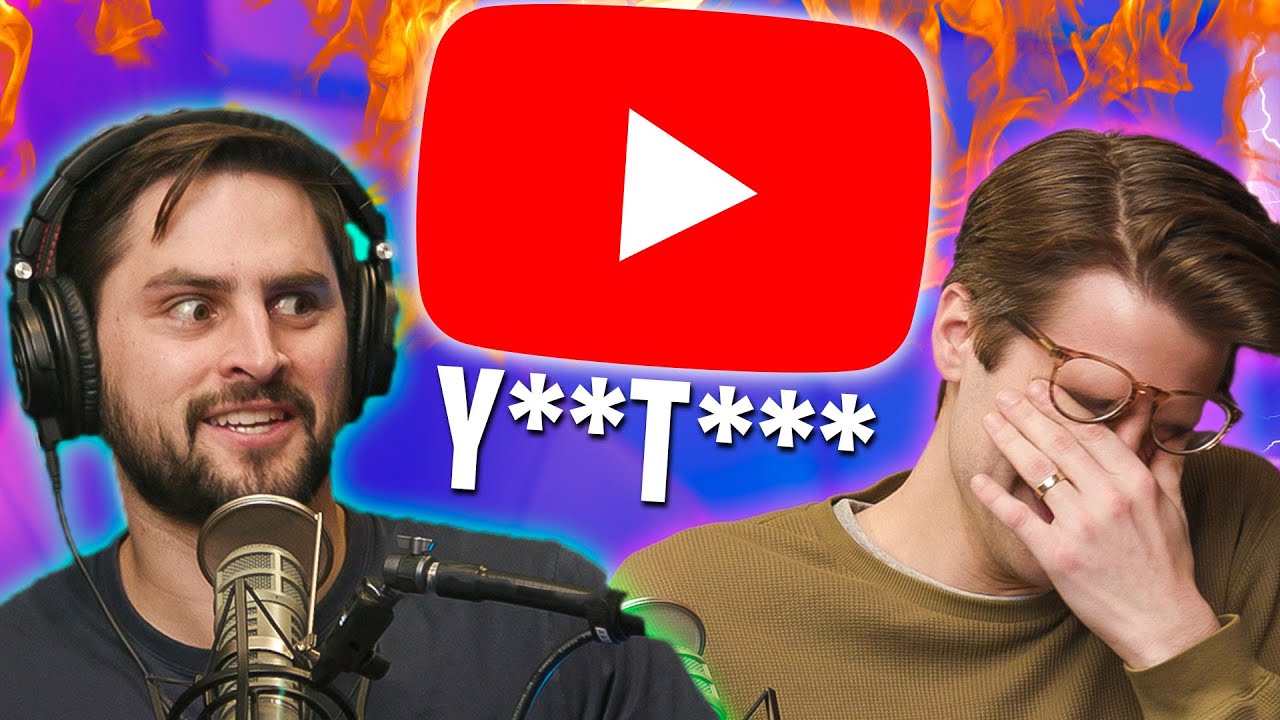
Do YouTube's new rules make any sense? - TalkLinked
0 up · 0 down · 0 ratings
Promos
Thanks to Secret Lab for sponsoring today's video! Check them out at lmg.gg Riley and James discuss a future where all of that personal data that's being collected anyway paves the way for a cuss-word-filled utopia. ►► LISTEN TO THE TECH NEWS: lmg.gg ► GET MERCH: lttstore.com ► AFFILIATES, SPONSORS & REFERRALS: lmg.gg ► PODCAST GEAR: lmg.gg ► SUPPORT US ON FLOATPLANE: floatplane.com NEWS SOURCES: lmg.gg --------------------------------------------------- Timestamps: 0:00 the f*** 1:13 WUT HAPPENED 4:10 WHAT'S IN A SWEAR? 8:23 BRAND ASSOCIATION 12:12 YOUTUBE USED CONFUSION! 14:10 Secret Lab! 14:35 CHOOSE YOUR WHOLESOME LEVEL 19:04 IT'S BUSINESS TIME FOLLOW US ELSEWHERE --------------------------------------------------- Twitter: twitter.com Instagram: @TechLinkedYT Facebook: @TechLinked
Do YouTube's new rules make any sense? - TalkLinked dives into the November 2022 to January 2023 changes to YouTube's advertiser friendly guidelines and the broader implications for creators, advertisers, and viewers. The conversation centers on how YouTube now treats profanity and violence in videos, including a shift toward treating different profanities as a single category and the nuanced 8 to 15 second and 0 to 8 second windows that affect monetization. The hosts discuss how the changes were communicated, or rather not communicated, and how creators, particularly gaming channels like RTGame, were affected by demonetization and the back catalog impact. They compare the guidance to old media standards and debate whether YouTube should act more like a traditional TV platform or a freer creative playground. The discussion also touches on regional differences in swearing, the role of branding and ad placement, and how personalization and ad targeting intersect with content moderation. Throughout, there is a tension between preserving advertiser value and maintaining creator authenticity, with both sides proposing practical strategies for navigating monetization while still reaching audiences. The hosts acknowledge the complexity of the policy landscape and call for clearer, more proactive communication from YouTube to reduce creator frustration and guesswork. Finally, the conversation shifts toward a pragmatic stance: creators may need to adapt their content style for monetization, or alternatively, brands and platforms might evolve toward more granular audience targeting to reduce blanket demonetization across diverse content. The overall takeaway is a critique of policy clarity and a cautious optimism about future improvements that balance revenue with creative freedom.
Topics · technology policy · online platforms · gaming · digital advertising · media studies
Questions answered
- What changed in YouTube's advertiser friendly guidelines regarding profanity?
- The changes unify profanity handling, reduce emphasis on a simple 0 to 15 second window, and introduce a more complex scheme where some profanities and their placement in a video affect monetization differently, including eight to fifteen second intervals and potential revenue limits.
- Why did gaming creators like RTGame feel the impact more than others?
- Gaming channels often feature violence and action early in videos, which can trigger tighter monetization rules or demonetization under the updated guidelines, especially for high retention moments and the initial content framing.
- Is there better communication from YouTube about these changes?
- Creators and viewers argue there is a lack of proactive communication; changes appeared quietly and were revealed mainly through policy pages and back catalog effects, leading to confusion and inconsistent application.