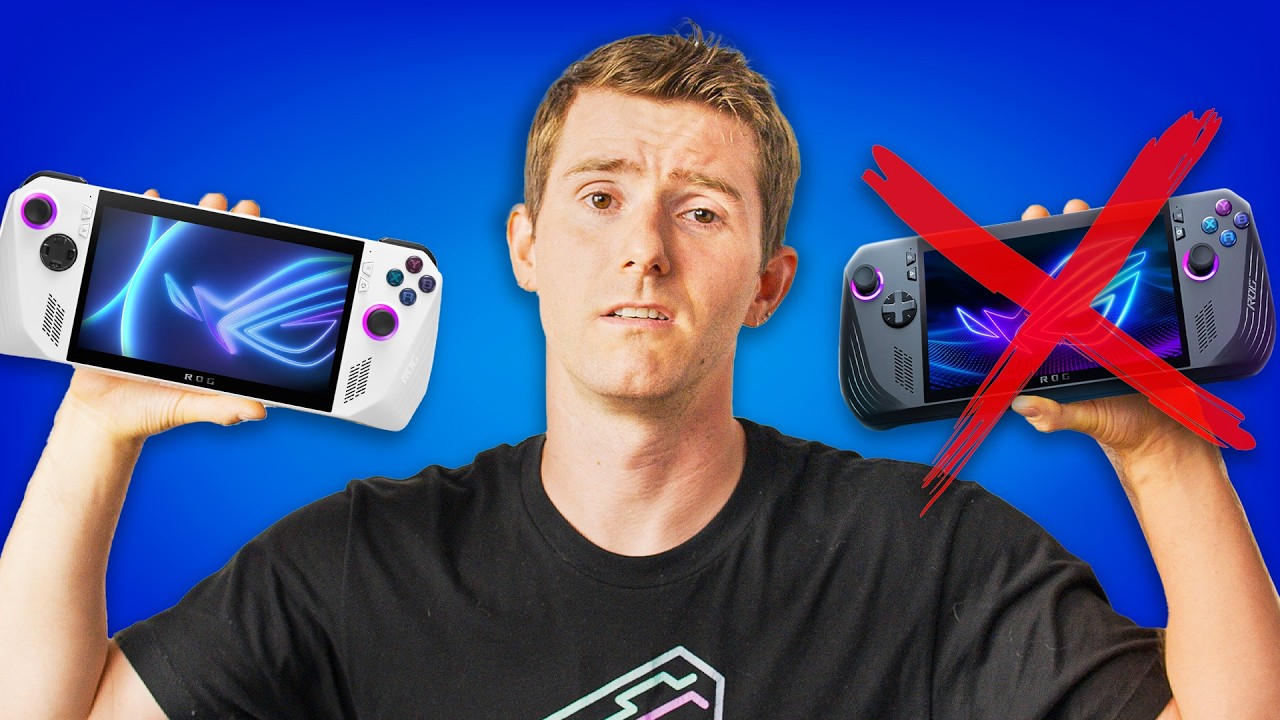
I don’t want to upgrade to the ROG Ally X.
0 up · 0 down · 0 ratings
Promos
Get a Sharge Shargeek 140 below, and use code "SUMMERSALE10" for an extra 10% off until July 29th! Shargeek 140 official website link: bit.ly Shargeek 140 Amazon link: amzn.to The ASUS ROG Ally X gives me complicated feelings. On the one hand, it's one of the best handheld gaming devices of 2024. On the other, how much better is it really than the originally ROG Ally? Enough to justify the new price? And even if I decide, it's good value....can I trust the ASUS Warranty? Buy an ASUS ROG Ally X: geni.us (Canada: lmg.gg Purchases made through some store links may provide some compensation to Linus Media Group. Want us to unbox something? Make a suggestion at lmg.gg ► GET MERCH: lttstore.com ► GET A VPN: piavpn.com ► GET EXCLUSIVE CONTENT ON FLOATPLANE: lmg.gg ► SPONSORS, AFFILIATES, AND PARTNERS: lmg.gg ► PRODUCTS WE USE ON THE SHORTCIRCUIT SET: lmg.gg FOLLOW US ELSEWHERE --------------------------------------------------- Twitter: twitter.com Instagram: @shortcircuityt TikTok: @linustech Facebook: @ShortCircuitYT CHAPTERS --------------------------------------------------- 0:00 Intro 0:43 Battery life 1:08 Tour of outside 2:40 In the box 3:52 Speakers 5:01 Differences from previous 5:29 Performance 6:17 More improvements 6:55 Price
I don’t want to upgrade to the ROG Ally X presents a nuanced look at how ASUS updated the handheld gaming PC market while acknowledging the price and value tradeoffs. The video kicks off by framing the new Ally X as an exciting device with a long list of claimed improvements, but also points out how the upgrade feels expensive when juxtaposed with the original Ally and other competing devices. The host emphasizes battery life as the standout improvement, reporting an endurance figure around 14 hours and a stress-test output of roughly 2 hours, all while noting the device is only modestly heavier than the first generation. He then walks through physical and hardware changes, such as refined ergonomics, a better d‑pad, more resistant joysticks rated for more rotations, improved back and shoulder buttons, and enhanced cooling with larger air intakes and a third exhaust grill, which together deliver quieter operation and cooler temps in testing. The video continues with practical details about the two USB‑C ports, a fingerprint sensor, a microSD issue history addressed, and a 65 W charger included, while highlighting the limitation that the X still does not support the maximum 100 W charging speed expected for top performance. In a broader comparison, the host weighs the Ally X against the Steam Deck OLED and other handheld PC options, noting that while the Ally X offers meaningful advantages like longer battery life and improved memory and storage options, the price remains a major barrier in a crowded market. The conclusion reflects on whether the upgrade justifies the cost for someone with an existing Ally or a Steam Deck, suggesting that unless you value the battery life and incremental hardware refinements, the Ally X may not feel like a compelling value upgrade at its current price point. Viewers are left with a balanced take: it’s among the best handheld PCs available, but it competes against cheaper or more mature alternatives, and the decision hinges on how much weight you place on battery life, upgrade cost, and ecosystem reliability.
Topics · technology · gadgets · handheld gaming · consumer electronics
Questions answered
- What is the standout hardware improvement of the ROG Ally X according to the video?
- The standout improvement is its battery life, with endurance testing showing around 14 hours and a shorter stress-test runtime around 2 hours, along with quieter and cooler operation.
- How does the Ally X compare in price and value to the original Ally and to Steam Deck OLED?
- The video notes that the Ally X is significantly more expensive than the original Ally and faces strong competition from devices like the Steam Deck OLED, making the upgrade less compelling unless you highly value the battery life and incremental hardware refinements.