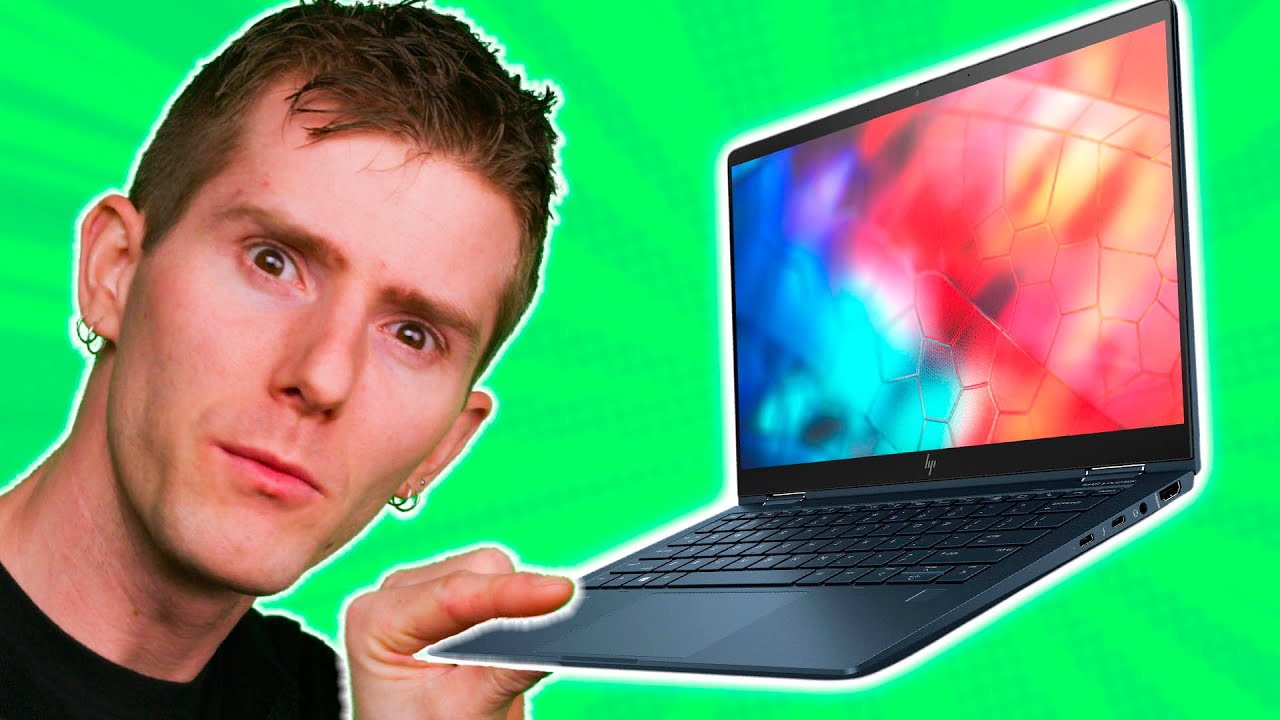
Why Aren't Laptops HEAVY Anymore?
0 up · 0 down · 0 ratings
Description
Thanks to HP for sponsoring this video.
Promos
Check out the HP Spectre x360 laptop: bit.ly How have manufacturers made laptops so thin and light? Techquickie Merch Store: lttstore.com Follow: twitter.com Leave a reply with your requests for future episodes, or tweet them here: twitter.com
Laptops have evolved from heavy, power-hungry machines to sleek, portable devices by shrinking and improving core components. Early on, manufacturers could pack more transistors onto a chip without increasing the overall package size, thanks to MOSFET scaling and the ability to raise switching frequencies. This meant CPUs could deliver higher performance at similar or lower power, enabling lighter laptops overall. In addition to smarter CPUs, smaller inductors and capacitors for power delivery allowed the voltage to be stepped down more efficiently, with smaller inductors contributing to a reduced form factor. The video emphasizes how advancements in PCB design, like high-density interconnects and multi-layer copper traces, let more functionality fit into a smaller space, further shaving weight without sacrificing connectivity. Manufacturing improvements,better simulation tools for thermal and electrical outcomes, and refined chassis production techniques,also play a crucial role, lowering the risk of overheating when components are packed more tightly. Materials science has contributed as well, with lightweight yet strong metals such as magnesium alloys used in both exteriors and internal brackets, enabling rigid structures without the bulk. Battery tech has followed suit, moving from heavier nickel-based chemistries to lithium-ion and lithium-ion polymer cells that store more energy per unit weight, pushing down the overall weight while maintaining usable power. The result is a class of ultrabooks that can sustain everyday tasks like browsing, media streaming, and light editing in compact, portable form factors, though deeper hardware remains necessary for gaming laptops which still tend to be larger. Overall, the talk ties these threads together to explain how innovations across transistors, power delivery, chassis manufacturing, and energy storage have converged to deliver light, capable machines that meet the needs of most users while acknowledging trade-offs like thermal management and port density.
Topics · technology · computing · hardware · laptops · manufacturing · electronics · science · education
Questions answered
- What enables laptops to become lighter without losing performance?
- Advances in transistor scaling, smaller and more efficient power delivery components, multi-layer high-density interconnects on PCBs, improved chassis manufacturing, and lighter battery chemistries all contribute to lighter laptops without sacrificing performance.
- Why do ultra-thin laptops still face thermal challenges?
- Because putting fast hardware into a compact, tightly-packed chassis reduces airflow, which can limit cooling and throttle performance, especially in devices designed to be very slim.