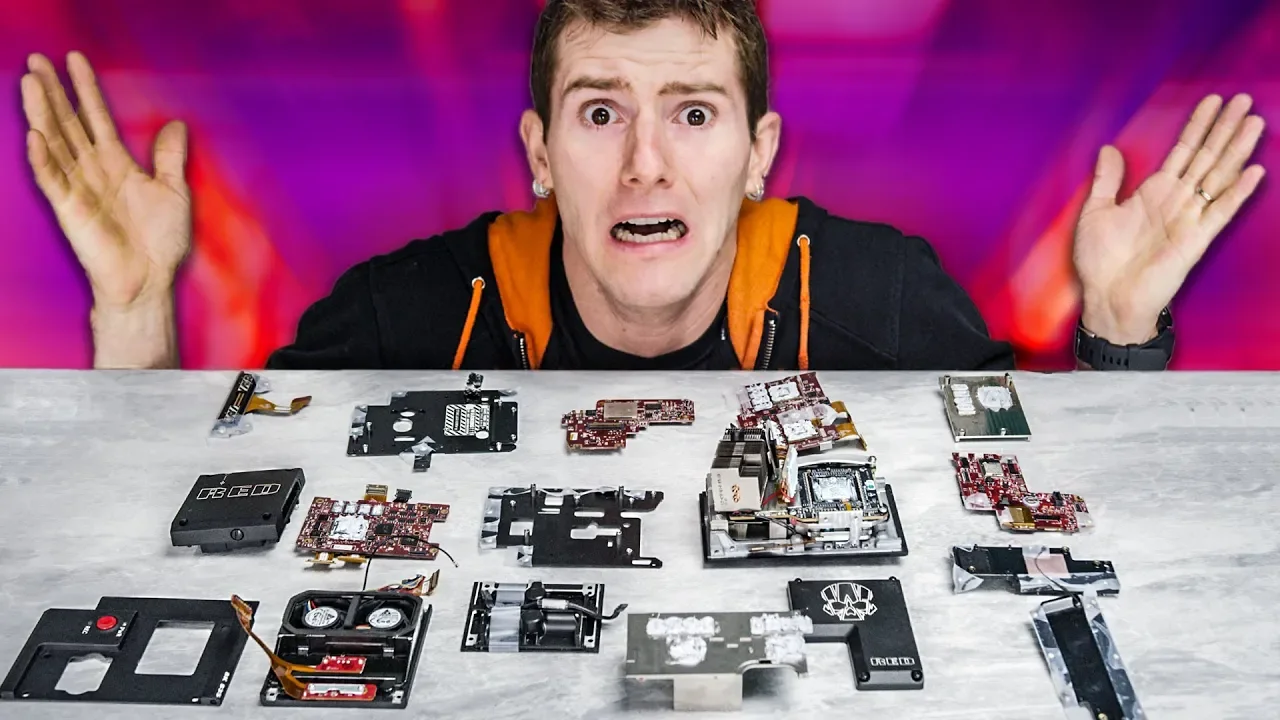
We TOOK APART an 8K Camera!
0 up · 0 down · 0 ratings
Promos
Buy cameras on Amazon: geni.us Discuss on the forum: linustechtips.com Our Affiliates, Referral Programs, and Sponsors: linustechtips.com Get Private Internet Access today at geni.us Linus Tech Tips merchandise at designbyhumans.com Linus Tech Tips posters at crowdmade.com Our Test Benches on Amazon: amazon.com Our production gear: geni.us Twitter - twitter.com Facebook - @LinusTech Instagram - @linustech Twitch - twitch.tv Intro Screen Music Credit: Title: Laszlo - Supernova Video Link: youtube.com iTunes Download Link: itunes.apple.com Artist Link: soundcloud.com Outro Screen Music Credit: Approaching Nirvana - Sugar High youtube.com
The video documents a highly ambitious teardown of a RED 8K camera, driven by a humorous suggestion of water cooling a body that is designed for extreme performance. Early on, the host explains that the camera is a compact yet bulky platform with a helium 8K sensor, and that cooling is a major challenge due to the dense data and heat produced inside. They outline their plan to start from the back and work upward, while acknowledging the risk of damaging delicate ribbons and cables hidden behind housings and boards. The discussion then pivots to the core question: could water cooling meaningfully improve the system, or is it just a novelty for a showpiece? The host notes that better cooling might extend longevity and reduce fan noise, even if it does not directly boost resolution or frame rate, and sets a success bar around achieving quieter operation and reduced heat in between shoots. They emphasize the lack of official instructions and the experimental nature of the project, framing it as uncharted territory that will require careful, methodical disassembly and documentation as they go. As the teardown progresses, the video delves into the daunting complexity of the camera internals. The team identifies the main cooling heat sink and maps out intake and exhaust paths, while carefully testing what can be detached without harming the sensor or circuitry. They encounter a series of challenging steps, including removing the mag reader, exposing ribbon cables, and uncovering a large heat sink assembly with heat pipes. The host comments on the unusual engineering of the cooling system, noting that the heat sink and PCB assembly appear much more substantial than expected, with multiple heat pipes running to a substantial radiator. Despite the growing complexity and a few missteps, they remain focused on preserving essential components and planning where to route any liquid cooling lines if they push forward. The dialogue continues to balance scientific curiosity with practical constraints. The host highlights the high costs of components seen in the teardown, from ASICs to potential water blocks, and openly questions whether the project can physically accommodate a liquid cooling loop. They debate window play with heat sinks and the necessary space for tubing, ultimately concluding that significant custom work would be required. The video closes with a candid acknowledgment of the project’s scope and a tease that the next installment would pursue further experimentation, including a possible reassembly or more advanced cooling approach, and even hints at a future Part 2 dating to 2020. Throughout, the tone remains exploratory, highlighting both the allure and the risk of modifying such a high-end, industrial camera for experimental cooling.
Topics · technology · science & engineering · hardware teardown · aerospace & photography equipment
Questions answered
- Why would someone water cool a RED 8K camera, and what is the expected benefit?
- Water cooling is explored as a way to reduce internal temperatures and potentially lower fan noise, with the goal of improving longevity and maintaining performance in hot environments. It is not expected to directly increase resolution or frame rate, but could improve stability and reduce throttling in demanding workloads.
- What major challenges did the teardown encounter during disassembly?
- Challenges include working with delicate ribbon cables behind assemblies, risk of damaging components, navigating a complex multi-part cooling system with heat pipes, and determining how to physically implement tubing and blocks without interfering with the camera’s existing hardware.
- Will there be a follow-up or completion of the project?
- Yes, the host mentions Part 2 and hints at continuing the project with further exploration or reassembly efforts, with a specific aim of advancing the cooling approach or attempting to put the camera back together.