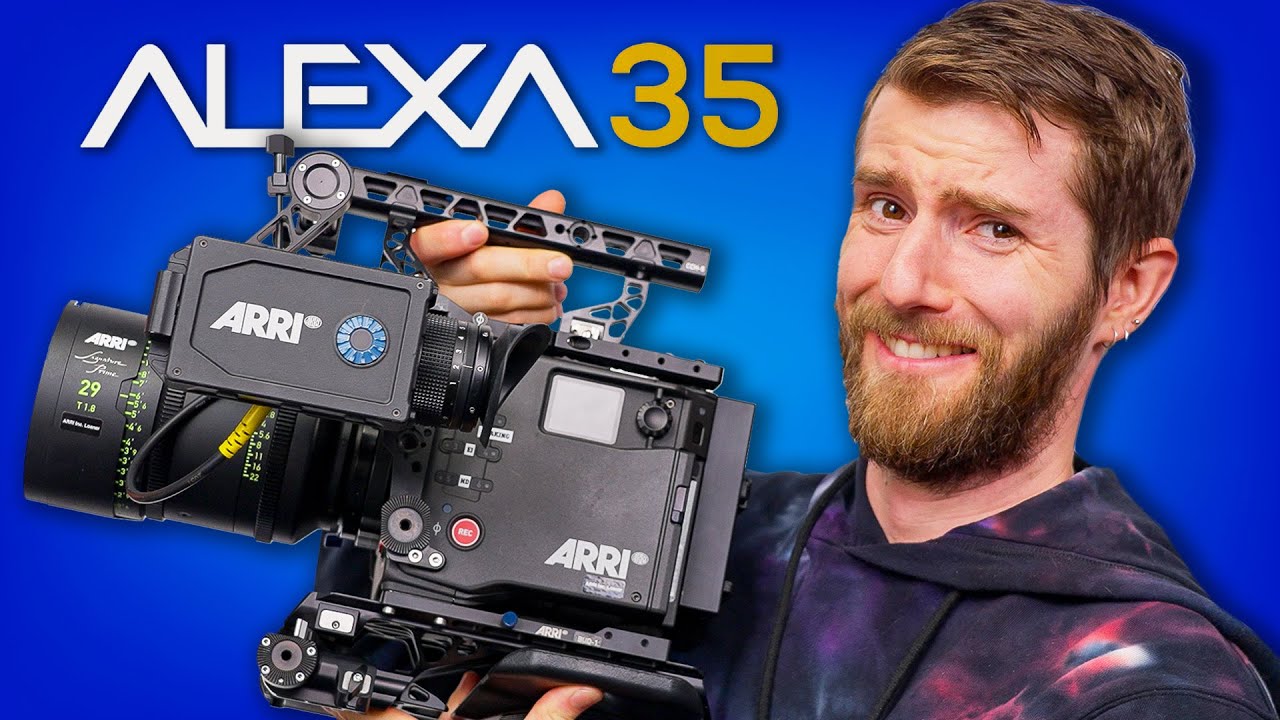
You will not convince me to buy this - ARRI ALEXA 35
0 up · 0 down · 0 ratings
Promos
Get a custom floppy disk sticker designed by us for free with the purchase of any stickers at Jukebox Print! Check them out at lmg.gg and use code linus for 30% off! Link to our Demo Footage: youtu.be We've used quite a few different camera systems for our production here at LMG and we ended up settling on Sony FX6 cameras to power the videos you watch, but when ARRI offered to send us their new ALEXA 35 camera to
check out, David tried his best to convince Linus that we should switch to what the big boys use. Want us to unbox something? Make a suggestion at lmg.gg ► GET MERCH: lttstore.com ► GET EXCLUSIVE CONTENT ON FLOATPLANE: lmg.gg ► SPONSORS, AFFILIATES, AND PARTNERS: lmg.gg ► PRODUCTS WE USE ON THE SHORTCIRCUIT SET: lmg.gg FOLLOW US ELSEWHERE --------------------------------------------------- Twitter: twitter.com Instagram: @shortcircuityt TikTok: @linustech Facebook: @ShortCircuitYT CHAPTERS --------------------------------------------------- 0:00 Who is this (expensive) camera for? 0:51 Specs and differences between the Alex 35 and Mini LF 2:44 Camera I/O 4:39 Is Resolution the most important thing? 5:35 LPL Lens mount 7:58 Storage options and digital film noise 12:07 Sponsor - Jukebox Print 12:44 Using the ARRI and looking at the UI 15:40 Blind test - ARRI vs Sony 19:48 Looking at our demo footage 21:02 Outro
The video is an exploration and critique of the ARRI ALEXA 35, framed as an examination of who the camera is for and what it actually delivers in practice. The hosts walk through the camera’s placement in ARRI’s lineup, noting the 35’s newer sensor, 17 stops of dynamic range, 4.6K resolution, and Netflix certification, and contrast these against the Mini LF with its older sensors. They discuss the practical implications of image quality, color science, and lens ecosystem, emphasizing that higher resolution is not always the defining factor for cinema grade results. The discussion shifts to I/O capabilities, time code, dual SDI outputs, and the ability to power peripheral devices, underscoring the camera’s potential as a production hub rather than just a single-shot capture device. Throughout, they compare the ARRI system to alternatives like Sony, highlighting noise characteristics, latitude in post, and the importance of workflow considerations when choosing a camera for different production contexts. In the early sections the hosts break down sensor technology and color science, explaining why the Alexa 35 introduces a new sensor and the implications for skin tones and red reproduction. They explain the benefits of ARRI Reveal color science and how it can impact the look of a scene compared with previous ARRI generations and competing brands. A recurring theme is that image quality is not only about pixel count but also about latitude, practical dynamic range, and how easy it is to salvage footage in post. They also touch on the physical and mechanical considerations, such as the LPL lens mount, robust support requirements for heavy PL lenses, and the adapter ecosystem that allows mixing brands. The conversation underscores the value of robust monitoring, reference displays, and the realities of operating with high-end cinema gear on set. Midway, the hosts perform a practical side-by-side blind test between ARRI and Sony footage to illustrate perceived differences in color, highlight roll-off, and bokeh. They acknowledge the challenges of a non-scientific test but use real-world footage to discuss how grading choices, lighting, and lens choices affect perceptual quality. They also discuss media codecs and recording formats, clarifying that ARRI RAW has uncompressed internal RAW and that ProRes options exist, which influences workflow latitude and post-production decisions. The conversation expands to post-production concepts such as film grain texture, the ability to digitally add film noise, and the idea that some grain is always present, but ARRI’s textures feature allows tailoring its character. Overall, the segment emphasizes that latitude and grading flexibility often matter more than resolution alone in achieving a cinematic finish. Toward the end, the camera’s UI, touchscreen usability, false color, focus magnification, and other on-camera tools are explored, highlighting user experience as a differentiator for on-set efficiency. They critique the process of mounting PL lenses on the LPL system and discuss the importance of choosing high-quality lenses and proper support to avoid damage. The hosts reflect on market positioning, noting ARRI’s traditional dominance in high-end productions and how the Alexa 35 appears to target budget-conscious creators while still showcasing cinematic capabilities. They conclude that the Alexa 35 is versatile and capable, but not a simple swap for all production needs, stressing the value of sensor latitude, color science, and workflow compatibility. The video ends with a recap that the best choice depends on the specific project requirements, resources, and the desired balance between image quality, flexibility, and budget.
Topics · technology · cinematography · video production · camera gear · HDR
Questions answered
- What makes the ARRI Alexa 35 different from the Mini LF?
- The Alexa 35 introduces a brand new sensor, higher dynamic range, improved color science, and 4.6K capture, with Netflix certification, while the Mini LF uses older sensor technology and is more compact but more expensive due to dual sensors.
- Is resolution the main factor for cinema image quality?
- No, the speakers argue that latitude, dynamic range, color science, and post-production flexibility are often more important than resolution alone.
- What are some key I/O features of the Alexa 35?
- It includes Ethernet for metadata, time code, sync, 12V power outputs, dual SDI displays, and multiple workflow-friendly ports for external devices.
- What is the purpose of ARRI’s film grain textures feature?
- To allow filmmakers tailor the characteristic of digital film noise, giving control over grain texture to suit the grading and look in post.
- Who is ARRI Alexa 35 best suited for?
- It is aimed at productions that need cinema-grade image quality with robust post-production latitude and a strong color pipeline, while also offering capabilities that appeal to high-end features and demanding productions.