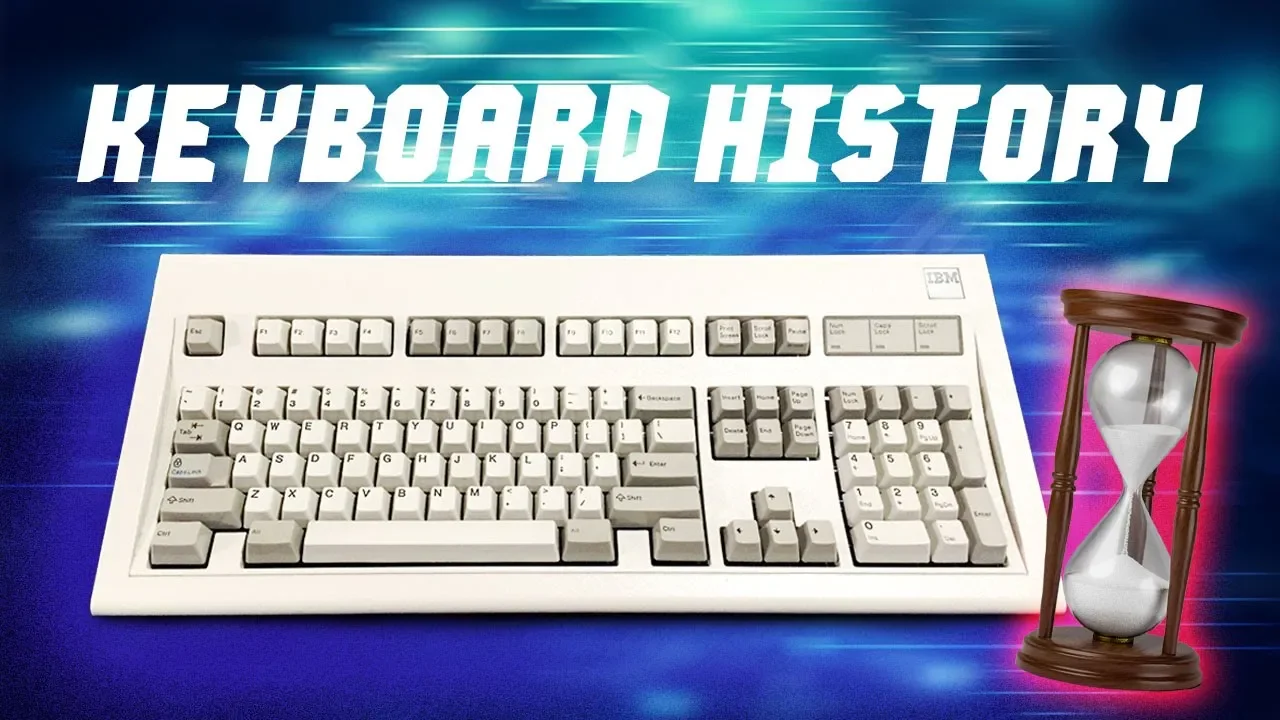
History of the Computer Keyboard
0 up · 0 down · 0 ratings
Promos
Freshbooks message: Head over to freshbooks.com and don’t forget to enter Tech Quickie in the “How Did You Hear About Us” section when signing up for your free trial. The present-day keyboard has its roots in devices that go all the way back to before electricity was mainstream! Learn all about the journey from early typewriters to feature-packed modern keyboards on this episode of Techquickie. Techquickie Merch Store: designbyhumans.com Techquickie Movie Poster: shop.crowdmade.com Follow: twitter.com Leave a reply with your requests for future episodes, or tweet them here: twitter.com Join the community: linustechtips.com Intro Theme: Showdown by F.O.O.L from Monstercat - Best of 2016 Video Link: youtube.com iTunes Download Link: itunes.apple.com Listen on Spotify: open.spotify.com Licenses for images/footage used: creativecommons.org creativecommons.org
The video traces the evolution of the computer keyboard from its roots in early typewriters through to modern computer input devices. It begins by highlighting Christopher Latham Sholes, the inventor of the typewriter that introduced the now ubiquitous QWERTY layout, which was designed to minimize mechanical jams by spacing commonly used letter pairs. The narrative explains why QWERTY became the dominant arrangement, even as other layouts like Dvorak existed, and describes how teleprinters in the early 20th century popularized that same layout for data input. As computers emerged in the 1940s, teleprinters with the QWERTY arrangement carried over into early machines such as the ENIAC era, setting the stage for keyboards to become standard computer components rather than standalone typing devices. The video then moves through the 1960s, when video terminals popularized on-screen data manipulation, while the hardware remained part of a larger system, and into the late 70s and 80s when ergonomic concerns began to influence design. It surveys the shift from reed switches to membrane and buckling spring switches, explaining the tradeoffs between durability, tactile feedback, and debris resistance. The rise of IBM’s keyboards, including the Model F and Model M, cemented buckling springs as a hallmark of keyboard feel, while German firms like Cherry contributed reliable switches that improved overall quality. The piece closes by contrasting noisy mechanical keyboards with cheaper rubber dome designs that helped proliferate chiclet and laptop keyboards, then notes the modern diversity of options from RGB backlighting to macro keys and optical switches, underscoring that while technology has evolved, the core interface,pressing keys to input data,remains constant.
Topics · technology · history · hardware · user-interfaces
Questions answered
- What invention introduced the QWERTY layout and why did it endure?
- The QWERTY layout was introduced by Christopher Latham Sholes with his typewriter to reduce typebar jams; it endured because it became widely adopted and associated with efficient typing, making retraining costly and productivity losses a concern during the early days of widespread typing.
- What are key keyboard switch technologies discussed, and what are their pros and cons?
- The video covers reed switches, membrane switches, buckling spring switches, and optical switches. Reed switches offered tactile contact but were fragile and noisy; membrane switches are inexpensive and debris resistant but less tactile; buckling springs offer durable, satisfying typing feel and audible feedback but are heavy and noisy; optical switches enable fast response and reduced debounce issues, though they are a newer option in this narrative.