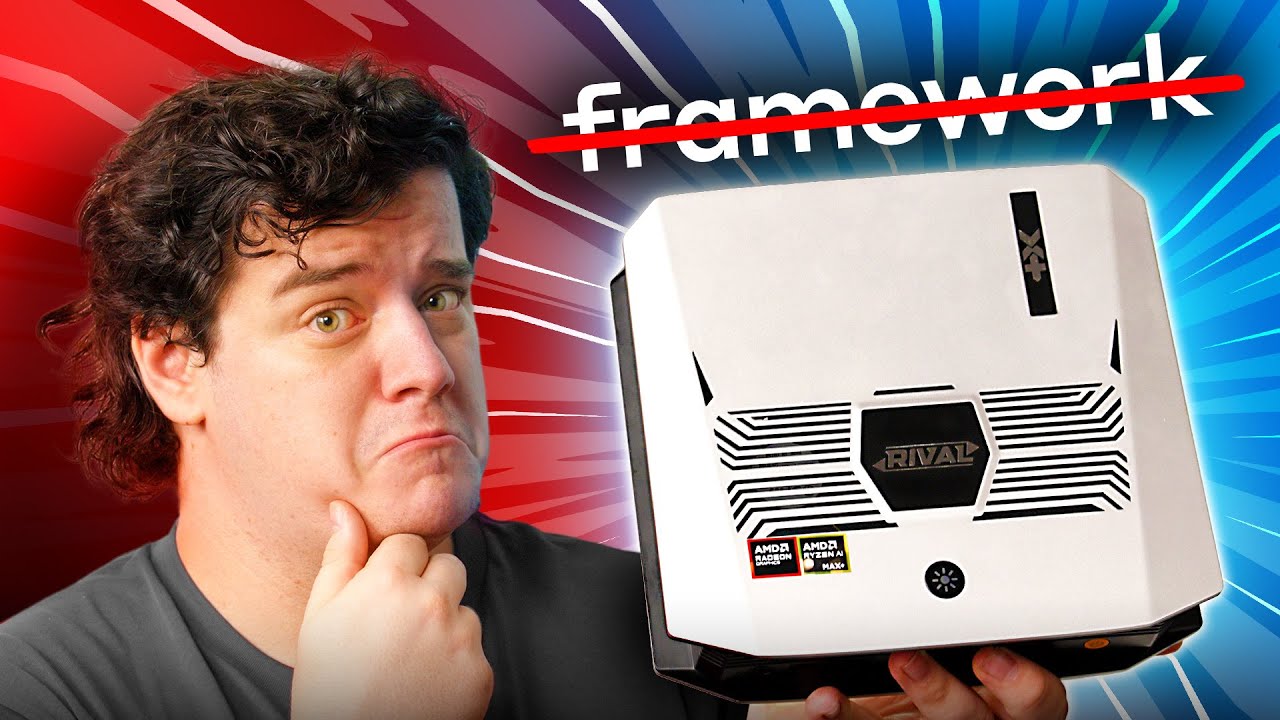
This Mini PC Might be the Best Value YET - X+ Rival
0 up · 0 down · 0 ratings
Description
Whether you're creating content, hosting meetings, or just want to upgrade your webcam game, the EMEET Pixy has you covered.
Check out their 4k dual camera system with AI smart tracking using our link: Amazon: amzn.to (Discount valid until Oct 26th) Elijah unboxed the new Framework Desktop not long ago and was quite impressed with the Ryzen AI Max+ 395 powering it, so when we stumbled across the X+ Rival, which offered that same chip at a cheaper price, we knew we had to get him to check it out.
Promos
Check out the X+ Rival Ryzen AI Max+ 395 Mini PC: lmg.gg Want us to unbox something? Make a suggestion at lmg.gg ► GET MERCH: lttstore.com ► GET A VPN: piavpn.com ► GET EXCLUSIVE CONTENT ON FLOATPLANE: lmg.gg ► SPONSORS, AFFILIATES, AND PARTNERS: lmg.gg Purchases made through some store links may provide some compensation to Linus Media Group. Affiliate links powered in part by affilimate.com Linus Sebastian is an investor in Framework Computer, Inc CHAPTERS --------------------------------------------------- 0:00 This has got some marketing 0:29 Unboxing and design impressions 2:06 Why compare to Framework, buttons and ports 3:13 Teardown and specs 6:50 Sponsor - EMEET 7:32 Powering it up, fan noise, and RAM allocation 10:03 Playing Cyberpunk 2077 11:20 Download speeds and performance modes 12:02 LABS performance and thermal test results 14:09 Playing Counter-Strike 2 14:48 Pricing, AliExpress, and overall thoughts
This video examines the X Plus Rival Mini PC, positioning it as a strong value proposition against the Framework Desktop by leveraging the same Ryzen AI Max+ 395 chip while targeting a lower price point. The host begins with an unboxing that highlights the physical design, materials, and included accessories such as the power brick, cables, M.2 access, and the stand. He then compares IO options, noting the front panel includes a full-size SD card reader, USB A, USB C, and a front power/mode button, while the back offers additional USB A ports, HDMI, DisplayPort, USB C, a 2.5 gigabit LAN, and extra audio jacks. The teardown follows, where he inspects the cooling solution, RAM configurations, and the internal layout, emphasizing the thinner form factor and its implications for thermals compared with the Framework setup. Throughout the early segments, the host questions marketing claims, confirms physical building details, and establishes a baseline understanding of how the Rival stacks up in terms of upgradeability and potential performance ceilings. The host then transitions to performance testing, sharing lab results and personal impressions on noise levels, BIOS mode behavior, and how the unit handles modern games at various resolutions. He notes that while the device is capable, the cooling solution appears less robust than the Framework, which partly explains temperature headroom and sustained performance differences under load. In gaming scenarios, Cyberpunk 2077 and CS2 benchmarks reveal that the Rival offers playable frame rates at 1080p with room for tuning, though it trails the Framework in sustained performance and thermals, especially under ray tracing or higher resolutions. The discussion shifts to pricing and availability, highlighting a price range that sometimes undercuts the Framework but with caveats about the reliability of certain vendor listings. The sponsor segment covers a webcam solution, and the host wraps with practical takeaways: the Rival delivers strong value for certain use cases like LLM work or compact productivity while emphasizing that the decision hinges on cooling, expandability, and price at the moment of purchase. The presenter concludes by weighing use cases, noting that a sub-$1,600 price for the 128 GB RAM variant could represent a compelling entry into the Stricks Halo ecosystem, and invites viewer opinions on whether this is the best value mini PC on the market.
Topics · technology · hardware · pc_gaming · product_reviews · unboxing · teardown · comparisons
Questions answered
- How does the X Plus Rival Mini PC's cooling compare to the Framework Desktop in sustained gaming?
- Lab results show that the Rival runs hotter on average and louder under load, indicating weaker cooling compared to the Framework in sustained gaming scenarios.
- What RAM configurations are available on the X Plus Rival and how do they affect performance?
- The unit supports up to 48 GB RAM for the tested configuration, with RAM allocation to GPU and CPU adjustable in the BIOS, impacting VRAM availability and overall performance.
- Is the Rival a good value for content creation or AI workloads?
- For workloads that benefit from VRAM and compact form factor, the Rival offers a compelling price-to-performance option, though buyers should consider thermals and noise.
- What is the significance of the Ryzen AI Max+ 395 in this device?
- The Ryzen AI Max+ 395 is the core chip that enables gaming and AI performance in a compact PC, acting as the primary differentiator versus other mini PCs at similar price points.