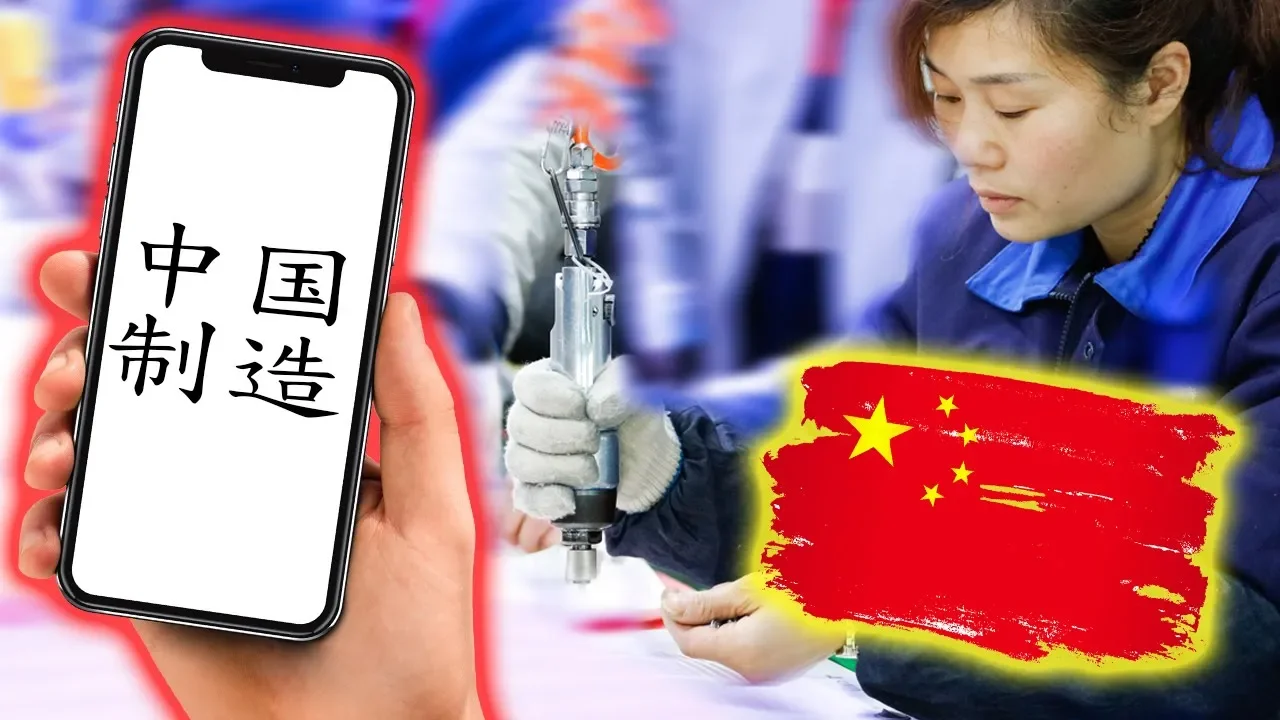
Why Are So Many Electronics Made In China?
0 up · 0 down · 0 ratings
Promos
Squarespace link: Visit squarespace.com and use offer code TECHQUICKIE to save 10% off your first order. How did China become such a powerhouse of electronics manufacturing? Techquickie Merch Store: designbyhumans.com Techquickie Movie Poster: shop.crowdmade.com Follow: twitter.com Leave a reply with your requests for future episodes, or tweet them here: twitter.com Join the community: linustechtips.com Intro Theme: Showdown by F.O.O.L from Monstercat - Best of 2016 Video Link: youtube.com iTunes Download Link: itunes.apple.com Listen on Spotify: open.spotify.com License for image used: creativecommons.org
The video opens by addressing a common assumption that the ubiquity of iPhones and other electronics means Apple and other brands manufacture globally, but in reality most assembly occurs in China. The host explains that a mass-produced gadget is likely to include components made or assembled there, setting up the central question: why China dominates electronics manufacturing? The discussion moves beyond the simple explanation of cheap labor, noting Shenzhen as a premier high-tech manufacturing hub where wages can be under three dollars per hour, yet also emphasizing that labor cost is not the sole driver. The narrative highlights China’s strategic policy moves from the 1970s, including the creation of Special Economic Zones like Shenzhen to attract foreign investment with tax breaks and regulatory flexibility. This framework helped attract massive factories capable of rapid scale and highlighted the importance of a large, technically skilled workforce, including engineers who can manage complex supply chains. The video further explains how the vast scale enables quick responses to demand and design changes, with Chinese manufacturers often handling custom fabrication so parts are available locally. Finally, it discusses domestic demand within China, noting that a burgeoning middle class and 1.4 billion potential customers push companies to expand capacity, all while acknowledging criticisms such as environmental issues and labor practices that accompany such mass production. The conclusion invites viewer opinions on the topic and plugs Squarespace, framing the discussion as part of a broader examination of forces shaping the technology industry and global manufacturing dynamics.
Topics · science and technology · economics · manufacturing · global trade
Questions answered
- What is Shenzhen's role in electronics manufacturing and why does it matter beyond cheap labor?
- Shenzhen serves as a designated Special Economic Zone that attracts foreign investment through tax breaks and regulatory flexibility, enabling the rapid creation and expansion of massive factories capable of quickly scaling production to meet big contracts and new product launches.
- Why can China offer faster response times and customization for electronics compared to other regions?
- Because of the large number of engineers, extensive supplier networks, and the ability of factories to perform quick in-house fabrication and assembly, reducing wait times for parts and enabling rapid design changes.