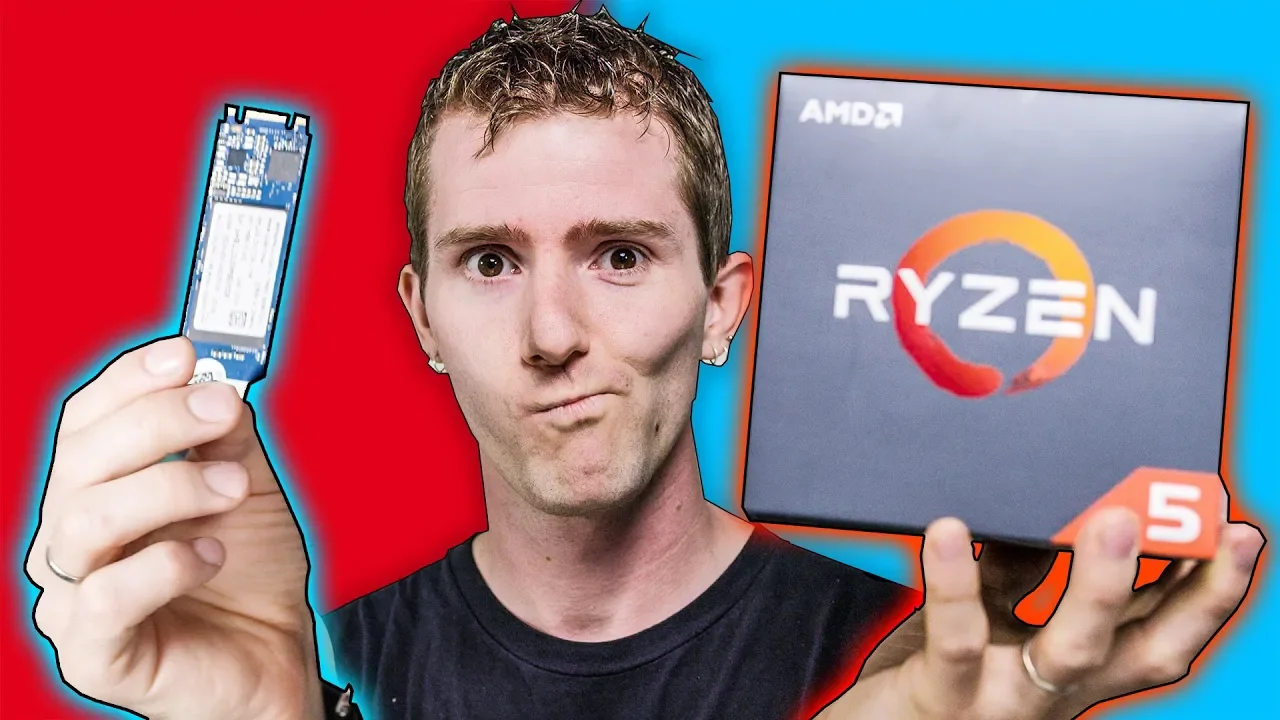
We Ran INTEL Optane on an AMD CPU!!
0 up · 0 down · 0 ratings
Description
Thanks to Skillshare for sponsoring this video! First 500 people will get a 2 month FREE trial here: skl.sh
Check out ORIGIN PC’s New EVO15-S, powered by NVIDIA GeForce GTX 1070 Max-Q, and their latest specials here: bit.ly Buy Optane 32GB on Amazon: geni.us Buy Optane 32GB on Newegg: geni.us Buy Seagate Barracuda Pro 12TB on Amazon: geni.us Buy Seagate Barracuda Pro 12TB on Newegg: geni.us Buy Samsung 960 Pro on Amazon: geni.us Buy Samsung 960 Pro on Newegg: geni.us
Promos
Check out PrimoCache: geni.us Discuss on the forum: linustechtips.com Our Affiliates, Referral Programs, and Sponsors: linustechtips.com Linus Tech Tips merchandise at designbyhumans.com Linus Tech Tips posters at crowdmade.com Our Test Benches on Amazon: amazon.com Our production gear: geni.us Twitter - twitter.com Facebook - @LinusTech Instagram - @linustech Twitch - twitch.tv Intro Screen Music Credit: Title: Laszlo - Supernova Video Link: youtube.com iTunes Download Link: itunes.apple.com Artist Link: soundcloud.com Outro Screen Music Credit: Approaching Nirvana - Sugar High youtube.com Sound effects provided by freesfx.co.uk
The video investigates whether Intel Optane memory modules can be used on an AMD platform by leveraging AMD StoreMI, a tiered storage solution that combines a fast cache with a larger slow drive. The hosts explain the core ideas behind tiered storage, comparing Intel Optane caching on a controlled platform with AMD StoreMI, which can work with any SSD within certain capacity limits. They describe the step by step setup, including assigning drives to fast and slow tiers and using the same 32 GB Optane module for both testing environments. Early runs show inconsistent results as the caching software learns, including a few baffling issues like a drive appearing and disappearing across machines and even a Steam integrity check error. After troubleshooting, they observe that StoreMI can reach SSD-level performance on some workloads, but the process is slow and introduces notable limitations, such as requiring full reformatting to move caches between machines. The discussion then pivots to PrimoCache as an alternative caching layer, highlighting its flexibility, non-destructive caching, and clearer visibility into cache hits and usage. In the end, the hosts conclude that all three solutions (Intel Optane, AMD StoreMI, and PrimoCache) can achieve similar performance under certain conditions, but PrimoCache offers the most straightforward functionality and fewer side effects, albeit at an additional license cost. The video wraps with practical guidance on licensing, hardware choices, and a recap of the key takeaways for readers evaluating caching solutions on mixed hardware ecosystems.
Topics · technology · hardware · storage · performance · benchmarking · amd · intel · optane
Questions answered
- What is the core idea behind tiered storage as discussed in the video?
- Tiered storage combines a fast cache with larger, slower storage so frequently accessed data stays on the faster medium, improving load times and responsiveness.
- Can AMD StoreMI use any SSD for caching, and what are the key limits?
- Yes, StoreMI can cache any SSD as long as the drive is under 256 GB or limited to 256 GB by the user, typically on an X470 motherboard.
- Which caching solution offered the best ease of use and least side effects according to the video?
- PrimoCache was described as the most flexible and non-destructive, with the easiest uncaching and monitoring, though it requires a separate license after a trial.