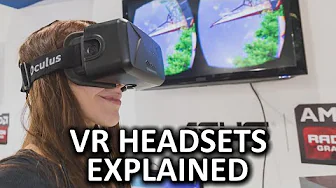
VR Headsets As Fast As Possible
0 up · 0 down · 0 ratings
Promos
Headsets like the Oculus Rift and HTC Vive could be the next big thing in gaming. How do they work, and how did we get from old-school VR in the 1960s to today? Squarespace link: Visit squarespace.com and use offer code LINUS to save 10% off your first order. Follow: twitter.com Join the community: linustechtips.com Licenses for images used in this video: creativecommons.org creativecommons.org
VR Headsets As Fast As Possible explores the evolution and inner workings of virtual reality headsets, starting with the early innovations like the Sensorama in 1962 and the Sword of Damocles, then tracing through arcade VR in the 1980s and consumer devices in the 1990s such as the Nintendo Virtual Boy. The video explains how modern VR achieves immersion through stereoscopy, showing slightly different images to each eye to trick the brain into perceiving depth, and how specialized lenses and high refresh rates reduce motion blur and motion sickness. It also covers the importance of head tracking, with gyroscopes and accelerometers enabling the displayed image to change as you move your head, and notes room-scale tracking approaches used by devices like the HTC Vive with external base stations and lasers. The discussion then shifts to more affordable options like Google Cardboard, highlighting how developers have created VR apps for simple cardboard viewers and smartphones, which lowers the barrier to entry for new users. The host emphasizes that even though premium headsets demand powerful PCs and high-end specifications, the VR ecosystem is expanding with broad industry support that could transform gaming on PC and console platforms. Finally, the video touches on the potential future directions of VR technology, the excitement around the medium, and light promotional content about Squarespace as part of the program, framed as a typical tech quickie about rapid tech advancement and consumer access.
Topics · virtual reality · technology history · gaming · consumer electronics
Questions answered
- What is stereoscopy and how does it create depth perception in VR headsets?
- Stereoscopy presents slightly different images to each eye, which the brain combines to perceive depth, creating a 3D effect on a 2D screen.
- Why do VR headsets require high refresh rates and powerful PCs?
- High refresh rates reduce motion blur and lessen the risk of motion sickness, while powerful PCs support higher resolutions and processing for realistic immersive visuals.