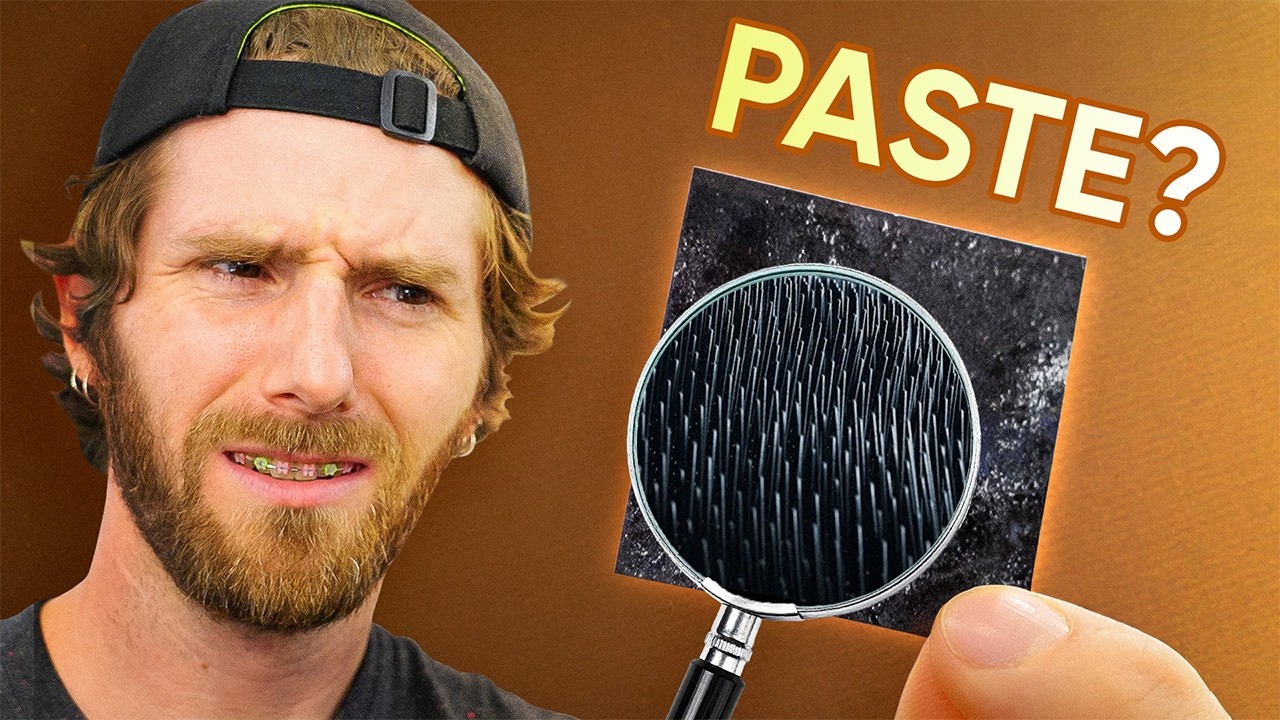
Noctua Says THIS is Thermal Paste
0 up · 0 down · 0 ratings
Description
Thanks to Meter for sponsoring this video! Go to meter.com to book a demo now! We're here at Computex 2026 checking out some new Noctua goodies, one of which seems to be a very interesting alternative to thermal paste. Alongside that they're also showing off an AIO which looks pretty nifty Labs article: lttlabs.com Discuss on the forum: linustechtips.com
Channels and socials
Check out our Channel Partners: Secretlab - Grab a TITAN Evo ergonomic gaming chair: lmg.gg PIA - Get the VPN of our choice: piavpn.com dbrand - Buy a "Circuit" series skin for your device: dbrand.com ► SHOP LTT PRODUCTS: lttstore.com ► GET EXCLUSIVE CONTENT ON FLOATPLANE: lmg.gg ► DIVE DEEPER ON THE LTT LABS WEBSITE: lmg.gg ► SPONSORS, AFFILIATES, AND PARTNERS: lmg.gg Purchases made through some store links may provide some compensation to Linus Media Group. Affiliate links powered in part by affilimate.com Linus Sebastian is an investor in Framework Computer, Inc and HexOS by Eshtek. CHAPTERS --------------------------------------------------- 0:00 Intro 2:33 Explain this to me tech tip man 7:24 AIO Cooler 8:10 Pumpless AIO 9:03 Other goodies 10:14 Outro
Noctua showcases an unconventional cooling concept at Computex 2026, focusing on a carbon nanotube thermal pad developed by Carbice and distributed as an alternative to traditional thermal paste. The video explains the fundamental idea: these pads are peel-and-stick, enabling easy installation with no risk of applying too much paste or leaving gaps. The host contrasts the pads with conventional compounds like PTM 7950 and Noctua NT-H2, noting that performance can be inferior in some setups, which raises questions about whether a brand renowned for engineering precision would endorse a less conventional solution. The narrative uses a time-travel gimmick to illustrate how such nanotube structures could improve heat transfer through a dense forest of nanotubes deposited on a metal substrate, potentially moving heat away from a CPU more effectively in certain conditions. However, the presenter highlights two critical constraints: burn-in time and the limited suitability for bare-die cooling, which influence practical adoption depending on user needs and hardware configuration. The segment then pivots to a broader look at Noctua’s product roadmap, including an AIO cooler in collaboration with Asetek and a pumpless AIO concept, signaling Noctua’s continued push into advanced cooling technologies while maintaining a clear emphasis on real-world usability and acoustic performance. The video closes with sponsor mentions and reflections on how these developments might affect both enthusiast builds and broader enterprise deployments, inviting viewers to consider how such innovations could reshape cooling strategies over the coming years.
Topics · science & technology · hardware · cooling · computer hardware · engineering
Questions answered
- What are Carbice carbon nanotube pads and how do they work?
- They are thin, peel-and-stick pads made from carbon nanotubes on a substrate, designed to fill microscopic gaps and transfer heat efficiently. They rely on CNTs bending and penetrating surface imperfections, aided by a polymer coating to increase surface area and enable impregnation during activation.
- Are carbon nanotube pads better than traditional thermal paste for all setups?
- Not necessarily. In some configurations they can underperform compared with high-performance pastes like PTM 7950 or NT-H2, and they require a long burn-in period to realize full benefit, making them less suitable for frequent reapplications or bare-die cooling in certain systems.
- What other cooling innovations does Noctua preview in this video?
- Noctua discusses an upcoming AIO cooler in partnership with Asetek, featuring improved acoustics and a VRM cooling solution, as well as a pumpless AIO concept focusing on re-engineered cold plates and heat transfer optimizations.