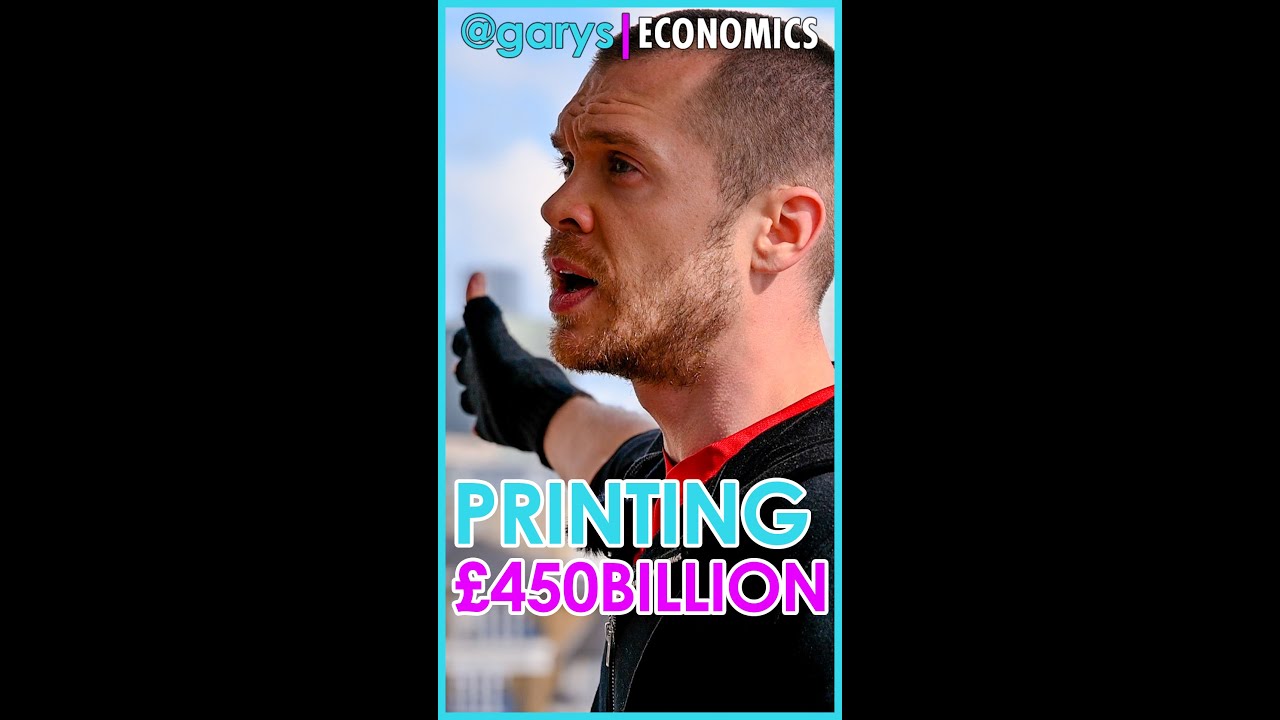
Why a £5 Billion Windfall Tax will do NOTHING when we have printed £450 Billion Pounds! #Shorts
0 up · 0 down · 0 ratings
Description
This #Short is a snippet from the full length video 'What's Wrong with Economics?" Full Video: youtu.be "If i was to come to you 3 years ago before Covid and say imagine the government printed £450 billion pounds and gave it to the rich, what do you think would happen? You don't need to be an economist, you say okay well if the rich get a ton of money they're going to push the prices up, which will be fine for them because they've got a ton of money. That will hurt the rest of us right and the rich will start to consume a larger share of the natural resources and natural resources become more expensive for the rest of us, that's not complicated okay. That happened it's obvious it's obvious and that's £450 billion pounds and now Rishi Sunak like is on tv saying oh don't worry we stand by ready to help with £5 billion pounds. You give £450 billion pounds to the rich and then you say we're gonna help with £5 billion pounds. It's not it's not gonna it's not going to help right and then Labour say we're going to do a windfall tax on oil and gas companies and we're going to raise £2 billion pounds. These guys are so far out of touch you know they're playing a different game you know if you transfer £450 billion pounds to the rich and then you you take £5 billion pounds back, you're going to destroy the economy right! but but who's talking about it? listen..."
The short presents a compact argument that recent monetary actions and proposed tax measures are out of touch with economic reality. It asserts that distributing £450 billion to the rich effectively boosts inflation and widens inequality, because the rich would spend a larger share of scarce resources and push up prices. The speaker contrasts this with the government’s proposed £5 billion windfall tax and Labour’s plan to raise £2 billion from oil and gas companies, arguing that such sums are minuscule in comparison to the previous stimulus. The narrative emphasizes that transferring a large amount of money to the wealthiest segments risks destabilizing the broader economy, potentially reducing investment and increasing unemployment. The tone is confrontational, calling on viewers to see through political rhetoric and recognize the mismatch between scale and policy. The clip frames the debate as a fundamental clash between massive QE-like actions and comparatively small tax measures, urging a reevaluation of economic policy priorities. The overall takeaway is that monetary expansion intended to bolster the economy can have unintended consequences, and that modest windfall taxes may be insufficient to counteract those effects.
Topics · economy · politics · public_finance · macroeconomics
Questions answered
- What is the central claim about printing £450 billion and its impact on inflation and inequality?
- The claim is that distributing £450 billion to the rich would push prices up, increase the rich's consumption of resources, and hurt the broader population by raising costs and worsening inequality.
- What is the suggested policy response discussed in the clip, and why is it seen as insufficient by the speaker?
- The suggested response is a windfall tax on oil and gas companies and a small £2 billion raise, which the speaker argues is insufficient to counteract the effects of the large-scale money printing and to stabilize the economy.