Using 6000 CPU Cores for SCIENCE - HOLY $H!T
0 up · 0 down · 0 ratings
Promos
Receive an additional $25 credit for Ting today when you use code LINUS2018 at linus2018.ting.com Use code LINUS and get 25% off GlassWire at lmg.gg We tour LIGO Hanford's gravitational waves observatory! Buy Gravitational Waves Books On Amazon: geni.us On Newegg: geni.us Discuss on the forum: linustechtips.com Our Affiliates, Referral Programs, and Sponsors: linustechtips.com Get Private Internet Access today at geni.us Linus Tech Tips merchandise at lttstore.com Linus Tech Tips posters at crowdmade.com Our Test Benches on Amazon: amazon.com Our production gear: geni.us Twitter - twitter.com Facebook - @LinusTech Instagram - @linustech Twitch - twitch.tv Intro Screen Music Credit: Title: Laszlo - Supernova Video Link: youtube.com iTunes Download Link: itunes.apple.com Artist Link: soundcloud.com Outro Screen Music Credit: Approaching Nirvana - Sugar High youtube.com
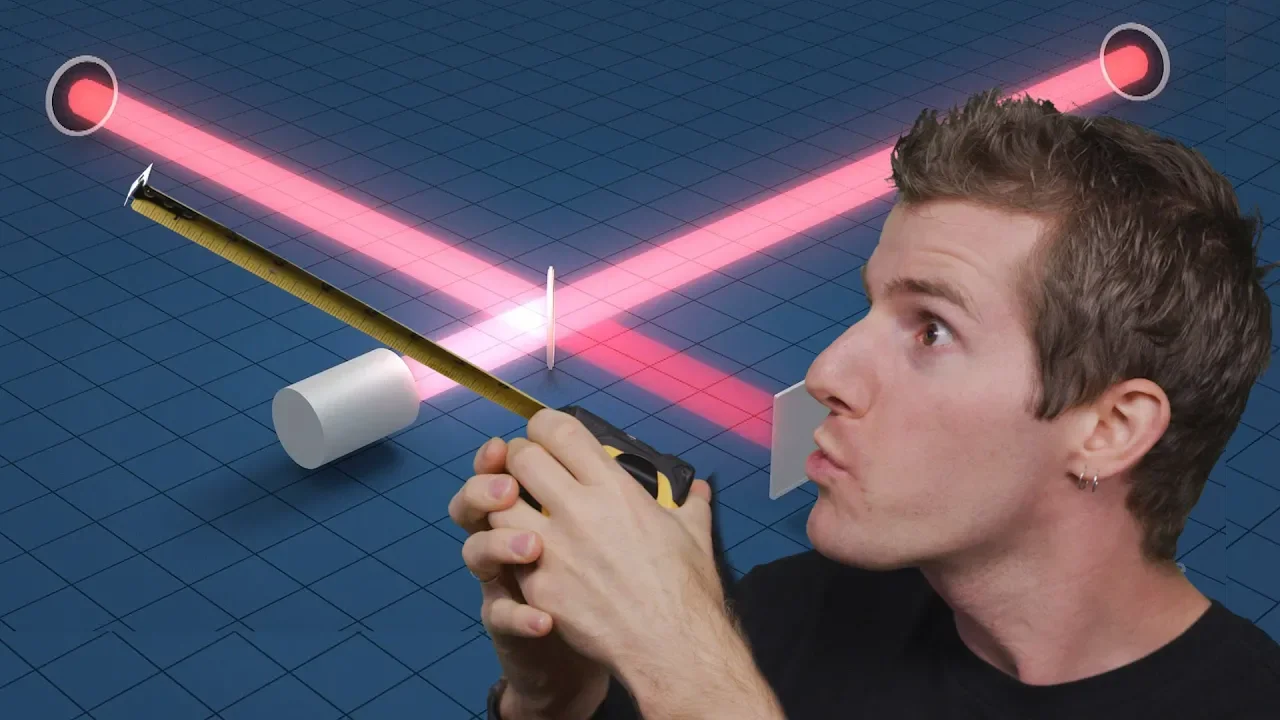
The video opens with a concise explanation of the challenge of measuring things that are incredibly small, comparing traditional measurement methods to the precision achieved by LIGO. It lays the groundwork for why laser interferometry over four-kilometer arms is essential, highlighting the leap from simple measurement tools to the use of lasers to detect minute distortions in space-time. The host connects the concept to the historical trajectory of gravitational wave science, noting Einstein's prediction and the evolution from early ideas to the successful detection in 2015 after upgrades to the LIGO system. We also learn about how LIGO’s detectors are engineered to operate in ultra-high vacuum and with stringent vibration isolation to maintain measurement integrity, setting the stage for the complex data processing that follows. The middle section dives into the intricate hardware and physics of the interferometers, explaining how laser light travels through long arms, reflects off mirrors, and recombines to produce interference patterns that reveal space-time changes caused by gravitational waves. The explanation covers vacuum engineering, mirror suspension systems, and vibration isolation, including the use of seismometers and active feedback to cancel ground motion. The concept of quantum squeezing is introduced, showing how quantum optics techniques reduce noise in the measurement, with an emphasis on the ktp crystal and entangled photons that improve phase detection. This segment emphasizes the scale and precision required to discern genuine gravitational-wave signals from a noisy environment. The final portion focuses on the data and computing backbone that makes rapid, global verification possible. It describes collecting data from thousands of channels, physically separating noisy computer equipment, and synchronizing clocks across multiple observatories to time-stamp events precisely. The video then highlights the immense compute resources dedicated to real-time analysis, including 6,000 processing cores, hundreds of GPUs, and multi-petabyte storage, with data eventually shared with Caltech and the broader scientific community. It closes with a look toward future improvements such as cryogenics, extended quantum squeezing, and potential space-based detectors, underscoring how each incremental enhancement expands our view of the cosmos.
Topics · science · technology · physics · astronomy · computing
Questions answered
- What makes LIGO's laser interferometer capable of detecting gravitational waves over four kilometer arms?
- LIGO uses a laser beam that travels down two four-kilometer tubes, reflects off mirrors, and recombines at a beam splitter. A gravitational wave distorts space-time, changing the relative lengths of the arms and altering the interference pattern detected at the end, allowing the measurement of incredibly small changes.
- How do scientists reduce noise in the measurement to improve sensitivity?
- Noise is reduced through ultra-high vacuum to minimize scattering, vibration isolation with multi-stage suspensions and seismometers, and quantum squeezing techniques using entangled photons to improve phase detection accuracy.
- Why is timing synchronization critical for LIGO's data analysis?
- Precise timing synchronization across all detectors and the end-of-arm sensors ensures that gravitational-wave events are time-stamped accurately. This enables correct cross-correlation, localization of the source, and rapid coordination with astronomers for follow-up observations.