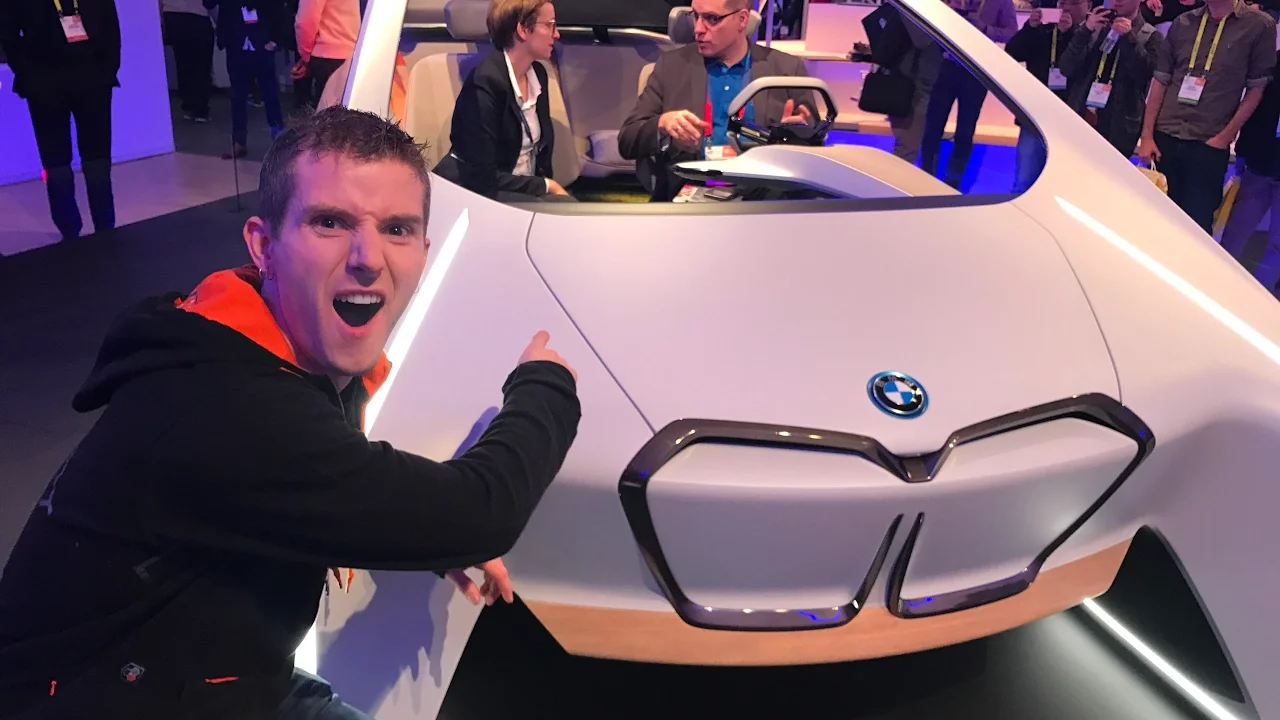
Holographic Touch Interface in a CAR? - BMW @ CES 2017
0 up · 0 down · 0 ratings
Channels and socials
Thanks to BMW for sponsoring this video! The ultimate future of automobiles blends the autonomous experience seamlessly with a pure driving experience. This is BMW's vision for how that might come together... Follow: twitter.com @linustech Join the community: linustechtips.com
BMW at CES 2017 presents a radical interior concept called the iInside future, reframing the car as a living space rather than a traditional cockpit. The host explains that autonomous five-series prototypes use a combination of ultrasonic front radar, rear cameras, and HD map data to safely navigate and adapt to changing routes, including construction zones, by sharing information across OEMs. A key highlight is the shift from conventional dashboards to an open, spacious cabin designed for relaxed autonomous travel, with separate headrest speakers and sound curtains that provide targeted audio while preserving quiet for the driver. Holographic displays with gesture sensing and haptic feedback are showcased as the primary interface, visible only to the driver, creating a futuristic, almost air-floating control surface. The system relies on Intel RealSense for gesture detection and a transducer array that produces a tingling sensation when interacting with the virtual controls, making the experience tactile even in the absence of physical buttons. In back, the concept envisions a lounge-like environment with a 4K projection screen and a bookshelflike interface for back-seat entertainment, suggesting a comfortable, cinema-like experience during autonomous travel. The presenter notes that while this is a sculpture phase concept, the core ideas point toward future mobility where driving remains a central activity, but the passenger experience can be highly customized and multimodal, including different audio zones and private calls. Overall, BMW positions this vision as an integrated ecosystem where cloud connectivity, smart mapping, and voice assistants converge to streamline everyday tasks like shopping or valet-like parking, all while preserving the driving identity of the brand during the transition to autonomous mobility.
Topics · technology · automotive · concept-design · future-mobility
Questions answered
- What makes the BMW iInside future concept different from current car interfaces?
- It replaces traditional dashboards with a holographic, gesture-controlled display, augmented by haptic feedback and a cabin designed for autonomous travel, including rear-seat entertainment and privacy-aware audio zones.
- How does the concept handle navigation and traffic information?
- It relies on HD maps and cross-OEM data sharing to adapt routes in real time, including construction zones and potential delays, to ensure smooth autonomous navigation.