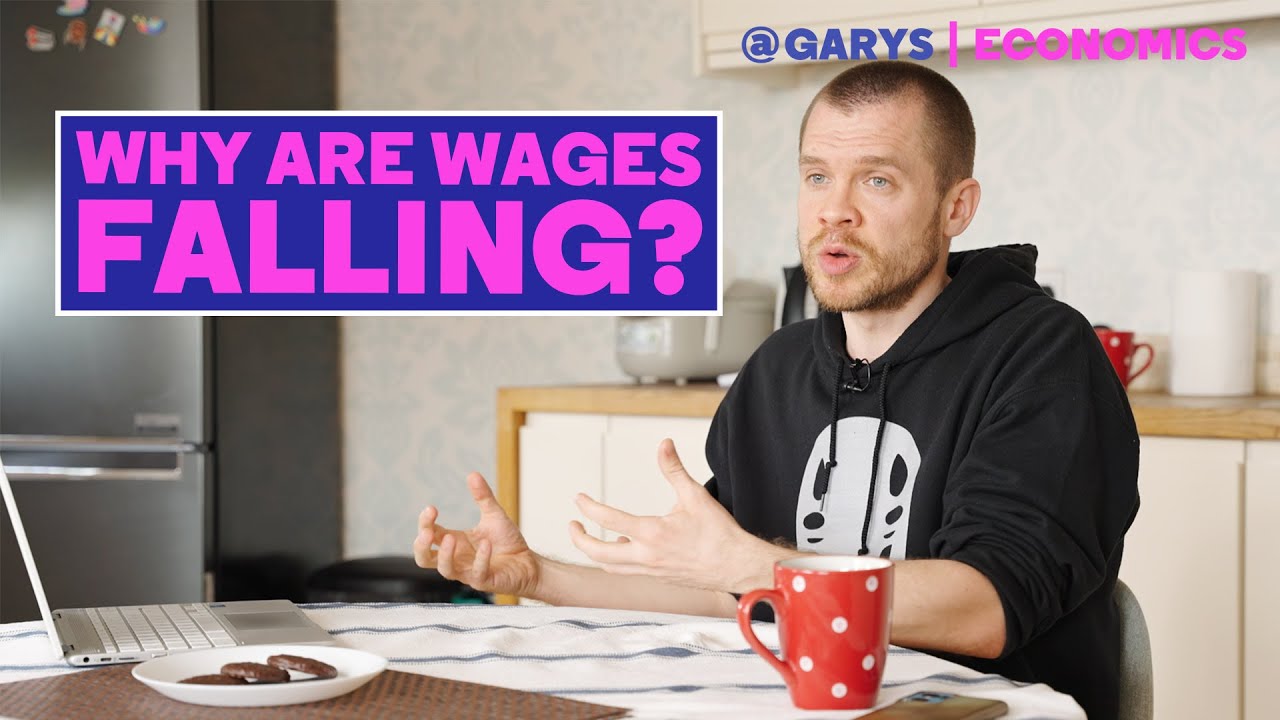
Why Are Your Wages Falling So Fast?
0 up · 0 down · 0 ratings
Channels and socials
Compared to real assets like property, food and energy, wages in the UK have collapsed in the last 20 years. UNDERSTAND, SHARE & PUSH BACK WEBSITE - garyseconomics.org TWITTER - twitter.com FACEBOOK - @garyseconomics INSTAGRAM - @garyseconomics TIKTOK - @garyseconomics YOUTUBE - youtube.com PATREON - patreon.com DISCORD - discord.gg BLUESKY - bsky.app SUBSCRIBE, SHARE & START A CONVERSATION Performed by Gary Stevenson @garyseconomics
Gary Stevenson's Gary's Economics presents a detailed argument about why wages have refused to keep up with rising living costs, arguing that the problem is driven by wealth inequality rather than merely stagnant productivity. He frames wealth as ownership of assets rather than just income, and insists that the distribution of ownership profoundly shapes wage dynamics. The video contrasts two hypothetical economies: one with broad wealth ownership among ordinary people and another with wealth concentrated in a tiny elite, showing how these structures determine the level of wage pressure, housing costs, and consumer demand. He links asset ownership to prospective security, showing how widespread ownership reduces pressure to work intense hours, while concentrated wealth creates a tiny spending base that intensifies competition for jobs and suppresses wages. The discussion also connects devaluation of currency with asset price booms, arguing that price rises in housing, stocks, and energy can mask stagnant wages and mislead people into perceiving a strong economy. Throughout, the host argues that the key policy response is reform of the tax system to reduce wealth inequality, framing this as essential for improving living standards for ordinary people. He closes by inviting viewers to share information, educate others, and push back against the current trajectory of wealth concentration. The first major section defines wealth as asset ownership and clarifies why wealth inequality matters beyond income disparities. He uses examples such as home ownership, commercial property, and stock-based wealth to illustrate how ownership is concentrated among richer individuals. The presenter emphasizes that even when productivity grows, wages can stagnate or fall if wealth is not broadly shared. He also highlights the role of passive income from assets as a stabilizing force for the rich, contrasting that with the lot of ordinary workers who rely primarily on earned income. The explanation links higher inequality to lower wage growth and greater financial pressure on the majority, while also noting that a mid-20th-century European model with more equal wealth distribution produced higher wages. He argues that contemporary wage stagnation is not just about productivity but about the structure of wealth ownership and its capacity to generate passive income. A second key segment explores two hypothetical economic systems: a wealth-equal economy and a wealth-unequal economy. In the wealth-equal scenario, most households own homes and stock portfolios, enabling lower living costs and greater flexibility to pursue family or creative projects. In the wealth-unequal scenario, mass unemployment and debt burdens are common, while a small number of elite households control assets and drive asset prices higher. He explains how in the unequal economy consumer demand is skewed toward luxury goods and services, and geographic concentration intensifies as workers move toward wealth centers. He connects these patterns to real-world housing booms, rental pressures, and urban crowding that accompany wealth concentration. The host argues that such dynamics erode living standards for the majority and reinforce a cyclical trap where wages fall while asset prices rise. A third section delves into price dynamics, inflation, and currency devaluation. He posits that currency devaluation has raised the price of assets while masking the decline in wages, making the economy appear healthier than it is. By separating the effects of inequality from price level changes, he asserts that the public misreads the health of the economy, often celebrating rising house and stock prices as proof of prosperity. He presents a combined view: inequality pushes wages down while currency devaluation pushes prices up, resulting in a misleading impression of overall economic strength while ordinary people face real declines in living standards. He concludes that without addressing wealth inequality, wage prospects will continue to deteriorate even as asset markets soar. In the closing argument, Gary stresses that reducing wealth inequality is not about envy or fairness alone but about preventing widespread poverty and social immobility. He links policy change, particularly tax reform, to reversing the trend and preserving opportunity for future generations. The video invites audience participation to educate friends and family and to push back against entrenched wealth-based power. He frames political action as essential because many politicians themselves are affluent and unlikely to fix the problem without public pressure. The overall message emphasizes systemic change to restore balance between wages and living standards, arguing that wealth inequality is the root driver of wages falling and that reform can realign incentives toward broader prosperity.
Topics · economy · wealth_inequality · wages_and_living_standards · macroeconomics · tax_policy · asset_ownership
Questions answered
- Why does Gary argue wage declines are tied to wealth inequality rather than productivity alone?
- Gary argues that even with some productivity growth, wages can stagnate if wealth is concentrated and most people do not own assets that generate passive income, which reduces overall demand and increases competition for jobs.
- What is the difference between wealth equal and wealth unequal economies?
- In a wealth equal economy, many households own homes and assets, reducing financial pressure and enabling flexibility; in a wealth unequal economy, wealth is concentrated, many depend on work for survival, and asset prices rise while wages stagnate.
- How does currency devaluation factor into the wage discussion?
- Currency devaluation tends to push asset prices up while masking the fall in real wages, making the economy appear stronger than it is and obscuring the need for wage growth.