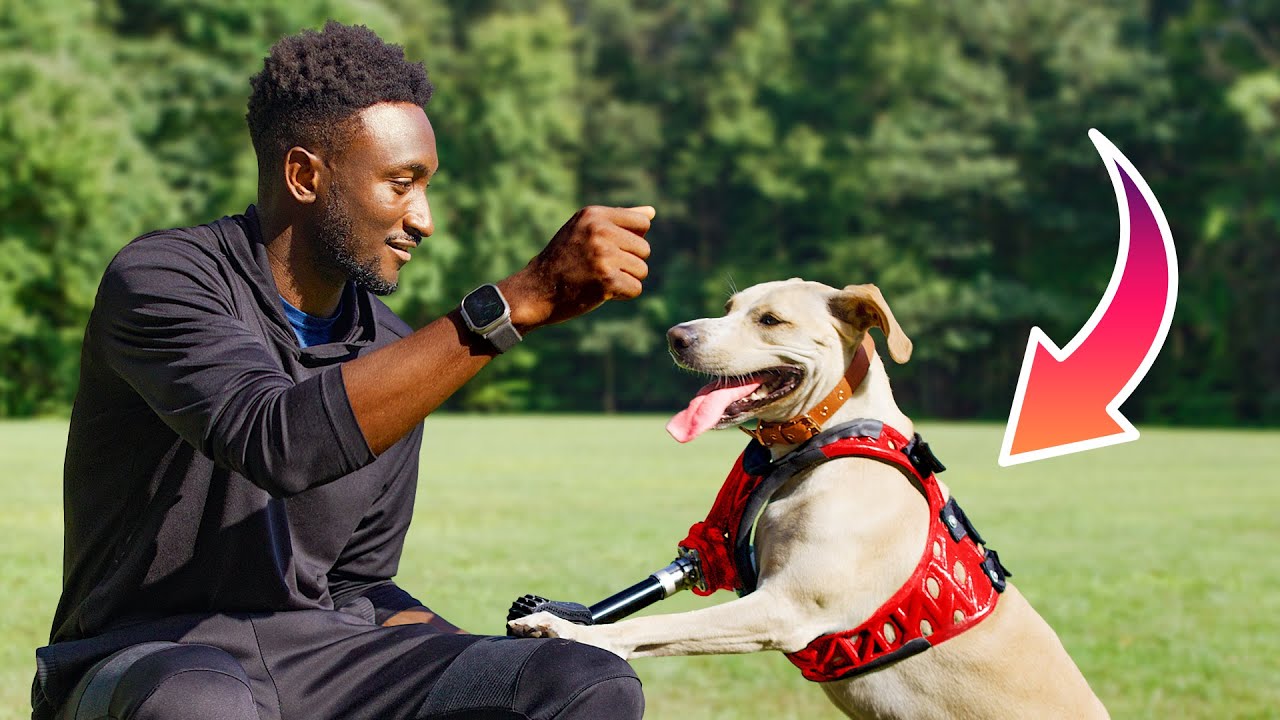
How 3D Printing Changed This Dog's Life!
0 up · 0 down · 0 ratings
Promos
This company uses an iPhone to scan, fit and 3D print prosthetics for pets of all shapes and sizes, and it's awesome 3DPets: 3dpetsprosthetics.com MKBHD Merch: shop.mkbhd.com Tech I'm using right now: amazon.com Playlist of MKBHD Intro music: goo.gl ~ twitter.com @MKBHD @MKBHD
Paragraph 1: The video introduces Cleo, a dog missing a right forelimb, whose daily life is showcased as it remains energetic and friendly. The host explains that Cleo’s mobility is now being enhanced by a specialized service called 3D Pets, which creates customized prosthetics using a high-tech workflow. The process begins with an in-person intake where Cleo is scanned using an iPhone with LiDAR or TrueDepth capabilities, producing dimensional data such as height off the ground and limb geometry. The goal of this initial step is to capture precise measurements so the subsequent prosthetic can be tailored to Cleo’s unique fingerprint, ensuring a comfortable fit and proper weight bearing. This sets up the central premise: one-off, highly customized devices can dramatically impact a pet’s quality of life, not just its appearance. Paragraph 2: The video then walks through the design pipeline, describing how the scan is uploaded to a web portal and imported into design software. Technicians overlay the scan with the digital model to patch any gaps, effectively performing a 3D Photoshop-like refinement to position the harness, straps, and hardware. Engineers adjust lattice structures and material distribution to balance rigidity where hardware attaches with flexibility around the chest and lungs. The aim is to adapt the prosthesis to each animal’s physiology while keeping the print process efficient enough to iterate quickly. The host emphasizes that this customization is essential because no two animals are identical, which is why a mass-produced one-size-fits-all solution wouldn’t work. Paragraph 3: The narrative highlights the practical aspects of production and iteration, including 3D printing with a range of machines from consumer models to industrial systems. After printing, the team sands, torches, and refines the parts to remove rough edges and improve comfort, all while reusing or repurposing supportive remnants. Concrete examples show how different devices address varied needs, such as a dachshund cart designed to support its spine, or a heel-friendly foot that absorbs impact during steps. The video closes the loop by noting that the final prosthesis must be tested with the pet, as acclimation and muscle memory development are gradual. Viewers are left with an appreciation of how accessible, affordable customization can extend an animal’s freedom and happiness, backed by a real-world case that translates tech into life-changing care.
Topics · science and technology · pets · 3d printing · prosthetics · manufacturing · accessibility · biomedical engineering
Questions answered
- What is the main goal of 3D Pets' approach to canine prosthetics?
- To create highly customized, well-fitting prosthetics for each animal using 3D scans and tailored design, enabling comfortable use and improved long-term mobility.
- Why is a single mass-produced prosthetic not sufficient for pets?
- Because every animal has unique anatomy, limb loss characteristics, and weight-bearing needs, requiring a bespoke fit to ensure proper function and comfort.
- What does the production workflow involve after scanning the pet?
- The scan is refined in design software, then translated into printing instructions, followed by 3D printing, finishing (sanding and torching), and fitting with the animal for acclimation.