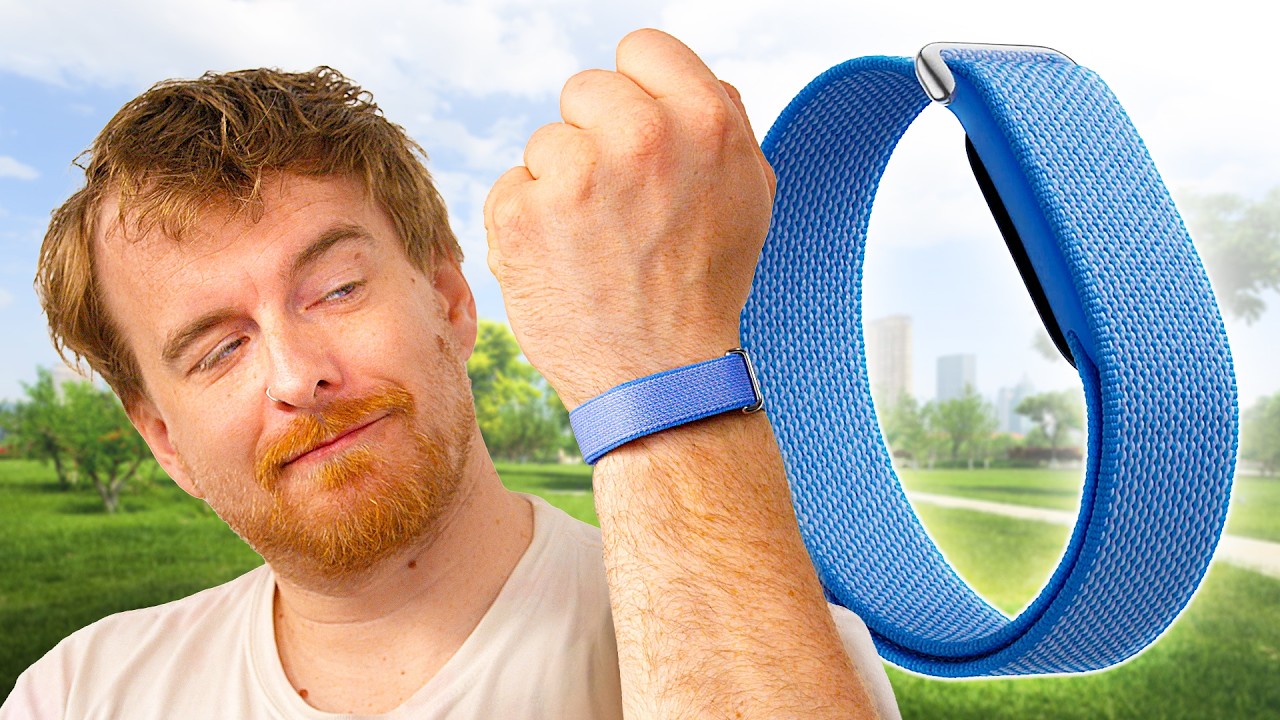
Google Made the Anti-Smartwatch - FitBit Air
0 up · 0 down · 0 ratings
Description
Save big on your SIHOO Doro C300 Pro V2 during the Prime Day sale from June 3rd to June 30th and save an additional 10% using code: YTBSHORTCIRCUIT Official Website (US): sihoooffice.com Official Website (UK): uk.sihoooffice.com Amazon US: bit.ly 6% OFF Code: SIHOODEAL Amazon UK: bit.ly 6% OFF Code: YSIHOOSIX Google is looking to dethrone the popular Whoop fitness tracker with the ultra-affordable FitBit Air. In our tests we found it to be extremely comfortable, but it's probably not for everyone.
Channels and socials
Check out the FitBit Air: prsm2.com Want us to unbox something? Make a suggestion at lmg.gg Thanks to our channel partner Secretlab! - Grab a TITAN Evo ergonomic gaming chair: lmg.gg - Grab a MAGNUS Pro sit/stand gaming table: lmg.gg ► SHOP OUR PRODUCTS: lttstore.com ► GET A VPN: piavpn.com ► GET EXCLUSIVE CONTENT ON FLOATPLANE: lmg.gg ► DIVE DEEPER ON THE LTT LABS WEBSITE: lmg.gg ► SPONSORS, AFFILIATES, AND PARTNERS: lmg.gg Purchases made through some store links may provide some compensation to Linus Media Group. Affiliate links powered in part by affilimate.com Studio lighting by Aputure: aputure.com Linus Sebastian is an investor in Framework Computer, Inc and HexOS by Eshtek. CHAPTERS --------------------------------------------------- 0:00 What's in the box 1:55 The new Google Health app 2:40 Why you want a screen free device 5:37 Sponsor 6:13 Diving back into the app 11:03 David working out 15:20 Final thoughts 16:20 Watch another video
Google has positioned the FitBit Air as a deliberately screenless wearable that sits between a pure fitness tracker and a smartwatch, aiming to disrupt the standard form factor with a focus on battery life and seamless wearability. The video opens by framing the device as a lightweight, screen-free pebble paired with a configurable band, highlighting the minimalistic design and the insistence that you wear it all day, all night, and in every situation. The host elaborates on the new Google Health app integration, which promises coaching, sleep tracking, and AI-generated data summaries for a monthly fee, while also noting that the device itself remains functional with older Fitbit ecosystems. A core argument is that the absence of a screen is offset by long battery life, with a rating of about seven days of continuous tracking, and a remarkably light weight around 12 grams including the pebble, making it nearly invisible on the wrist. Throughout the review, practical usage scenarios are explored, such as wearing it during hockey practice and daily activities, and the trade-offs compared to devices with GPS, stress tracking, or emergency features are made explicit. The discussion then pivots to the experience of using the Google Health app and the AI coach, including setup prompts, goal setting, and how the coach adapts to user inputs, schedules, and available equipment. Finally, the host weighs the value proposition against the $99 price point, subscription considerations, and the broader ecosystem, concluding that while the device is compelling for a low-cost, screenless experience, the AI coaching surface may not be essential for everyone, and privacy concerns remain a prominent consideration for potential buyers.
Topics · wearables · technology · health_fitness · privacy · ai_coaching
Questions answered
- What is the core design philosophy behind the FitBit Air as presented in the video?
- The core idea is a screenless wearable with long battery life and a lightweight form factor, designed to be worn all day, every day, while relying on a connected phone and the Google Health app for data insights and coaching.
- Does the Google Health AI coach require a subscription, and what does it offer?
- Yes, there is a paid tier that offers AI summaries of data and personalized coaching, but basic tracking works without the subscription and access to some features may be limited without it.
- What are the main trade-offs of using the FitBit Air compared to traditional smartwatches?
- Key trade-offs include the absence of a screen, lack of GPS independence, and fewer on-device safety features, balanced against lighter weight, longer battery life, and price.