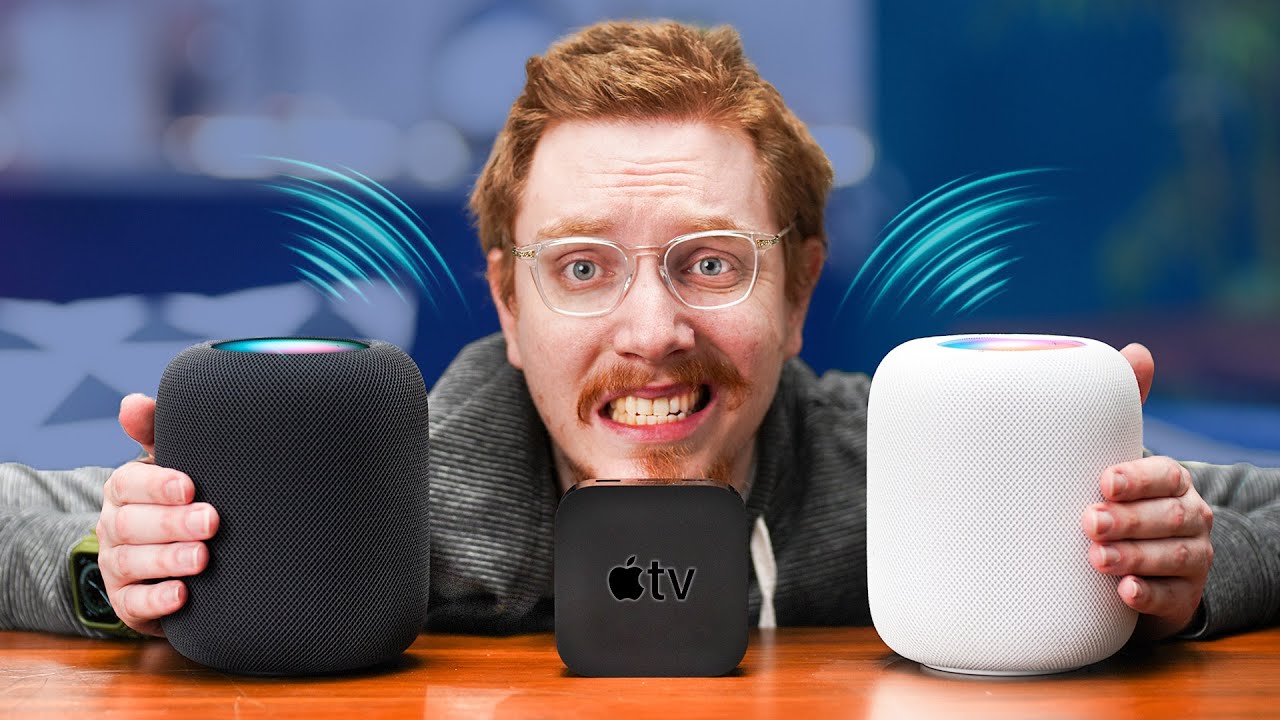
We made an Apple home theatre. It was bad
0 up · 0 down · 0 ratings
Promos
Join us in War Thunder for FREE at playwt.link and get an exclusive bonus using our link - thanks for supporting the channel! The HomePod is back! At a new starting price of $299, it has some upgrades, some downgrades, and a price cut which isn't really a price cut. So, is it worth it? Buy 2nd Gen Apple HomePods: lmg.gg Buy an Apple TV 4K: lmg.gg Buy Edifier S2000MKIII Bluetooth Bookshelf Speakers: geni.us Buy a Fire TV Stick 4K Max: geni.us Buy a Belkin SoundForm Connect AirPlay 2 Adapter & Receiver: geni.us Buy an Echo Studio Speaker: geni.us Purchases made through some store links may provide some compensation to Linus Media Group. ► GET MERCH: lttstore.com ► LTX 2023 TICKETS AVAILABLE NOW: lmg.gg ► GET EXCLUSIVE CONTENT ON FLOATPLANE: lmg.gg ► SPONSORS, AFFILIATES, AND PARTNERS: lmg.gg FOLLOW US ELSEWHERE --------------------------------------------------- Twitter: twitter.com Instagram: @macaddressyt Facebook: @MacAddressChannel CHAPTERS --------------------------------------------------- 0:00 Intro 1:02 The new stuff! 1:48 Getting set up 2:35 It just works!... or does it? 3:35 Thanks War Thunder 4:05 How are the HomePods for music? 4:57 They sound... different 5:37 Let's talk about another option! option...option... (it's the Echo) 6:42 The competition isn't that bad! 7:30 Let's investigate the new HomePods 9:10 Disappointing discoveries, but there are more choices! 10:24 Making a great alternative better 10:58 Who is the HomePod for?
The video undertakes a practical experiment to assess whether Apple’s HomePod based home theater setup can compete with traditional or non-Apple options, all while aiming for a sleek Apple lifestyle. The presenter lays out the premise: avoid messy speaker wires and opt for a polished, Apple-integrated experience using two HomePods, an Apple TV 4K, and wireless connections to create a compact 2.0/2.1 style home theater. They acknowledge the potential benefits, such as stereo imaging, spatial audio, and Dolby Atmos support, plus the convenience of AirPlay, Siri, and centralized control. However, the core tension quickly emerges: the $600 asking price for a HomePod pair, coupled with the need for an Apple TV and other accessories, raises questions about overall value versus traditional speakers and simpler setups. The discussion centers on whether the promise of seamless integration translates into superior sound and user experience, or if compromises in sound quality and usability erode that value proposition. The host is explicit about expectations, emphasizing the blend of design, ecosystem, and performance as the deciding factors for a modern home theater buyer. In the middle section, the reviewer provides a side-by-side examination of sound quality and user experience, noting that the HomePod setup offers a surprisingly broad soundstage when used in stereo for movies like Rogue One, with deep bass that exceeds expectations for such compact speakers. Atmos playback is explored but with mixed impressions, as the reviewer finds Atmos playback distant and sometimes echoey, and suggests that turning Atmos off can actually improve music playback. They compare these dynamics to an alternative Amazon Fire TV/Echo Studio setup, highlighting differences in interface, remote quality, and the presence or absence of AirPlay. The testing process includes listening to a diverse playlist, testing with games via War Thunder, and conducting measurements to illustrate how the second-generation HomePod differs from the first generation, including a noticeable 2 to 4 kHz dip and an overemphasized high end that can affect vocal clarity. The summary of results begins to tilt toward the conclusion that while HomePods offer certain advantages in home theater contexts, their audio tuning and price point create a gap relative to expectations, especially for listeners seeking flat, accurate studio monitoring. Toward the end, the video pivots to a clear alternative: Edifier S2000MKIII bookshelf speakers, paired with a Belkin AirPlay 2 adapter to achieve smart functionality without being tethered to Apple’s ecosystem. The Edifier option is presented as more affordable, offering straightforward, tunable EQ and multiple inputs including RCA, optical, and Bluetooth, albeit without built-in Wi-Fi. The host emphasizes that these speakers provide louder, clearer sound with less reliance on software finesse, and they conclude that for many listeners, this non-Apple route delivers better value and sound quality per dollar. A candid takeaway emerges: the HomePod approach prioritizes aesthetics and ecosystem features over raw audio performance, making it suitable for some users but not a universal best choice for a home theater, especially at higher price points. The video closes with a pragmatic verdict and a call to viewers to share their own home theater configurations, inviting discussion about what people would actually use in living rooms and why.
Topics · Technology · Home Theater · Product Review · Audio
Questions answered
- What is the basic HomePod + Apple TV home theater setup described in the video?
- Two HomePods connected via Apple TV 4K for audio, with AirPlay and Siri integration, forming a compact home theater system tailored to the Apple ecosystem.
- How does the reviewer rate the audio quality of the HomePod setup for movies and music?
- They find the movie soundstage impressive in stereo but feel the music playback is inconsistent, sometimes dull or distant with Atmos enabled, and overall not meeting expectations versus the first generation. They prefer alternative non-Apple speakers for better value and simpler tuning.
- What is proposed as a more economical alternative to HomePod for a home theater?
- Edifier S2000MKIII bookshelf speakers with a Belkin SoundForm Connect AirPlay 2 receiver provide strong clarity, higher volume, and flexible inputs at a lower price point.