Can I Turn Dead CPUs into Money?
0 up · 0 down · 0 ratings
Description
Try Rocket Money for free: rocketmoney.com (US Residents Only) #rocketmoney #personalfinance
Promos
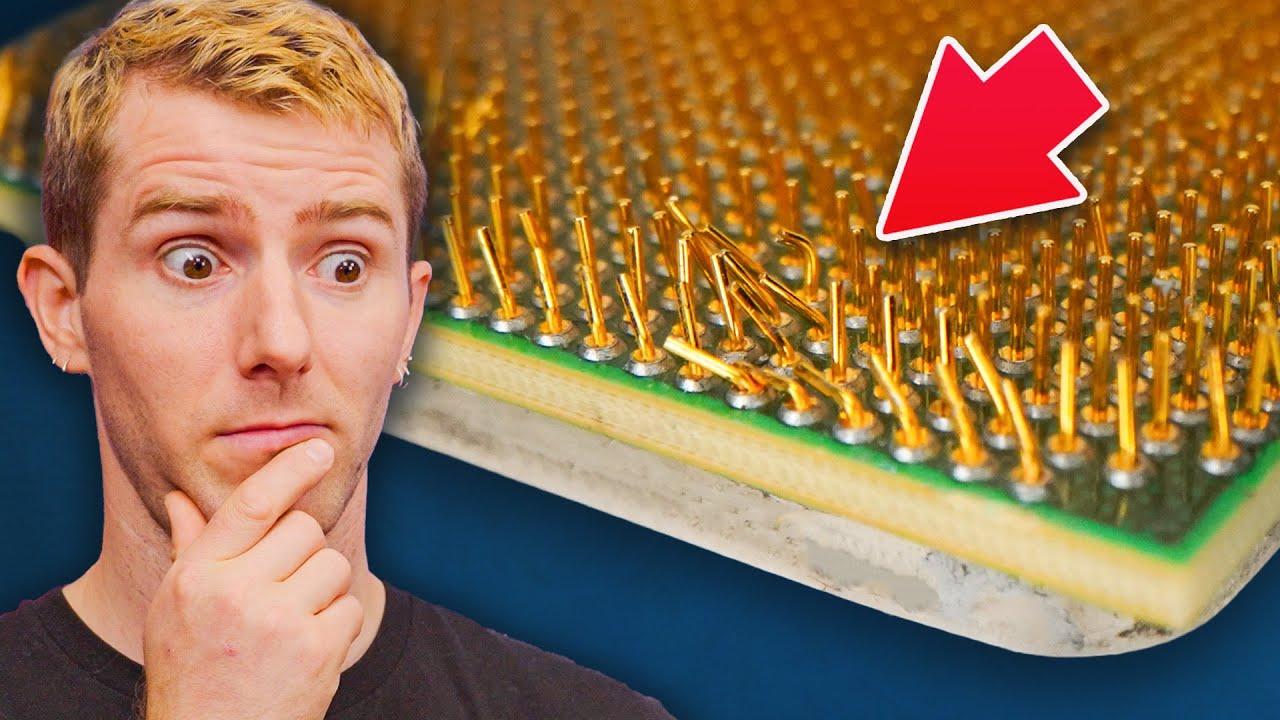
Check out MSI’s Fall Deals on laptops at msi.gm We've saved money by buying and fixing damaged motherboards, but could we make a profit selling repaired CPUs? Linus and the team take on 'for parts' CPUs from eBay. Discuss on the forum: linustechtips.com ► GET OUR MERCH: lttstore.com ► GET EXCLUSIVE CONTENT ON FLOATPLANE: lmg.gg ► GET A VPN: piavpn.com ► SPONSORS, AFFILIATES, AND PARTNERS: lmg.gg Purchases made through some store links may provide some compensation to Linus Media Group. CHAPTERS --------------------------------------------------- 0:00 Intro 1:17 Meet the Victims 2:15 James 5:36 Jordan 6:41 Elijah (and friends) 8:53 Linus 12:50 How'd everybody do? 17:11 Credits
Part 1 introduces the premise of turning dead CPUs into money, framing the challenge as a small scale, DIY side hustle. The host explains that the team will purchase several nonfunctional or partially functioning CPUs, assess their damage, and attempt to repair bent or missing pins to revive them. We learn about the tools and methods being considered, including a microscope for pin inspection and improvised techniques to straighten or re-seat pins with household items. The tone blends curiosity with practical constraint as the team inventories CPUs, inventories tools, and sets a time-bound plan to measure potential profit. This section also introduces a host perspective on repairing technology as a hobbyist pursuit rather than a formal repair service, establishing expectations for risk and reward. The segment ends with a plan to test repaired CPUs in an actual system to confirm viability before calculating profit. Part 2 follows the execution phase, where multiple participants attempt to fix different CPUs with varying degrees of success. The narrative captures hands-on experimentation, including pin bending, corner pin issues, and the use of a mechanical pencil trick and razor blade as makeshift repair aids. The crew compares approaches, shares a methodical workflow, and reflects on the limits of their techniques while measuring progress using post-repair boot and performance checks. The section highlights teamwork dynamics, with participants offering encouragement or critique and attempting to optimize repair time. The outcomes vary by CPU model, with some boards booting and others failing or presenting uncertain results, illustrating the unpredictability of DIY repair projects. Part 3 centers on testing outcomes and profit calculations for the repaired CPUs. Test results reveal a successful boot and usable performance on at least one processor, driving an estimated profit for that unit. The group consolidates lessons about labor costs, tool usage, and the time required per unit, translating repair time into hourly earnings estimates. They acknowledge overhead costs for tools but still project meaningful profits if they can repeat the process efficiently. The discussion broadens to include a note on nonfunctional CPUs with missing or improperly seated pins, and the team debates the line between salvageable parts and hopeless cases. The segment closes with a practical framework for evaluating future CPU repairs as a side hustle, balancing risk with the potential reward. Part 4 returns to broader reflections and practical takeaways, evaluating whether repairing bent pins is a viable side hustle. The team synthesizes data from their tests: some CPUs repair easily, others require more time or may be unsalvageable, and profit varies accordingly. They offer caveats about upfront risk, selecting CPUs with clear failure modes, and negotiatingseller disclosures to maximize recoverable value. The conversation ties together the personal finance angle with technical skill, suggesting that focused, time-bound repair projects can yield nontrivial hourly earnings but are not guaranteed. The video concludes with encouragement to viewers interested in DIY electronics to test similar workflows while managing expectations and costs. The wrap-up reinforces the notion that repair-based side hustles can work for some, but require careful selection, time, and a willingness to accept mixed outcomes.
Topics · technology · side-hustle · repair · computer-hardware · electronics · testing · business · education
Questions answered
- What is the main goal of the CPU repair challenge in this video?
- The goal is to fix four or more CPUs with bent or missing pins, verify they boot and operate, and estimate potential profit or hourly earnings from repairing and reselling them.
- How is profit calculated for the repaired CPUs?
- Profit is estimated by subtracting repair costs and overhead from the resale value of each repaired CPU, then dividing the net profit by the time spent repairing to estimate hourly earnings.
- What tools are used to repair the CPUs in this video?
- Tools include a microscope for pin inspection, spudgers, razor blades, a mechanical pencil trick for aligning pins, and other common DIY items to manipulate and re-seat CPU pins.
- Are there safety or ethical considerations highlighted in the video or comments?
- Yes, discussions touch on privacy around family participation in videos, the ethics of repair work as a business, and the responsibility of accurately declaring CPU faults when buying and selling parts.