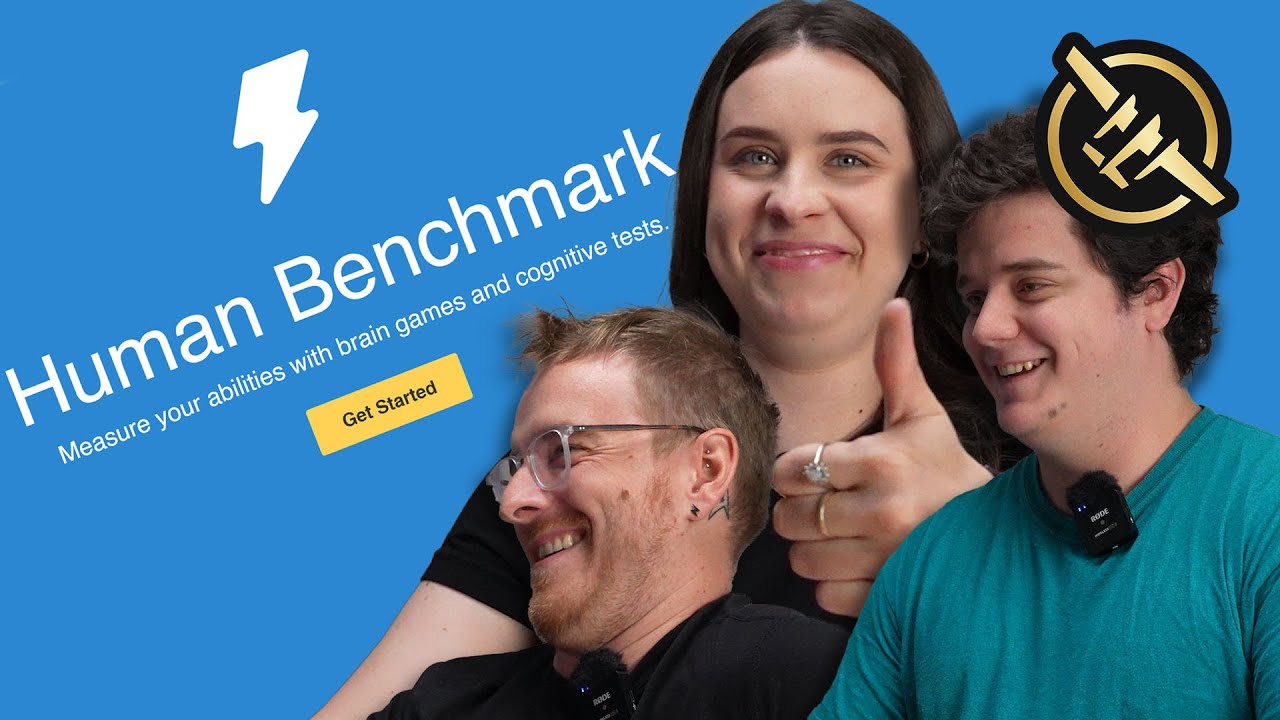
FP Exclusive: The Human Benchmark Departmental Battle
0 up · 0 down · 0 ratings
Description
Thank you for your support!
Promos
Check out Floatplane for more benefits at lmg.gg ► GET MERCH: lttstore.com ► LTX: lmg.gg ► SPONSORS, AFFILIATES, AND PARTNERS: lmg.gg ► OUR WAN PODCAST GEAR: lmg.gg FOLLOW US --------------------------------------------------- Twitter: twitter.com Facebook: @LinusTech Instagram: @linustech TikTok: @linustech Twitch: twitch.tv
FP Exclusive follows an unusual experiment where different departments within a team undertake a human benchmark challenge. The video frames the competition around cognitive and reaction-based tasks often associated with human benchmarks, and it sets up a controlled, lab-like environment for fair comparison. Viewers are guided through the premise, the rules, and the scoring system, which is designed to quantify performance across multiple cognitive domains. Throughout the segment, the host explains how latency, accuracy, and consistency are weighed in the final tallies. The purpose appears to be both entertainment and an informal study of how diverse teams approach problem solving under time pressure. In the preparation phase, the video outlines the participants, the equipment used, and the standardization of the testing conditions. It discusses how devices are calibrated and how ambient factors such as lighting and desk setup are controlled to minimize external influences. The departments are showcased as they organize their teams, assign roles, and designate a game plan for tackling each task. The rules emphasize fairness, repeat trials, and the collection of objective data rather than subjective impressions. This setup establishes the tone for a competitive yet methodical evaluation of human benchmarks. The core of the content focuses on the actual tasks and the way teams approach them. Participants race against the clock on reaction-time drills, memory sequences, and quick decision-making challenges that echo common benchmark formats. Each round is described with brief demonstrations, highlighting moments of rapid response, careful deliberation, or occasional errors. The video captures the dynamics between teams as strategies shift between rapid-fire actions and slower, more deliberate approaches. Observations are translated into metrics that feed into the overall scoring system, offering a data-driven view of performance. As the competition progresses, the host provides commentary on notable performances, trends across departments, and the impact of practice versus innate skill. The narrative emphasizes that small improvements can compound across tasks, and it showcases how team coordination translates into measurable gains. There are moments of suspense when a department pulls ahead or when a close score prompts a rapid regroup and recalibration. The pacing balances explanation with competitive tension, keeping viewers engaged while reinforcing the analytical backbone of the benchmark approach. By the midsection, the video revisits the methodology to reassure the audience that outcomes are grounded in repeatable testing. Midway reflections probe the limitations and potential biases of human benchmark tests, including how fatigue, motivation, and familiarity with tests can influence results. The discussion broadens to consider what these benchmarks reveal about team dynamics beyond raw numbers, such as leadership, communication, and distributed problem solving. The participants offer insights into their decision-making processes, including when to push for speed and when to prioritize accuracy. The segment underscores that benchmarks are a lens on cognitive performance, not a definitive measure of overall capability. It closes the midway point with a summary of the key takeaways and how they might inform future benchmarking sessions. In the concluding portion, the video reveals the final standings and reflects on what the results imply for the participating departments. The host interprets the data to highlight lessons about workflows, collaboration, and the value of practice across cognitive tasks. Practical implications are discussed, such as how teams can apply improved strategies to real-world problems that require quick thinking under pressure. The ending reiterates the playful yet informative spirit of the challenge, inviting viewers to consider conducting similar experiments in their own organizations. The show closes with a nod to upcoming events and potential improvements for future departmental battles, encouraging continued engagement and experimentation.
Topics · science · technology · competition · teamwork · benchmarking · research · laboratory · education