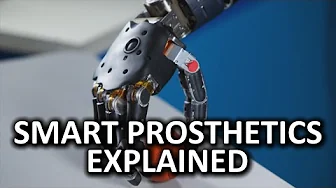
Smart Prosthetics As Fast As Possible
0 up · 0 down · 0 ratings
Description
Artificial body parts have been around for a long time, but how is modern tech allowing patients to get replacements that look and function more like the real deal? Freshbooks message: Head over to freshbooks.com and don’t forget to enter Tech Quickie in the “How Did You Hear About Us” section when signing up for your free trial. Follow: twitter.com Join the community: linustechtips.com License for image used in this video: creativecommons.org
Smart Prosthetics As Fast As Possible surveys the long arc of artificial limbs from ancient peg legs to modern, high-tech prosthetics that imitate real limbs in both appearance and function. It explains how recent manufacturing advances enable more lifelike devices with better joints, moving parts, and skin-like coverings made from materials such as silicone, which helps prosthetics look and feel more natural. The video highlights computer-aided design and precise modeling that allow custom fits for each patient, along with high-quality joints that replicate natural movement. It then explains how control systems have evolved from simple mechanical cables that can be operated with shoulder movements to myoelectric systems that read muscle impulses and drive the prosthetic in real time. The most exciting development, however, is the move toward brain–computer interfaces, where implanted sensors pick up neural signals and translate them into actions at the artificial limb. This path toward thought-controlled prosthetics aims to restore intuitive use, including sensing touch through sensors embedded in the prosthetic that relay information back to the brain. The video further explores vision-enhancing implants, such as retinal prosthetics that project images onto the retina or brain interfaces that bypass the eye entirely, offering potential future improvements for people with impaired vision. Overall, the discussion emphasizes how interdisciplinary advances in materials, sensors, and neural interfaces are converging to create prosthetics that not only look more lifelike but also feel and act more like natural limbs, with ongoing caveats about current limitations and the pace of real-world adoption.
Topics · science and technology · biomedical engineering · assistive technology · medical devices
Questions answered
- What enables control of modern prosthetics by thought, according to the video?
- Implanted sensors beneath the skin pick up neural impulses or muscle signals and send them to a processor that translates them into movements of the artificial limb.
- What future vision technologies are discussed as potential improvements for people with impaired vision?
- Retinal implants that project images onto the retina and brain interfaces that bypass the eye entirely to provide information to the brain for vision.